GCSE Edexcel Physics 14.3 - Particle Model and Pressure
Study these flashcardsFree · spaced repetition · iPhone, Android, Mac & web
All cards
1
Describe the motion of molecules in a gas
Constant random motion at high speeds
They collide with each other and the walls of the container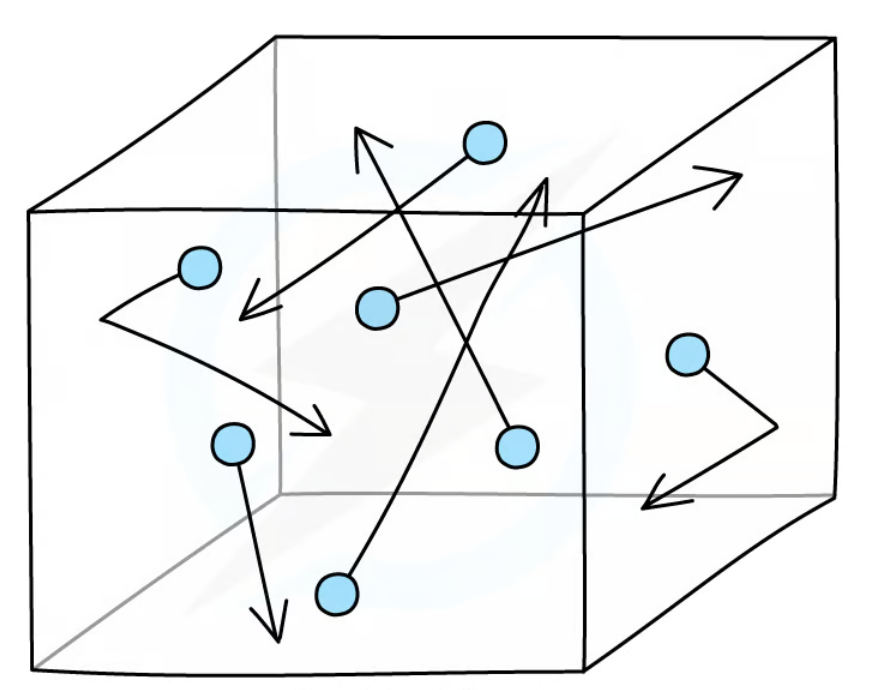
They collide with each other and the walls of the container
2
Random motion of tiny particles in a fluid is also known as…
Brownian motion
3
How is pressure in a gas related to the random motion of molecules in a gas?
Whenever molecules collide with the walls of a container
They exert a force on the walls of the container
Pressure is the force exerted per unit area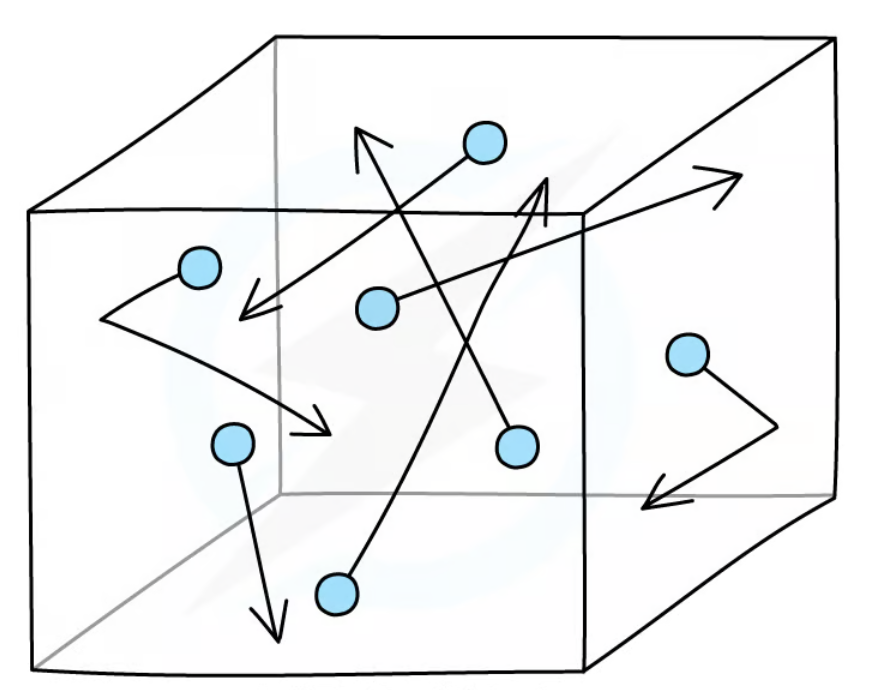
They exert a force on the walls of the container
Pressure is the force exerted per unit area
4
Pressure equation
Pressure (Pa) = Force (N) / Area (m²)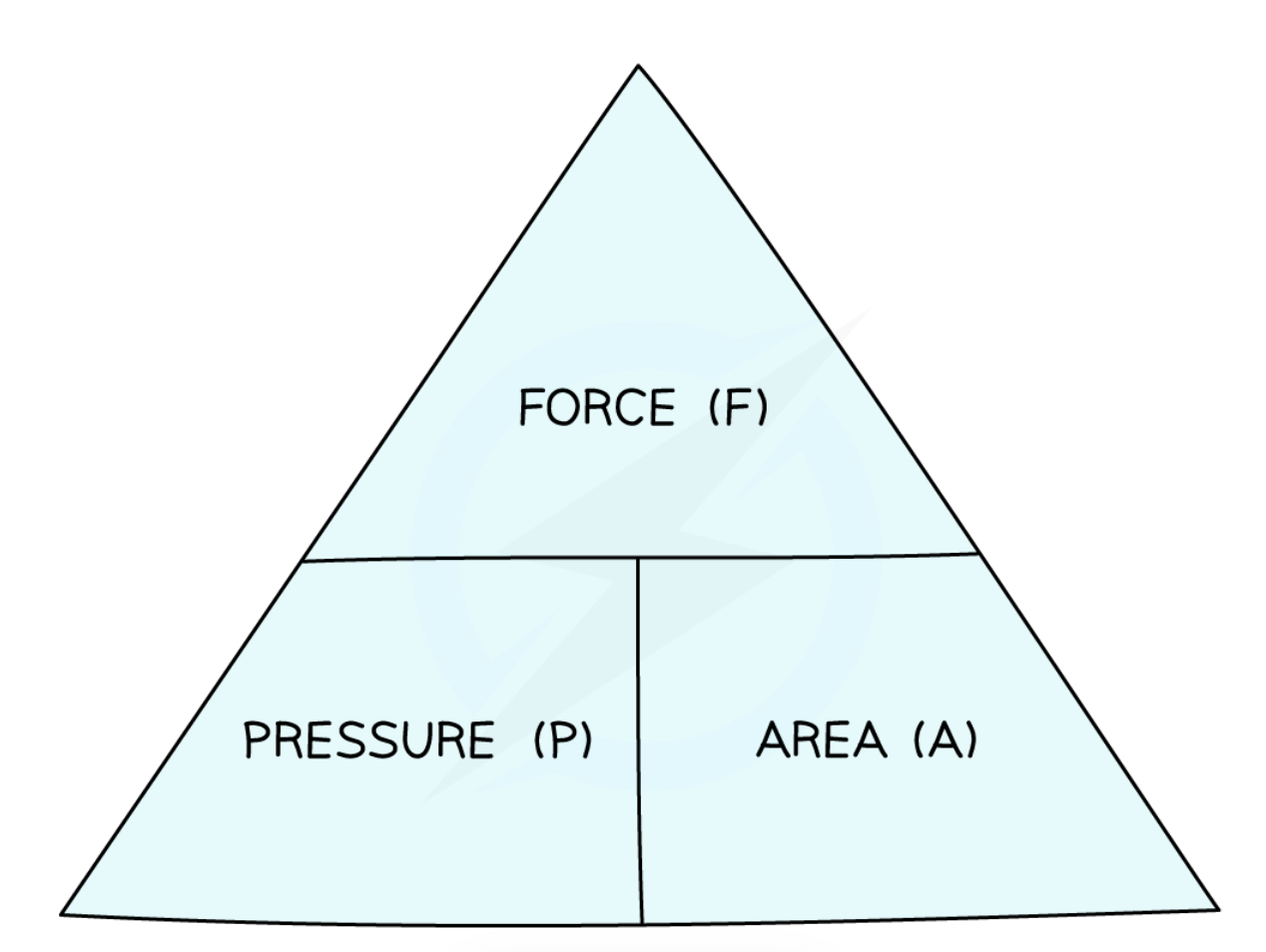
5
How does an increase in temperature affect the pressure in a gas?
The hotter the gas, the faster the molecules move (greater kinetic energy)
So the molecules collide with the walls more frequently and with more force
Greater frequency of collisions and force means more pressure
So the molecules collide with the walls more frequently and with more force
Greater frequency of collisions and force means more pressure
6
How does a decrease in temperature affect the pressure in a gas?
The cooler the gas, the slower the molecules move (lower kinetic energy)
So the molecules collide with the walls less frequently and with less force
Less frequency of collisions and force means less pressure
So the molecules collide with the walls less frequently and with less force
Less frequency of collisions and force means less pressure
7
What is meant by the term “absolute zero”?
-237°C or 0 K (Kelvin)
The temperature at which molecules have zero kinetic energy (have no movement)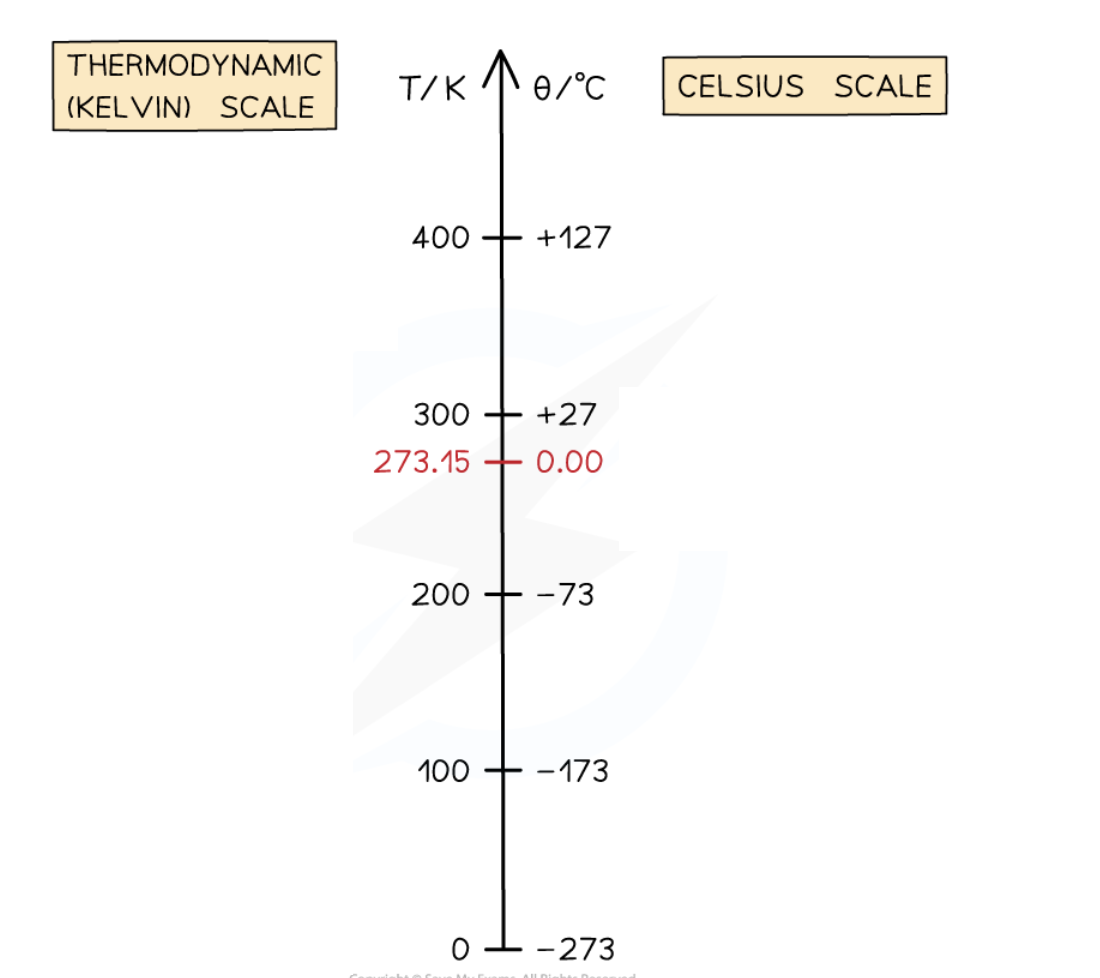
The temperature at which molecules have zero kinetic energy (have no movement)
8
How do you convert from Celsius to Kelvin?
Add 237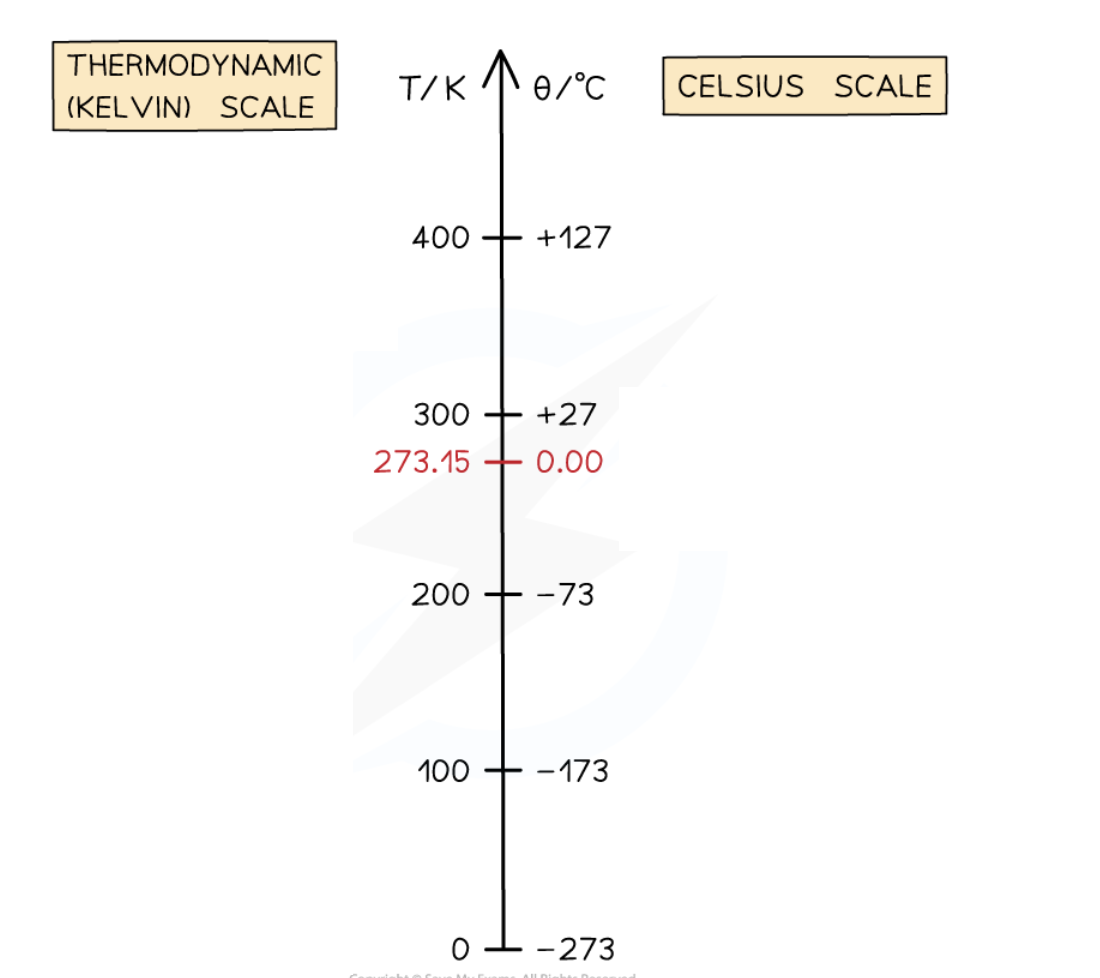
9
How do you convert from Kelvin to Celcius?
Subtract 237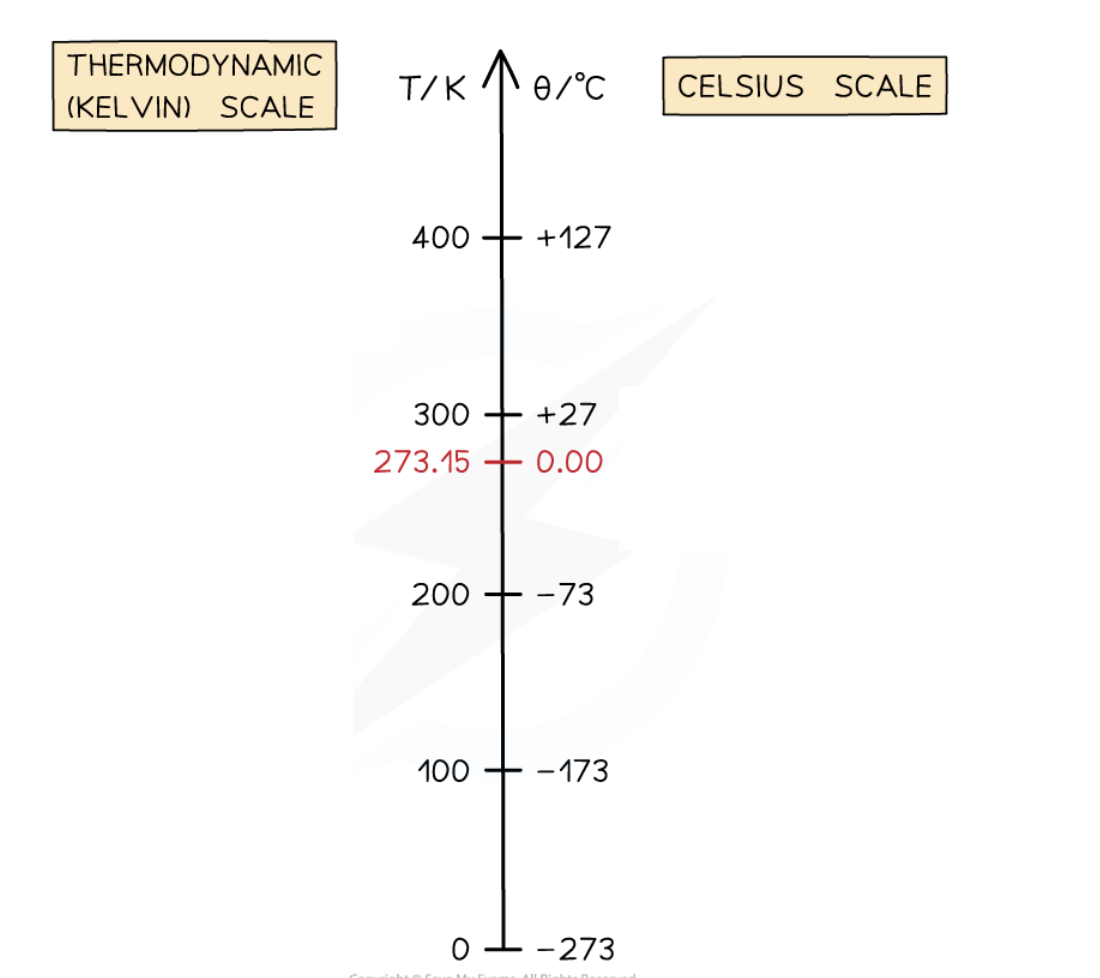
10
A change in temperature of 1 Kelvin is the same as a change of how many °C?
A change of 1 K is the same as a change of 1°C
11
0°C is equal to how many Kelvin?
237 K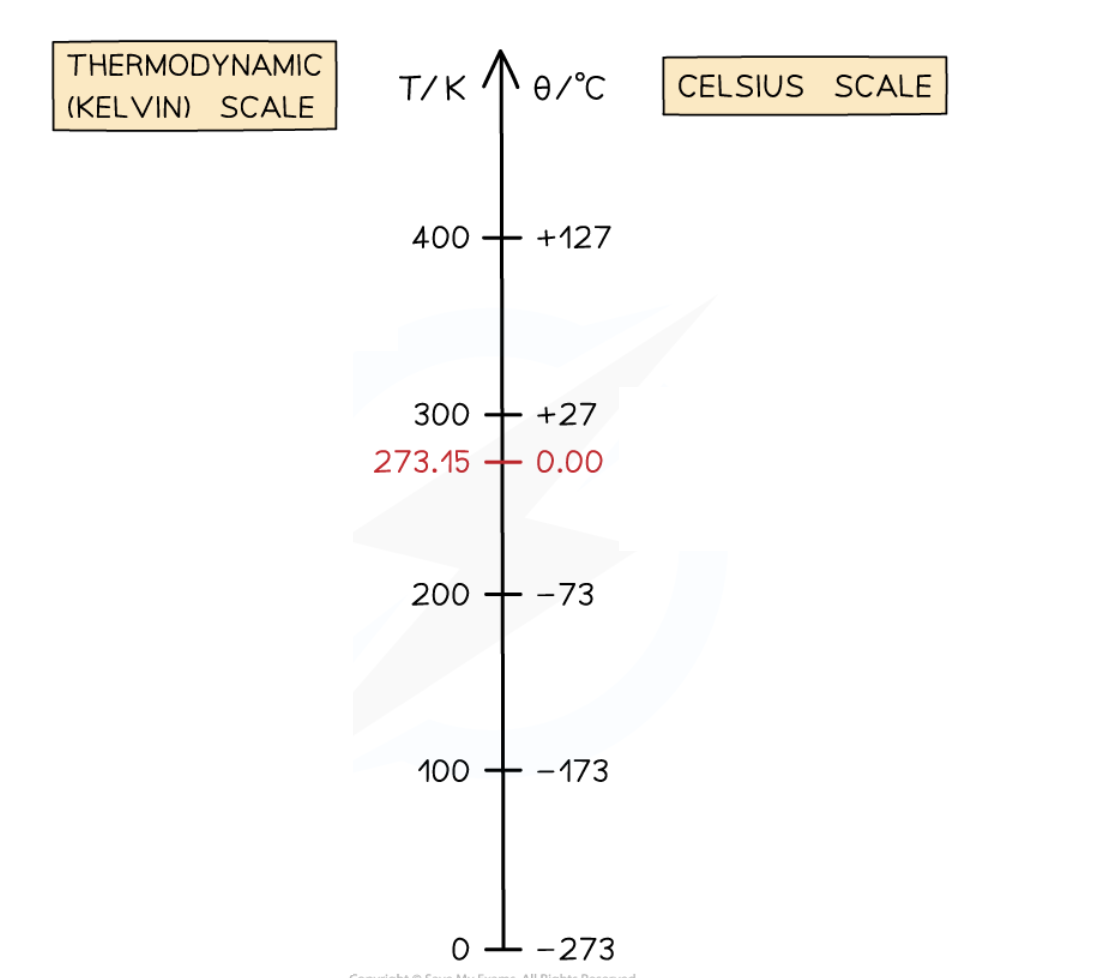
12
0 K is equal to how many Celcius?
-237°C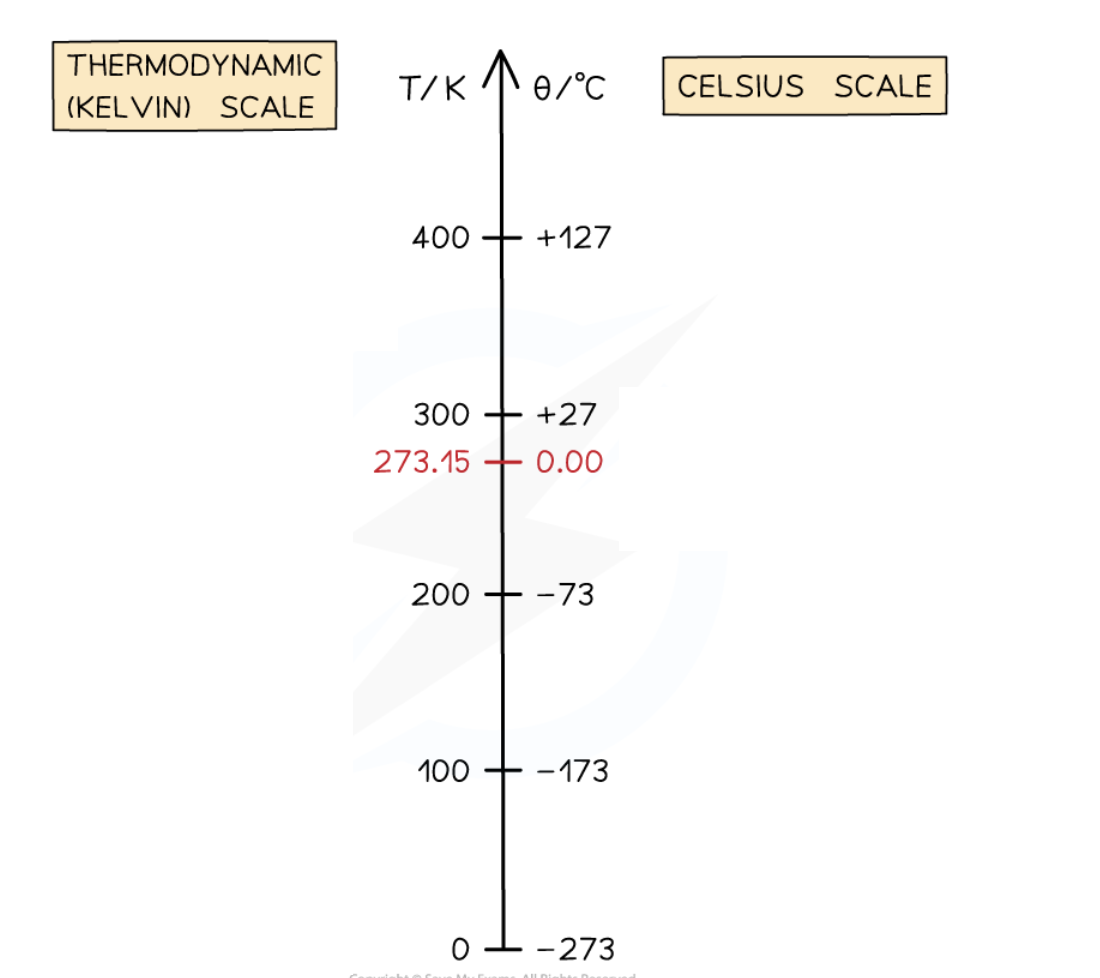
13
If the temperature of a gas remains constant and it is compressed, what happens to its volume, density and pressure?
Volume decreases, density increases, pressure increases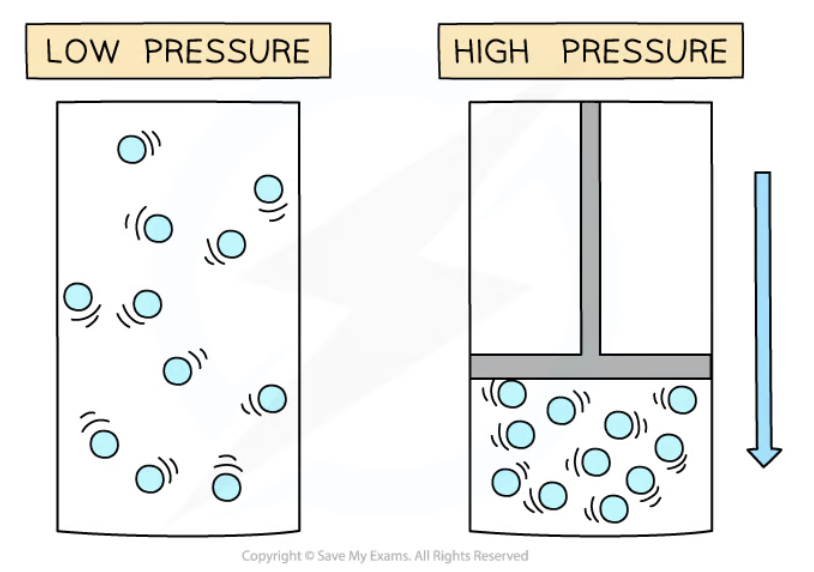
14
Explain why the pressure increases when a gas is compressed (if temperature doesn't change)
The volume decreases and the number of molecules remains the same
Frequency of collisions between molecules and walls increases
Which means there is a greater force, so pressure increases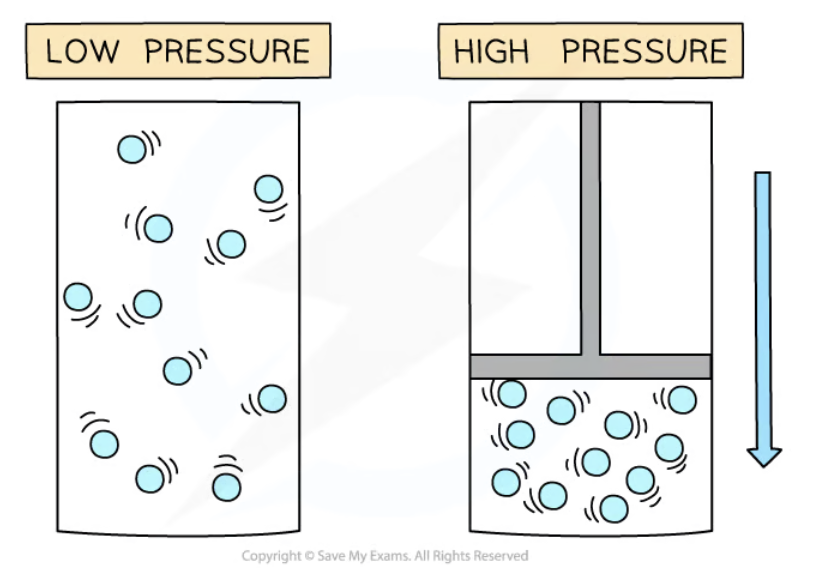
Frequency of collisions between molecules and walls increases
Which means there is a greater force, so pressure increases
15
When the pressure outside a container of gas is greater than inside, what can happen to the container?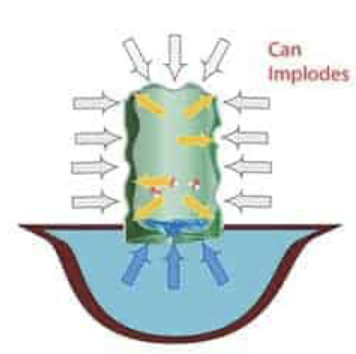
It will compress - inward force is greater than the outward force
16
If the temperature of a gas remains constant and it is expanded, what happens to its volume, density and pressure?
Volume increase, density decreases, pressure decreases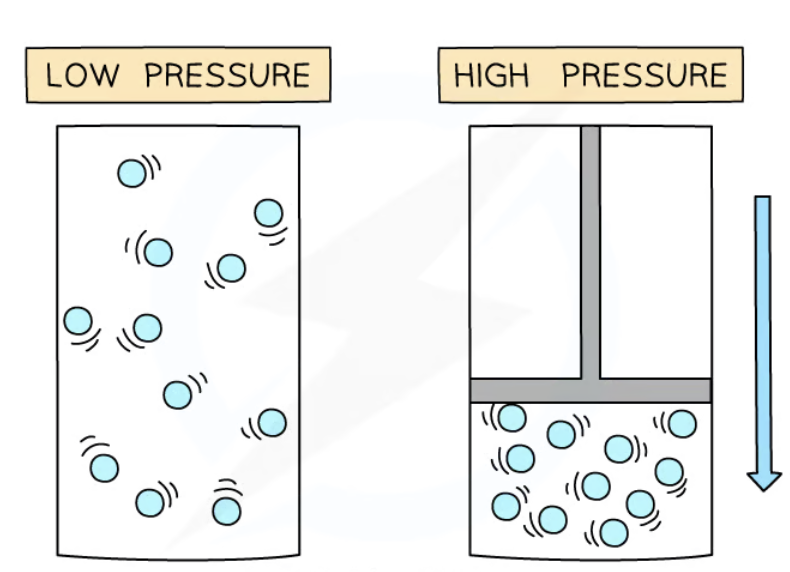
17
Explain why the pressure decreases when a gas is expanded (if temperature doesn't change)
The volume increases and the number of molecules remains the same
Frequency of collisions between molecules and walls decreases
Which means there is a smaller force, so pressure decreases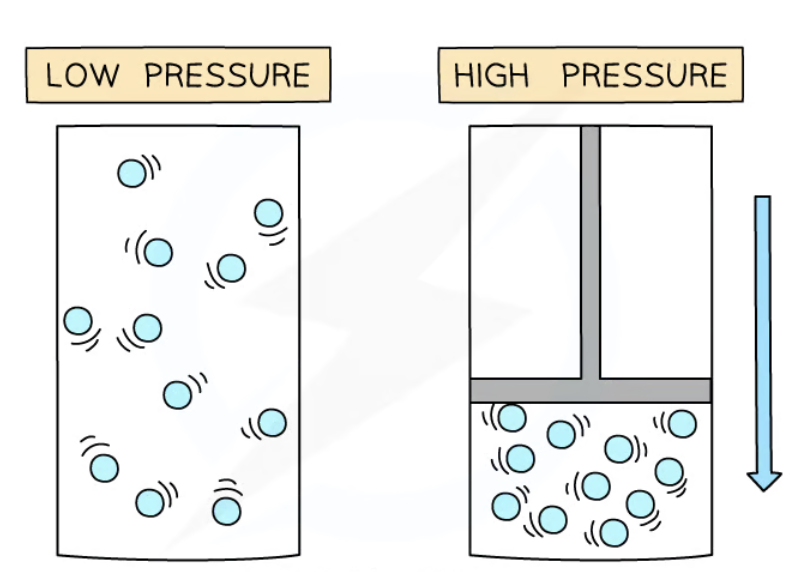
Frequency of collisions between molecules and walls decreases
Which means there is a smaller force, so pressure decreases
18
When the pressure inside a container of gas is less than inside, what can happen to the container?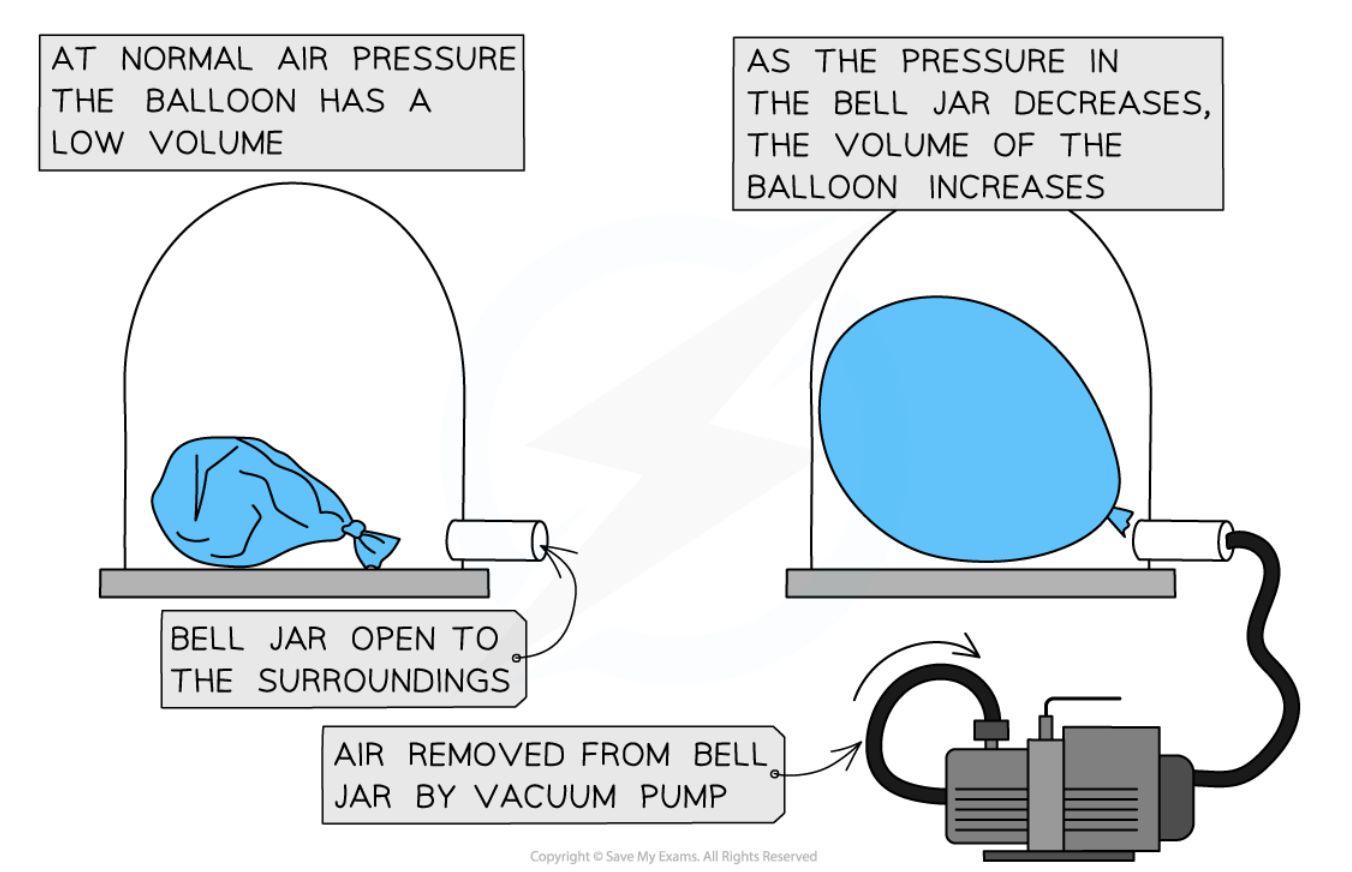
It will expand - inward force is less than the outward force
19
When particles collides with the walls of a container, in which direction is the force exerted?
The net force is exerted at right angles to the wall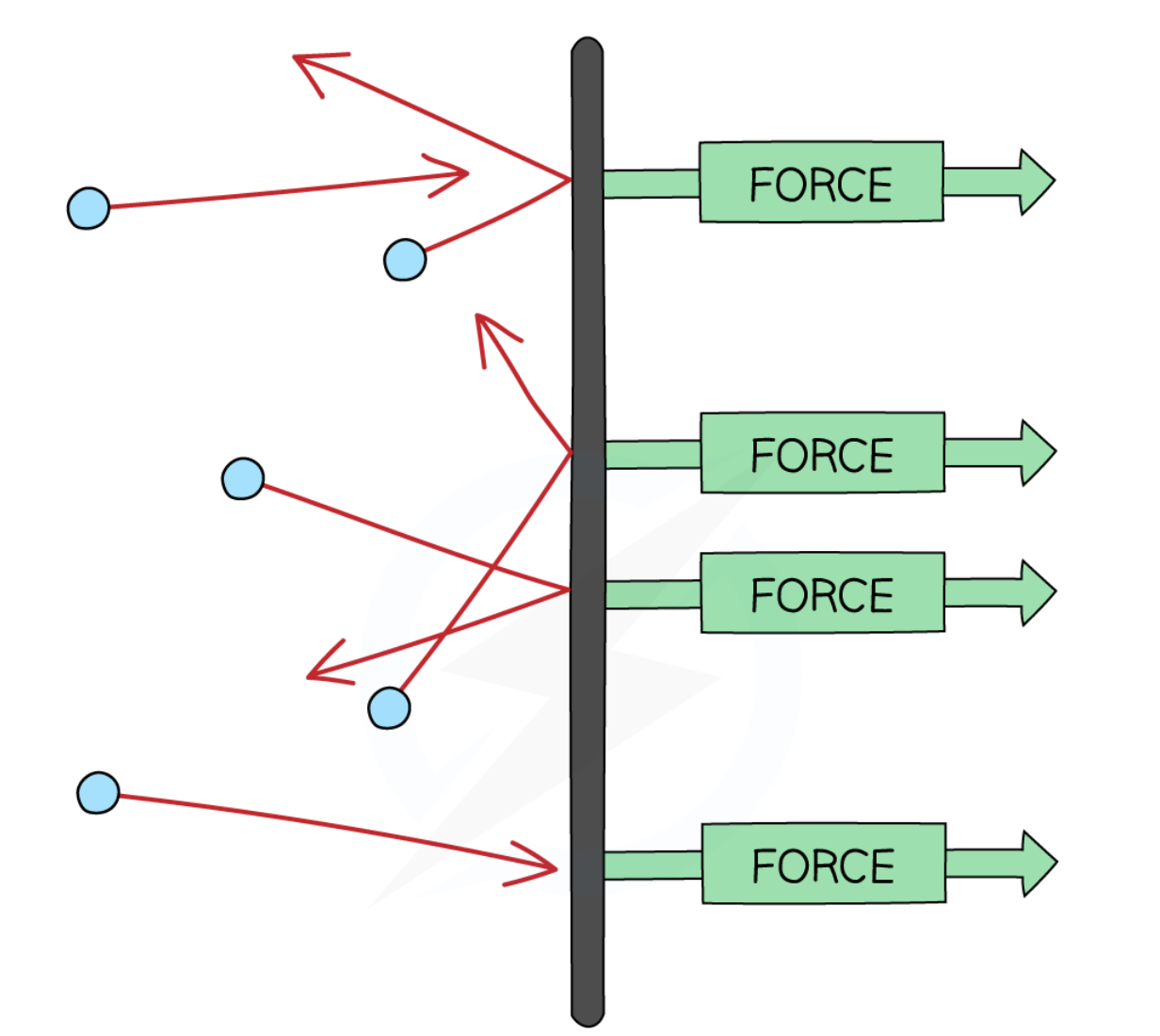
20
Boyle’s Law equation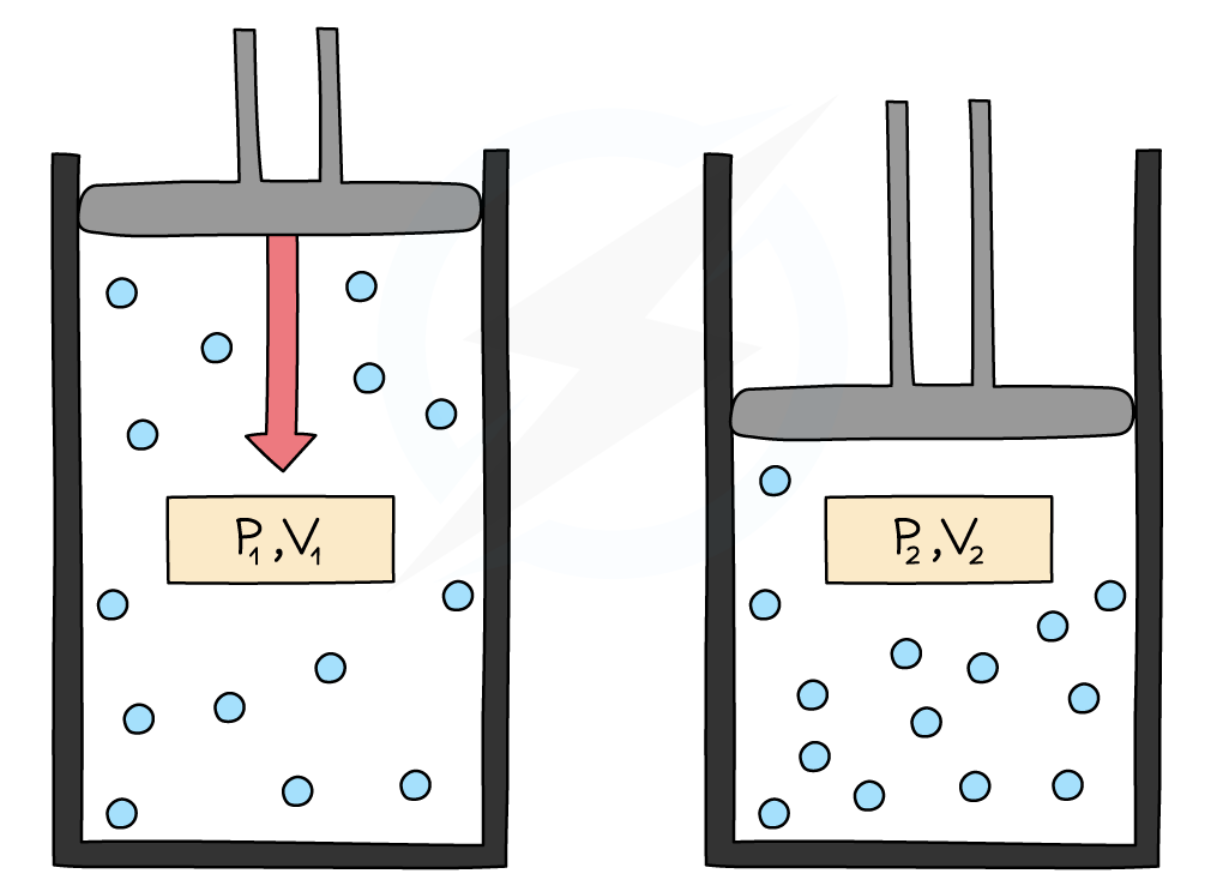
At a constant temperature:
P₁ x V₁ = P₂ x V₂
P₁ - Pressure before (Pa)
V₁ - Volume before (m³)
P₂ - Pressure after (Pa)
V₂ - Volume After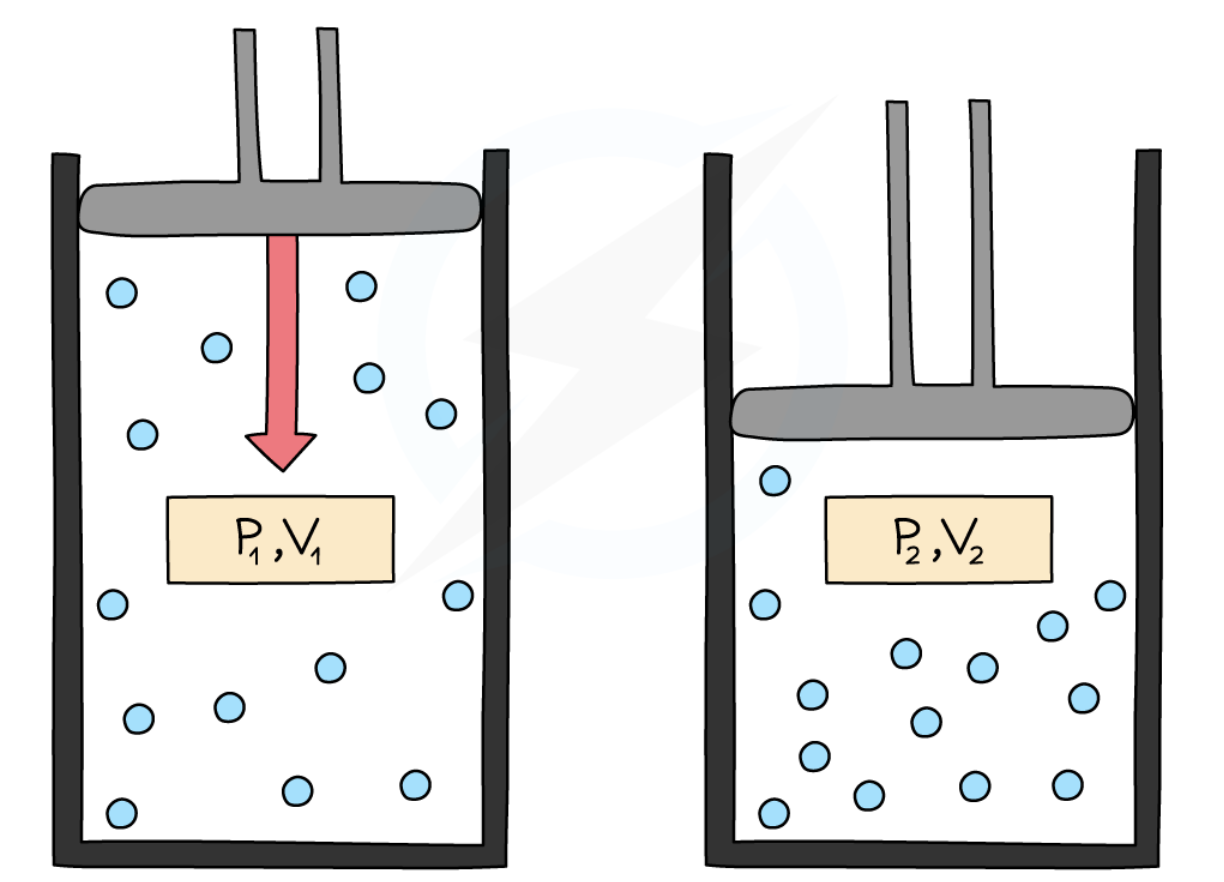
P₁ x V₁ = P₂ x V₂
P₁ - Pressure before (Pa)
V₁ - Volume before (m³)
P₂ - Pressure after (Pa)
V₂ - Volume After
21
Explain Boyle’s law
At a constant temperature, pressure is inversely proportional to volume
If pressure increases, volume decreases
If pressure decreases, volume increases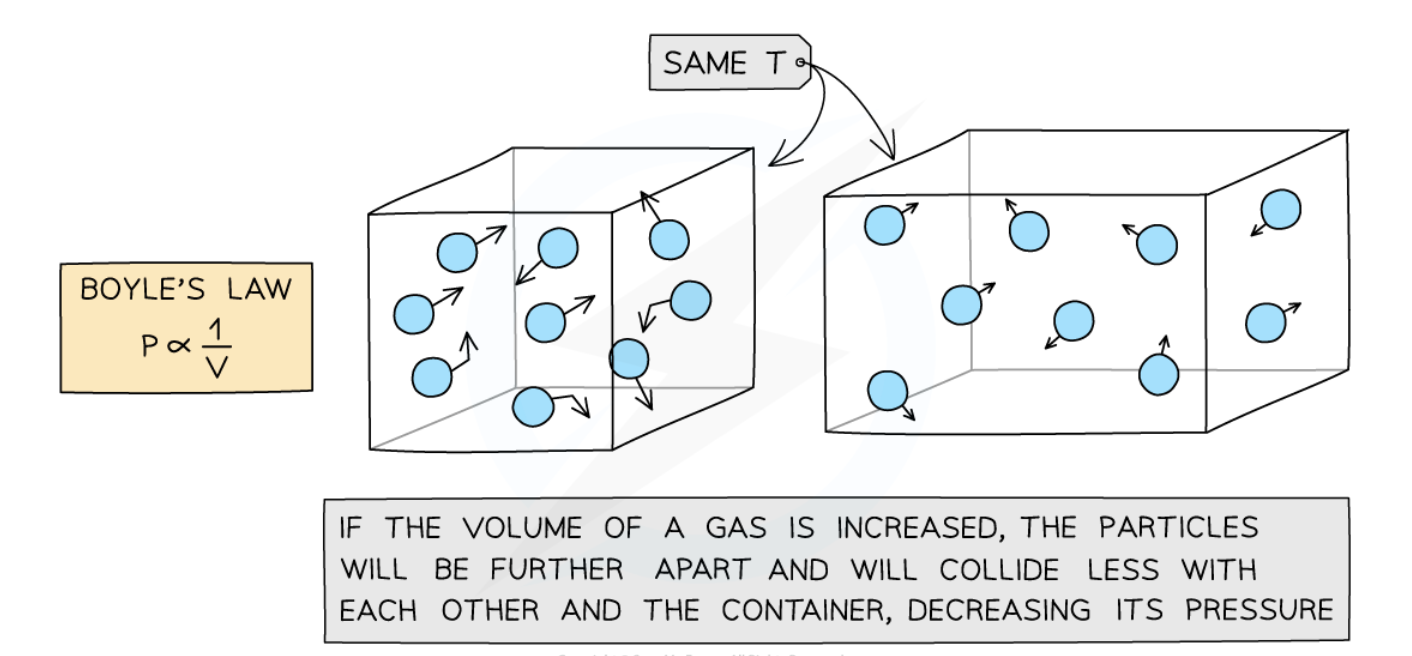
If pressure increases, volume decreases
If pressure decreases, volume increases
22
What happens to the temperature of a gas when work is done on the gas?
Temperature increases
23
What happens to the temperature of a gas when work is done by the gas?
Temperature decreases
24
How can work be done on a gas?
By compressing the gas using a force
[Diagram of compression with force and distance labelled and work done equation]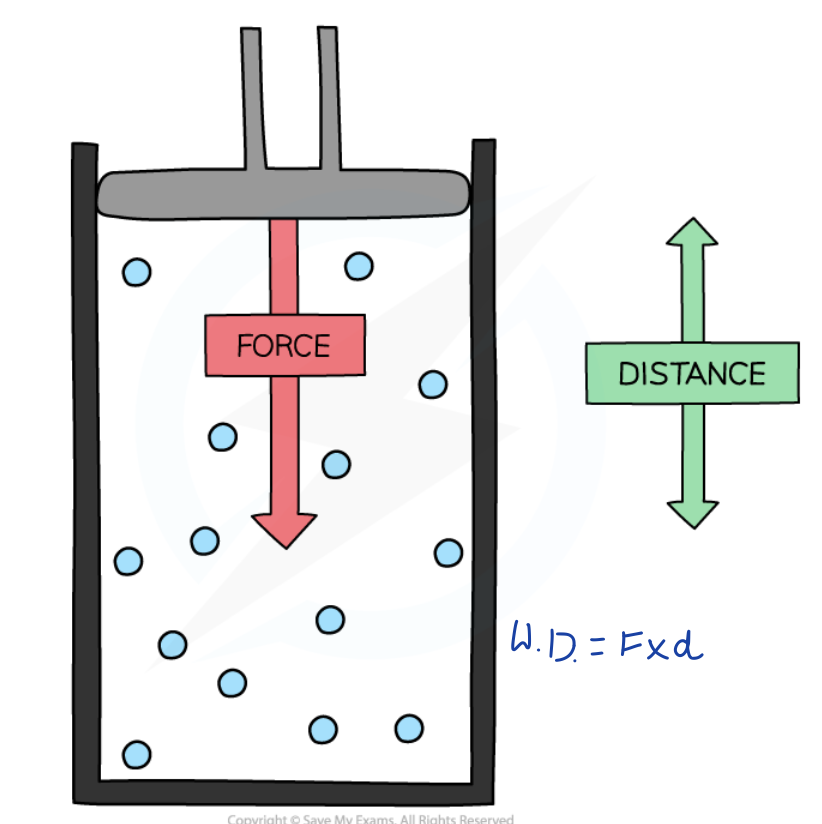
[Diagram of compression with force and distance labelled and work done equation]
25
Explain the energy transfer when work is done on a gas
Doing work on a gas increases the internal energy of the gas which increases the temperature
26
Explain how doing work on a gas can increase the temperature of the gas
Volume decreases so molecules move faster so have a higher kinetic energy, meaning greater temperature