GCSE Edexcel physics 6.1-Atomic Structure
Study these flashcardsFree · spaced repetition · iPhone, Android, Mac & web
All cards
1
Describe an atom
Positively charged nucleus with orbiting electrons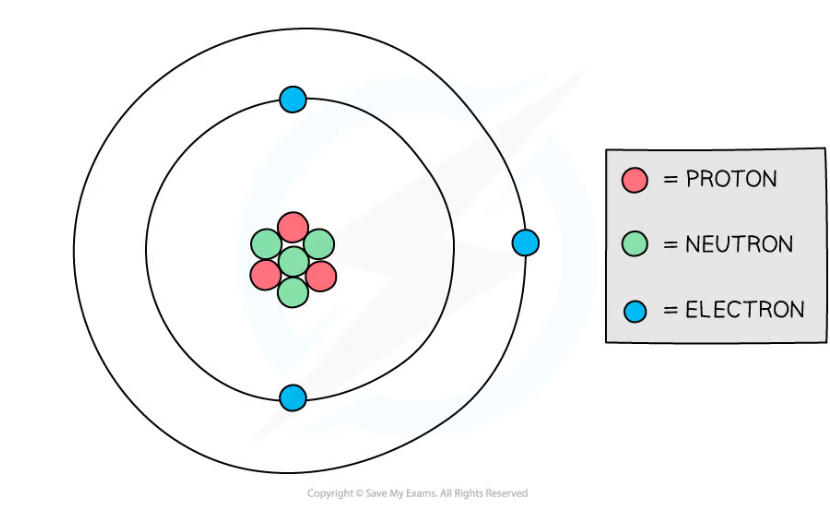
2
What is the nucleus made up of?
Protons and Neutrons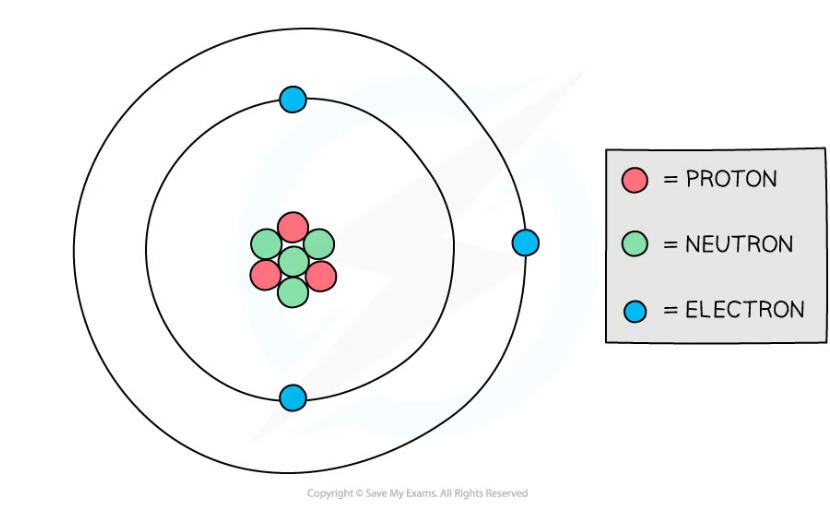
3
Where is almost all of the mass of an atom concentrated?
In the nucleus
4
Compare the size of an atom and its nucleus
The nucleus is much smaller than the atom
5
What is the radius of an atom?
1 × 10⁻¹⁰ m
6
What's the atomic number?
The 'Proton number' - the amount of protons present in the nucleus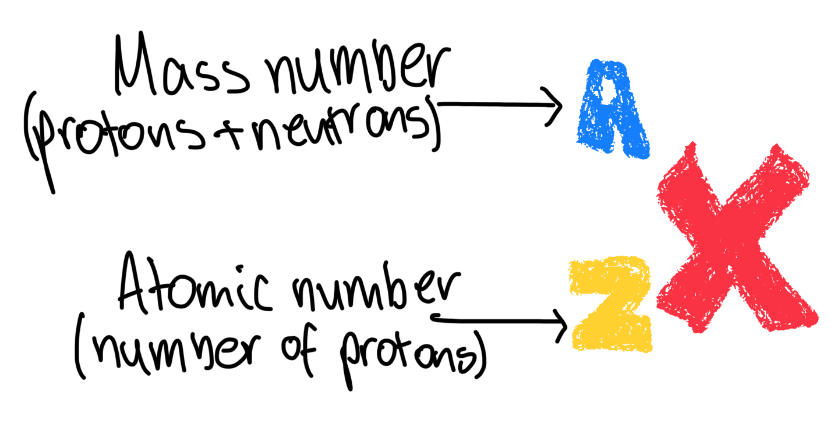
7
What's the mass number?
The 'Nucleon number' - the amount of protons and neutrons present in the nucleus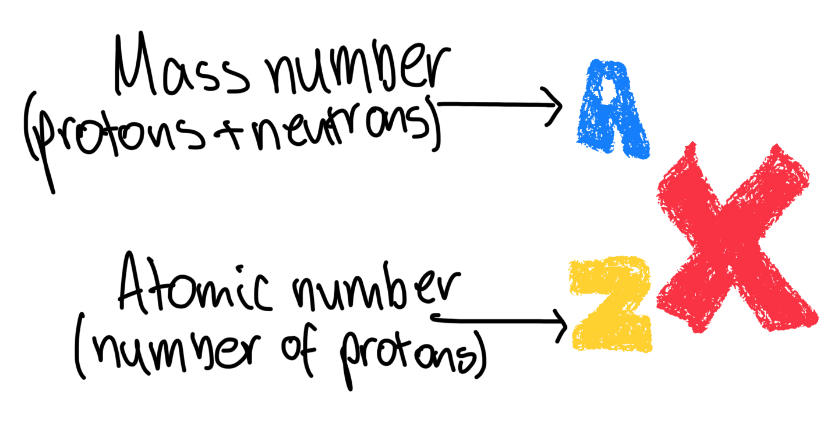
8
How do you work out the number of neutrons in an atom?
Mass number - Atomic number
Or
(Nucleon number - Proton number)
Or
(Nucleon number - Proton number)
9
Define isotope
Same number of protons different number of neutrons
10
What is the relative mass and charge of a proton?
RM: 1
Charge: +1 (positive)
Charge: +1 (positive)
11
What is the relative mass and charge of an electron?
RM: 0
Charge: -1 (negative)
Charge: -1 (negative)
12
What is the relative mass and charge of a neutron?
RM: 1
Charge: 0 (neutral)
Charge: 0 (neutral)
13
What is a positron?
The antiparticle of an electron
Produced during beta-plus decay
Produced during beta-plus decay
14
What is the overall charge of an atom?
0 (neutral)
15
Why is the overall charge of an atom neutral?
It has an equal number of protons and electrons
16
What are energy levels?
The distance at which electrons orbit the nucleus in an atom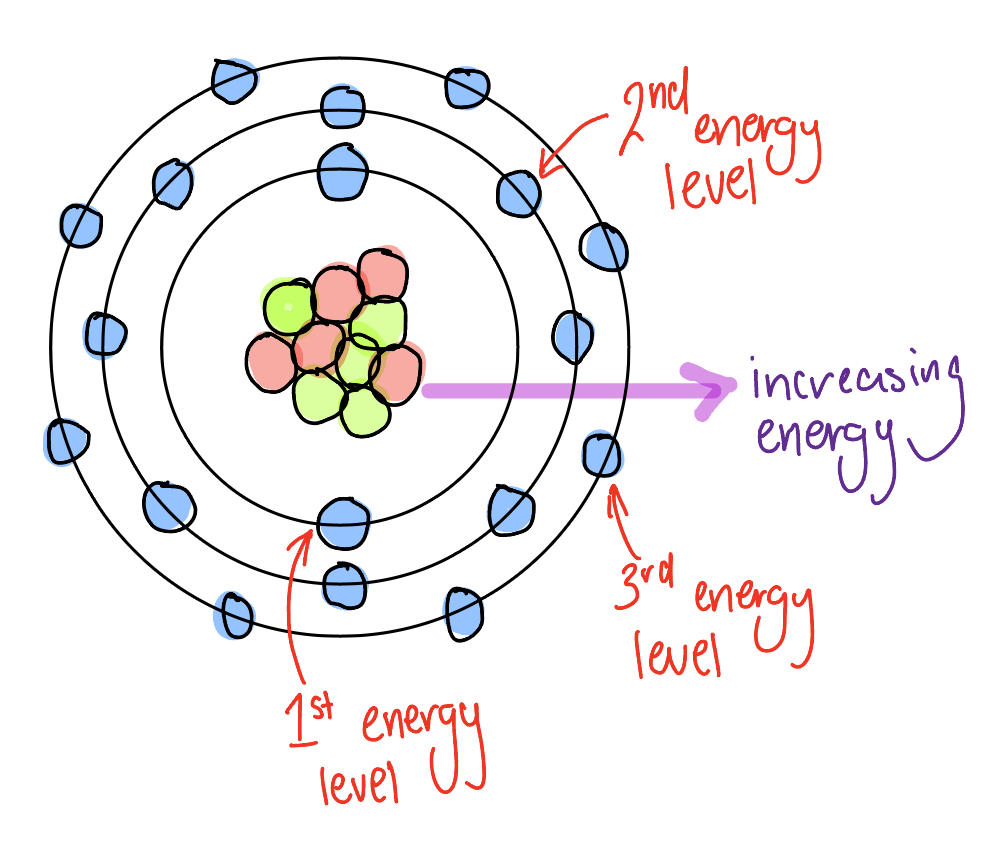
17
How many electrons can occupy the first energy level?
2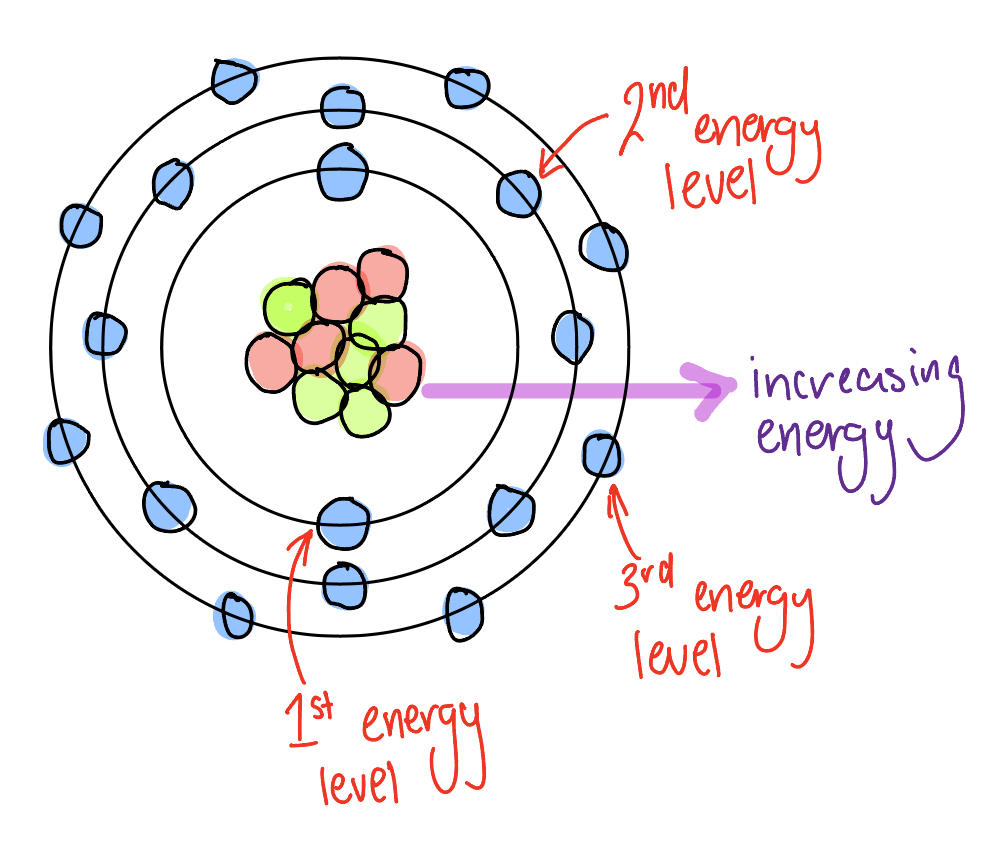
18
How many electrons can occupy the second and third energy levels?
8 in each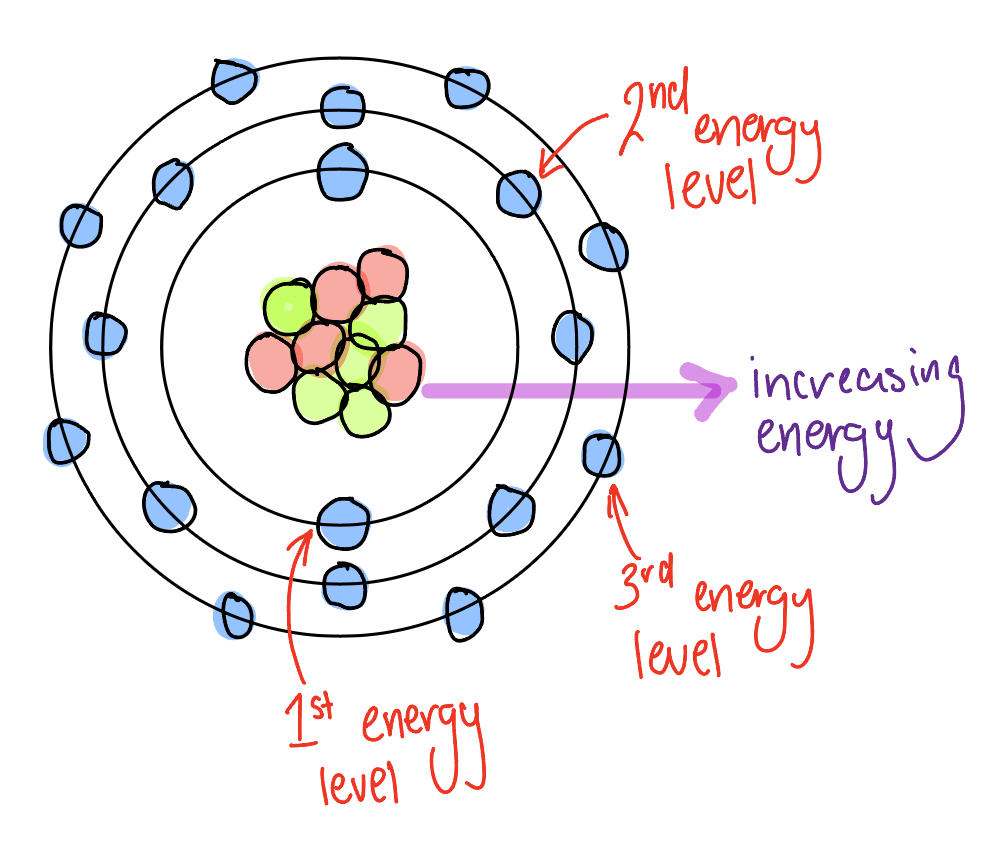
19
Greater distance from the nucleaus means...
electrons have more energy 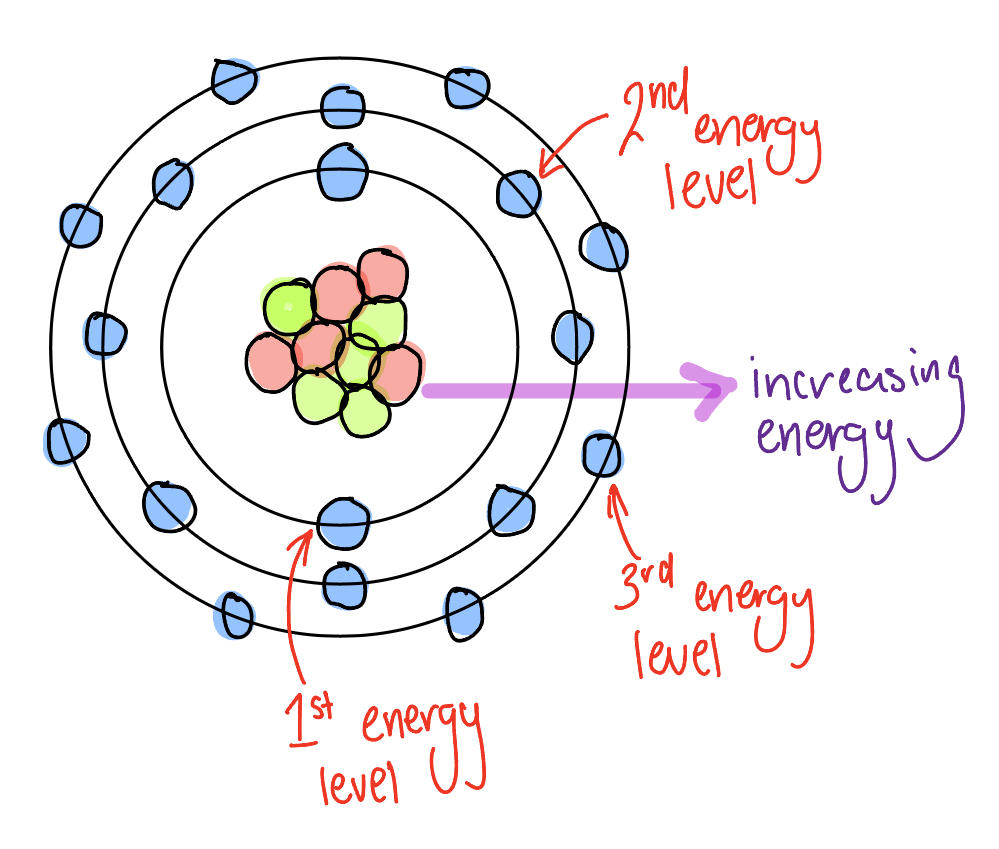
20
How can electrons change energy levels?
By absorbing or emitting EM radiation
21
What happens when electrons absorb EM radiation?
They move to a higher energy level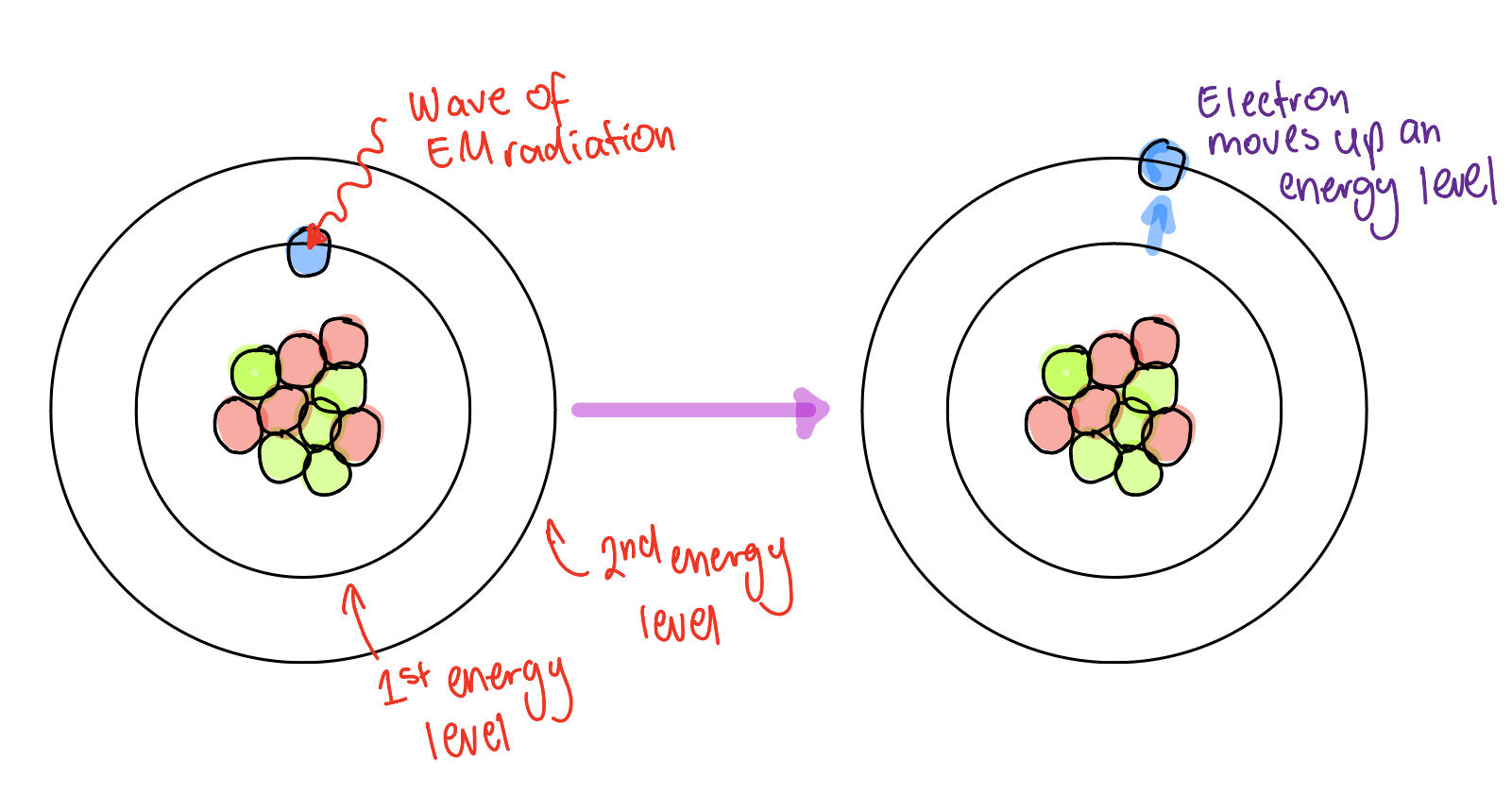
22
What happens when electrons emit EM radiation?
It moves to a lower energy level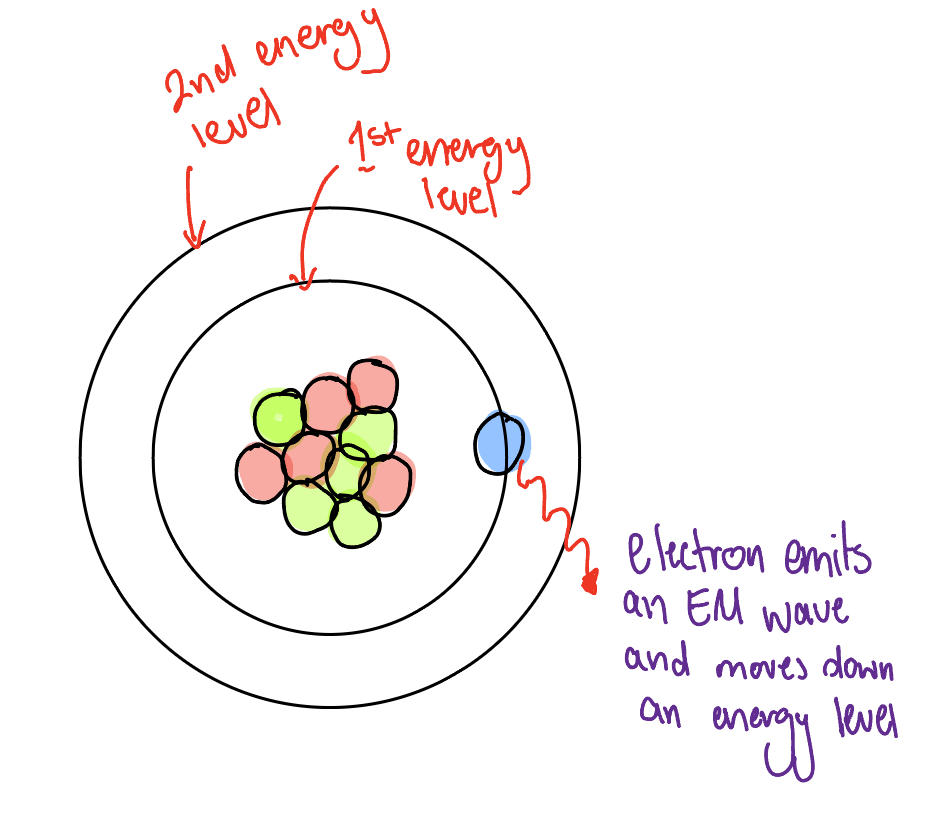
23
How are positive ions formed?
When atoms lose electrons from their outer shells
24
What type of ion is formed when an atom loses an electron?
Positive
25
How can atoms lose electrons from their outer shell?
By friction (rubbing together)
When they absorb enough energy from EM radiation to leave the atom
Chemical reactions
When they absorb enough energy from EM radiation to leave the atom
Chemical reactions
26
What is an ion?
An atom or particle with a non-zero charge
They are more reactive than atoms
They are more reactive than atoms