1.2 Periodic Table
Study these flashcardsFree · spaced repetition · iPhone, Android, Mac & web
All cards
1
How did Dmitri Mendeleev arrange elements known at the time in a periodic table?
(Horizontally) in order of increasing relative atomic mass and
(Vertically) based on the properties of the elements and their compounds
(Vertically) based on the properties of the elements and their compounds
2
Once he arranged the elements in his Periodic Table in order of increasing mass, Dmitri Mendeleev swapped some elements around. Why?
So that elements were in groups (columns) that shared similar properties
3
How did Dmitri Mendeleev use his table to predict the existence and properties of elements that had not yet been discovered?
He left gaps in the table
He used the properties of elements around the gap to predict the properties of the missing element
He used the properties of elements around the gap to predict the properties of the missing element
4
Why did Dmitri Mendeleev leave gaps in his table?
For elements not yet discovered
5
Mendeleev thought he arranged elements in order of increasing relative atomic mass. Why was this not always true in his periodic table?
Subatomic particles had not yet been discovered at this time
So the existence of isotopes was not known
So he used a combination of mass and chemical properties to arrange them
So the existence of isotopes was not known
So he used a combination of mass and chemical properties to arrange them
6
What is a row in the periodic table called?
Period
7
What is a column in the periodic table called?
Group
8
What does the period number tell you?
How many shells of electrons the atom has
9
What does the group number tell you?
How many electrons the atom has in its outer shell
10
How are elements in the modern periodic table arranged?
Arranged in order of increasing atomic number, in rows called periods
Each element has one proton more than the element before it
Each element has one proton more than the element before it
11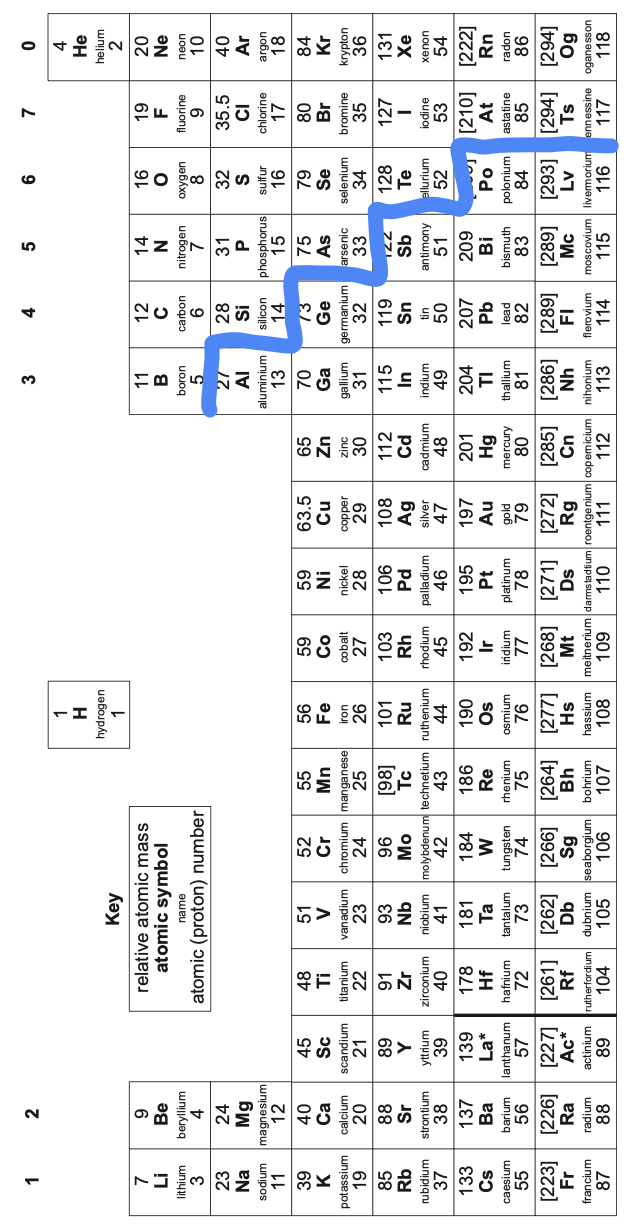
Metals and non-metals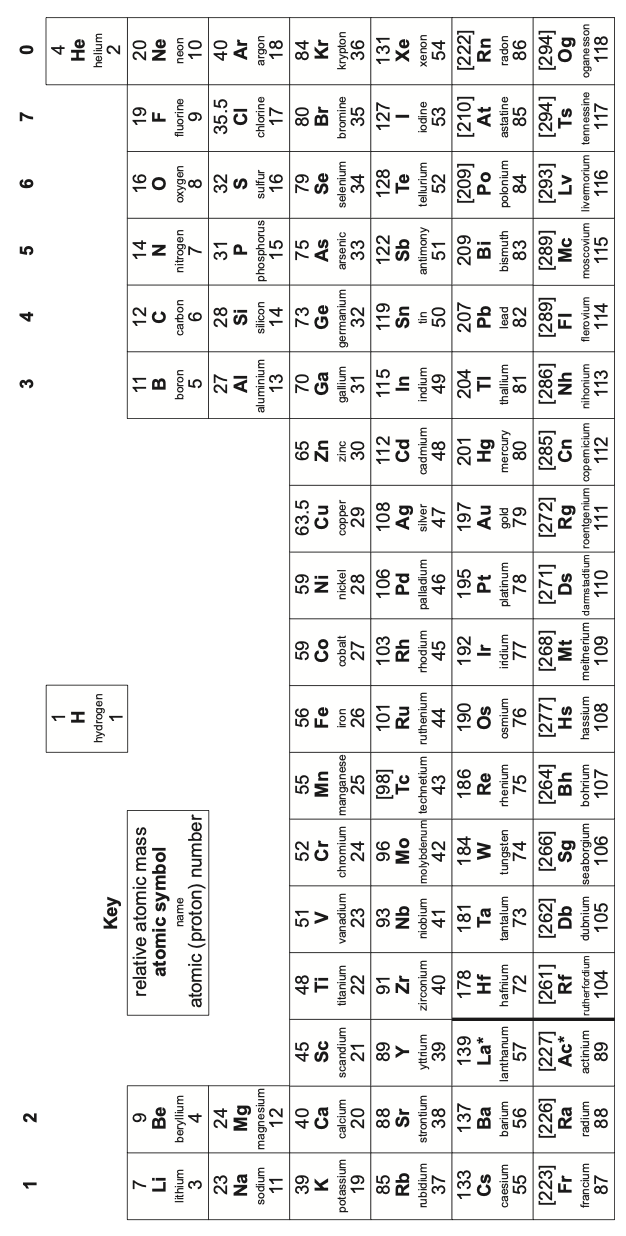
12
Differences in atomic structures between metals and non-metals
Metals - 1-3 electrons in outer shell
Form positive ions as it is easier to lose electrons
Non-metals - 4-8 electrons in outer shell
Form negative ions as it is easier to gain electrons
Form positive ions as it is easier to lose electrons
Non-metals - 4-8 electrons in outer shell
Form negative ions as it is easier to gain electrons
13
How many electrons can each electron shell have?
1st - 2 electrons
2nd and 3rd - 8 electrons
2nd and 3rd - 8 electrons
14
How is the electronic configuration of an element related to its place in the periodic table?
Period number - number of electron shells
Group number - number of electrons in the outer shell
Group number - number of electrons in the outer shell