GCSE Edexcel Physics 5.2 - Electromagnetic Waves
Study these flashcardsFree · spaced repetition · iPhone, Android, Mac & web
All cards
1
What are electromagnetic waves?
Transverse waves
that transfer energy from one point to another
All EM waves travel at the same speed in a vacuum
that transfer energy from one point to another
All EM waves travel at the same speed in a vacuum
2
Describe the energy transfers in a microwave (EM waves)
Electronics in microwaves emit microwave radiation
Water molecules in food absorb microwaves and heat up
The water molecules heat up the rest of the food
Water molecules in food absorb microwaves and heat up
The water molecules heat up the rest of the food
3
Explain the energy transfers when an object is hot (EM waves)
All hot objects emit infrared radiation
Infrared radiation can be absorbed by other objects and make them warmer
Infrared radiation can be absorbed by other objects and make them warmer
4
Describe the energy transfers from the sun (EM waves)
The sun emits visible light, infrared and ultraviolet waves
Visible light allows creatures to see
Infrared heats up the earth
Ultraviolet provides plants with energy for photosynthesis
Visible light allows creatures to see
Infrared heats up the earth
Ultraviolet provides plants with energy for photosynthesis
5
Electromagnetic spectrum (energy, wavelength and frequency)
Red Martians Invaded Venus Using X-ray Guns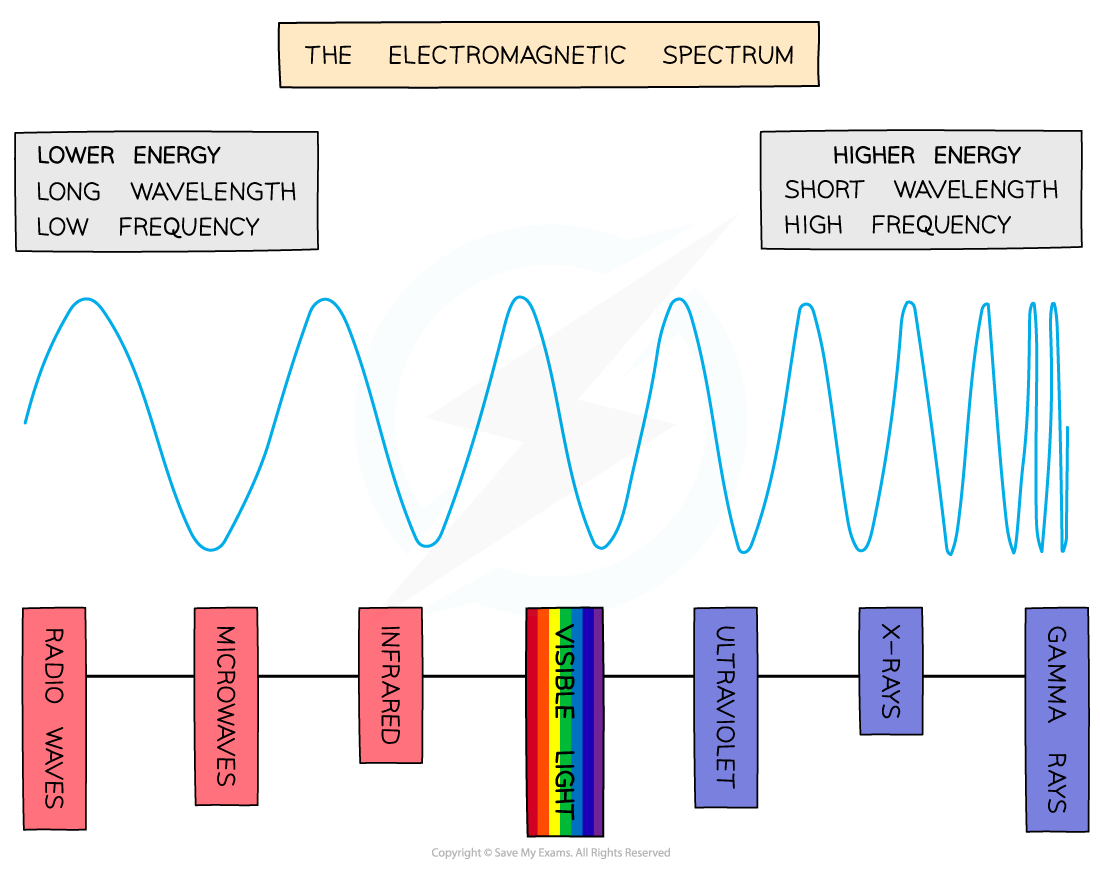
6
EM spectrum - as frequency increases…
Energy increases
Wavelength decreases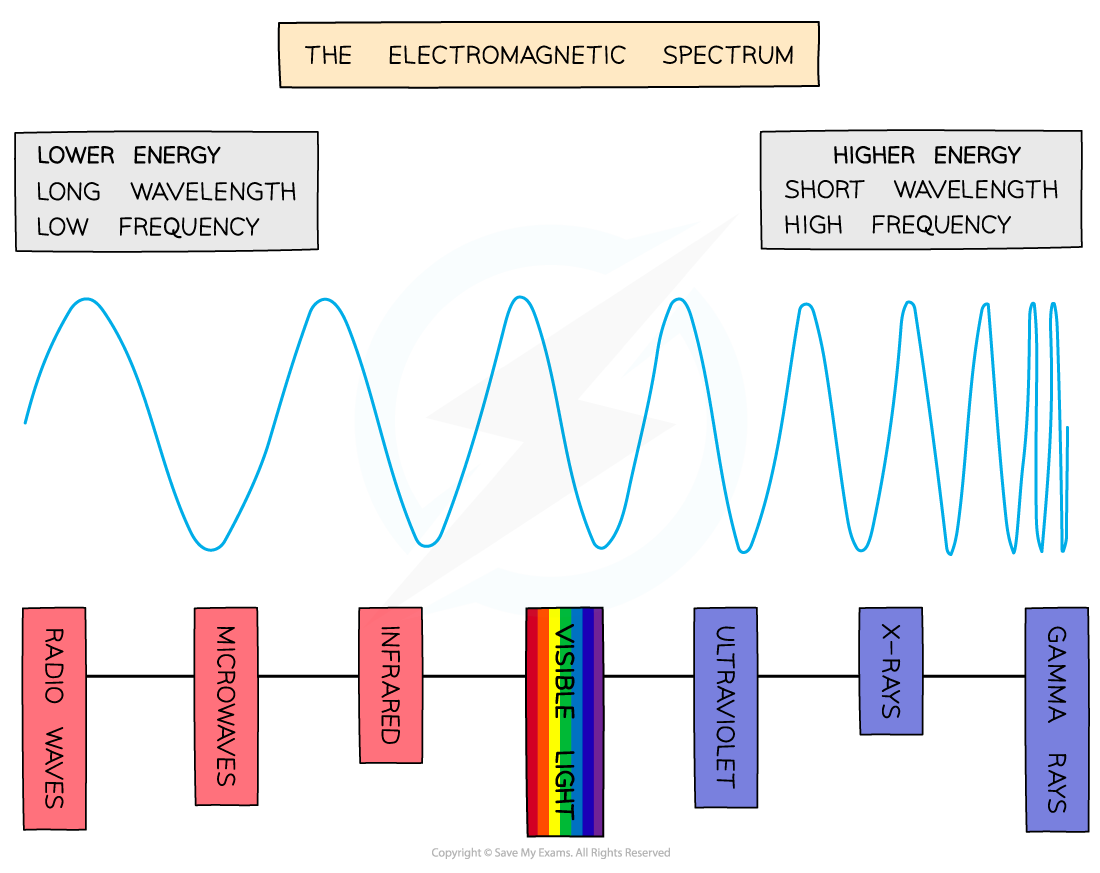
Wavelength decreases
7
EM spectrum - as wavelength increases…
Energy decreases
Frequency decreases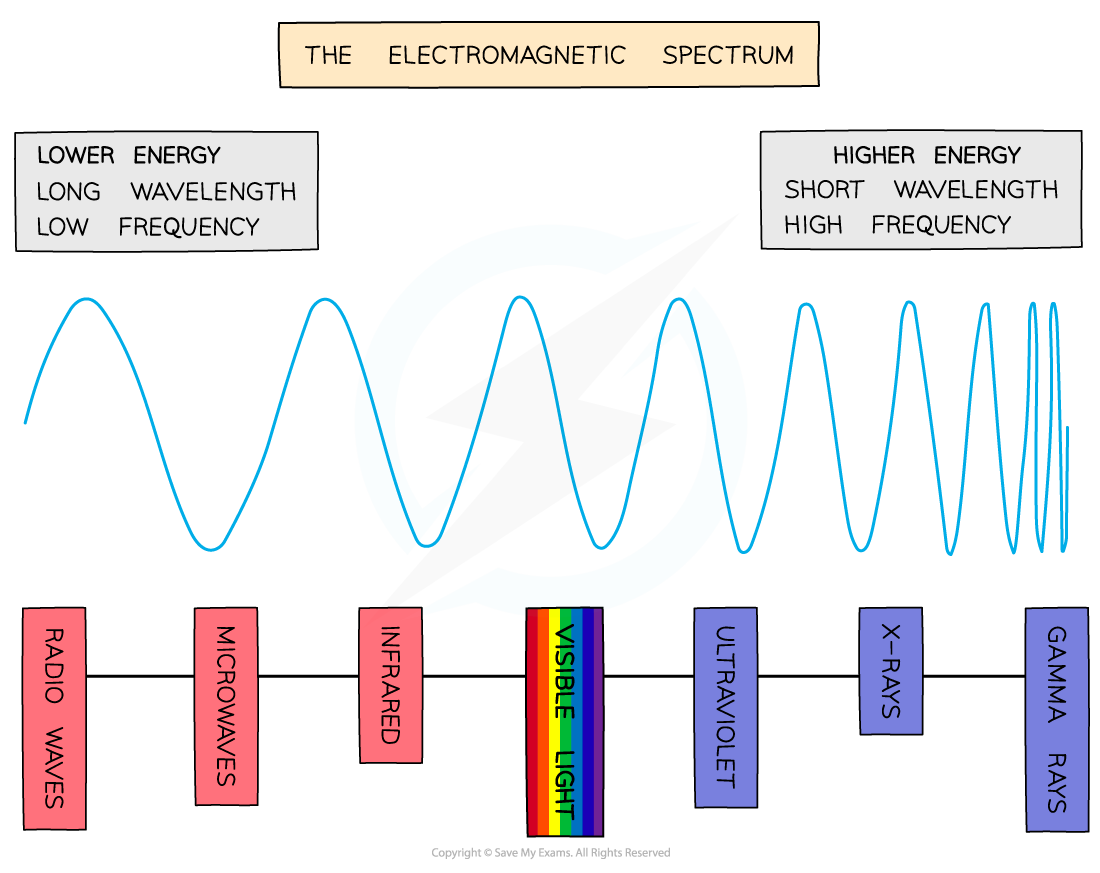
Frequency decreases
8
EM spectrum - as energy increases…
Wavelength decreases
Frequency increases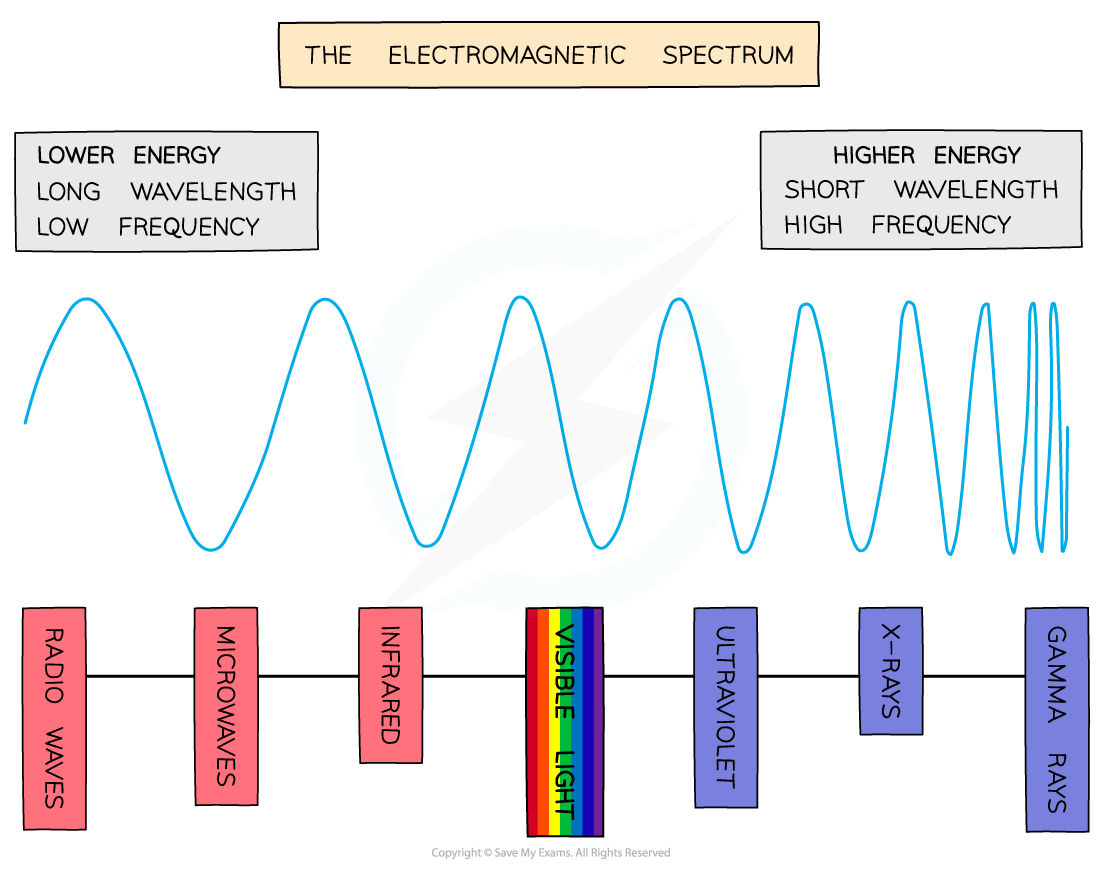
Frequency increases
9
Why are EM waves with higher frequencies more dangerous?
Higher frequency means higher energy
High energy EM waves are highly ionising
Meaning they are harmful to cells and tissues
They can cause cancer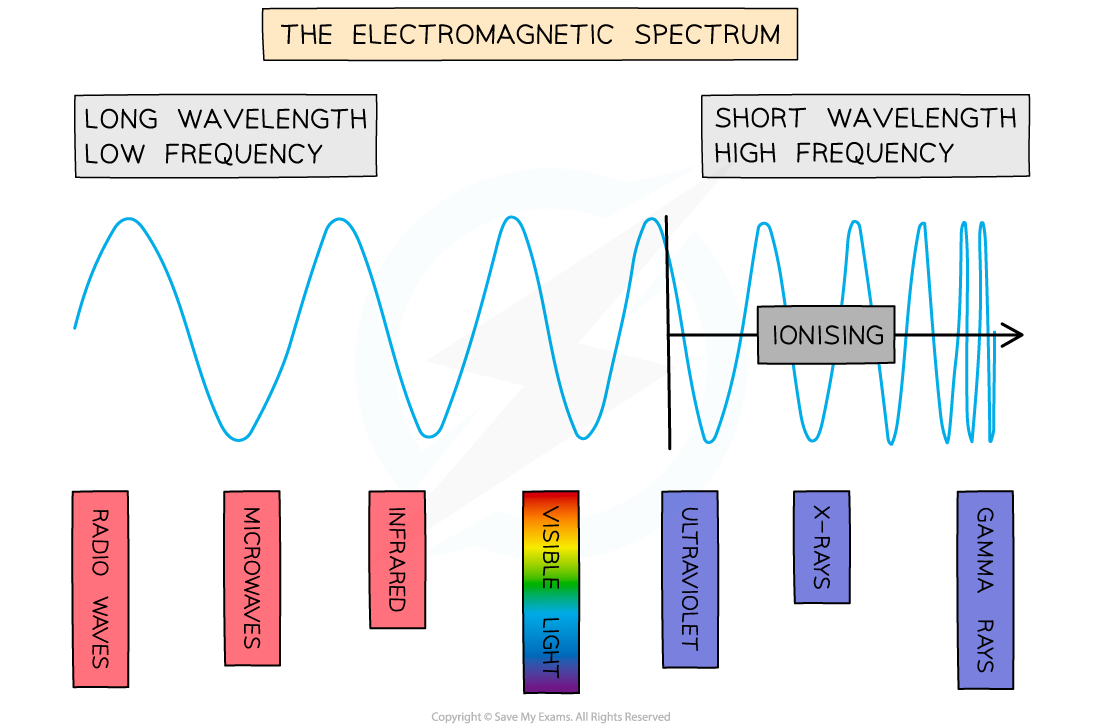
High energy EM waves are highly ionising
Meaning they are harmful to cells and tissues
They can cause cancer
10
How are EM waves with higher wavelengths useful? Are they dangerous?
Higher wavelength means less energy
Low energy EM waves are not ionising - not harmful to cells
They are useful in communications (radio waves)
Low energy EM waves are not ionising - not harmful to cells
They are useful in communications (radio waves)
11
What types of EM waves can human eyes detect?
Waves in the visible light spectrum
12
Visible light spectrum (energy, wavelength and frequency)
ROYGBIV
As wavelength increase, frequency and energy decreases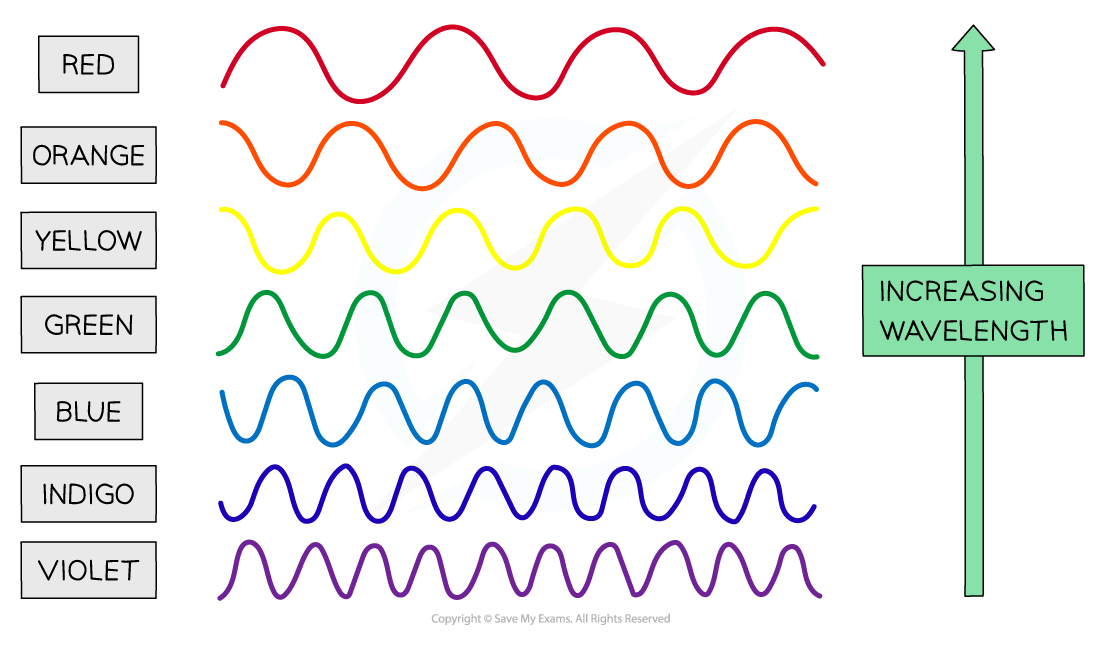
As wavelength increase, frequency and energy decreases
13
What types of radiation do all bodies emit?
Thermal radiation - EM waves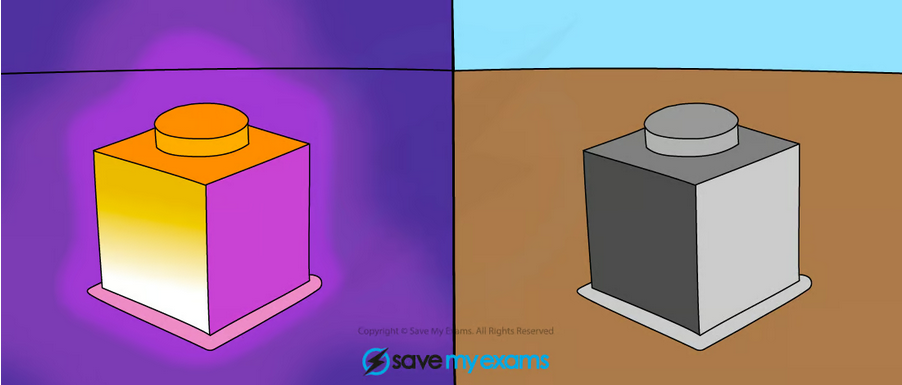
14
What types of EM radiation do bodies usually emit?
Infrared radiation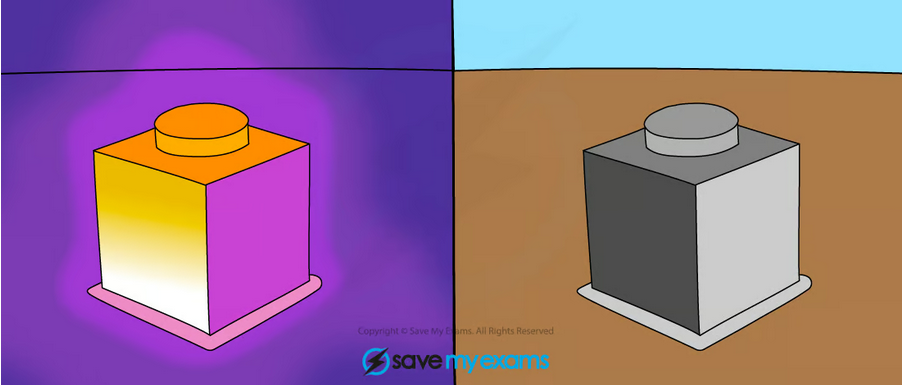
15
What type of EM radiation can very hot (1000-6000 degrees celcius) bodies emit?
Visible light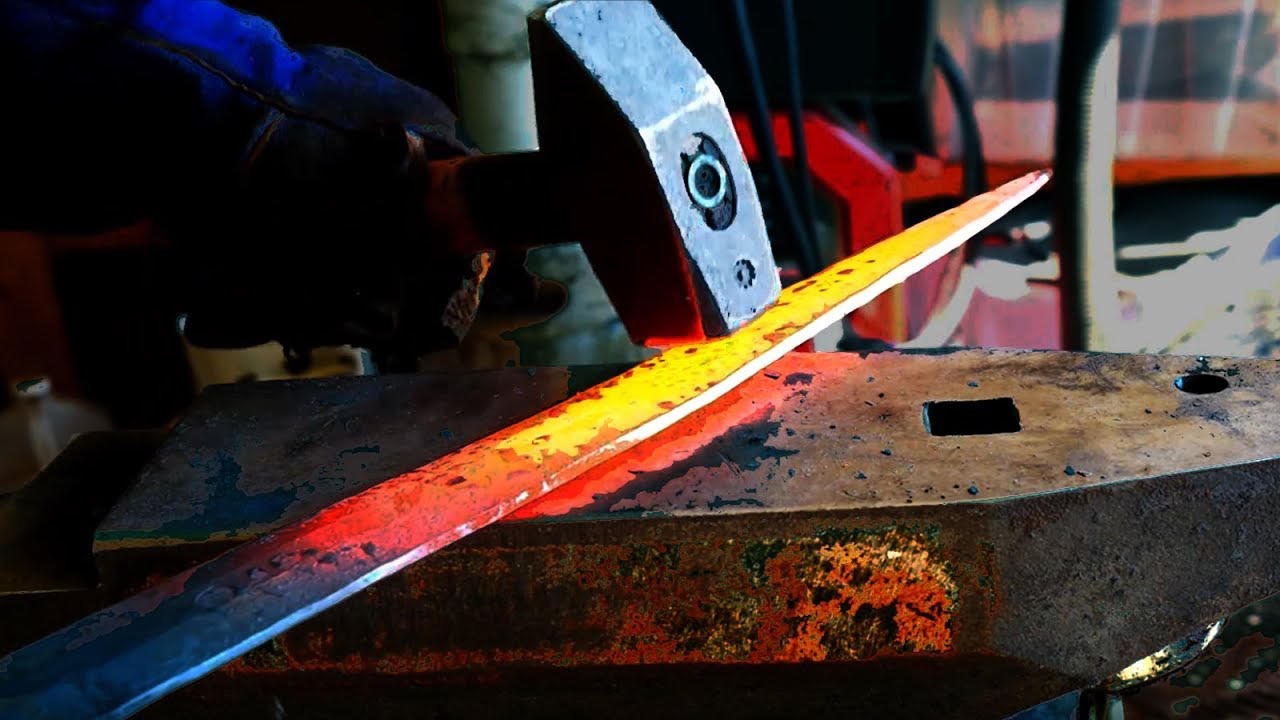
16
What type of EM radiation can extremely hot (6000+ degress celcius) bodies emit?
Ultraviolet or even X-rays
17
As temperature of a body increases, what happens to the thermal radiation curve?
Peak intensity is greater, peak wavelength is lower
Smaller wavelength means higher energy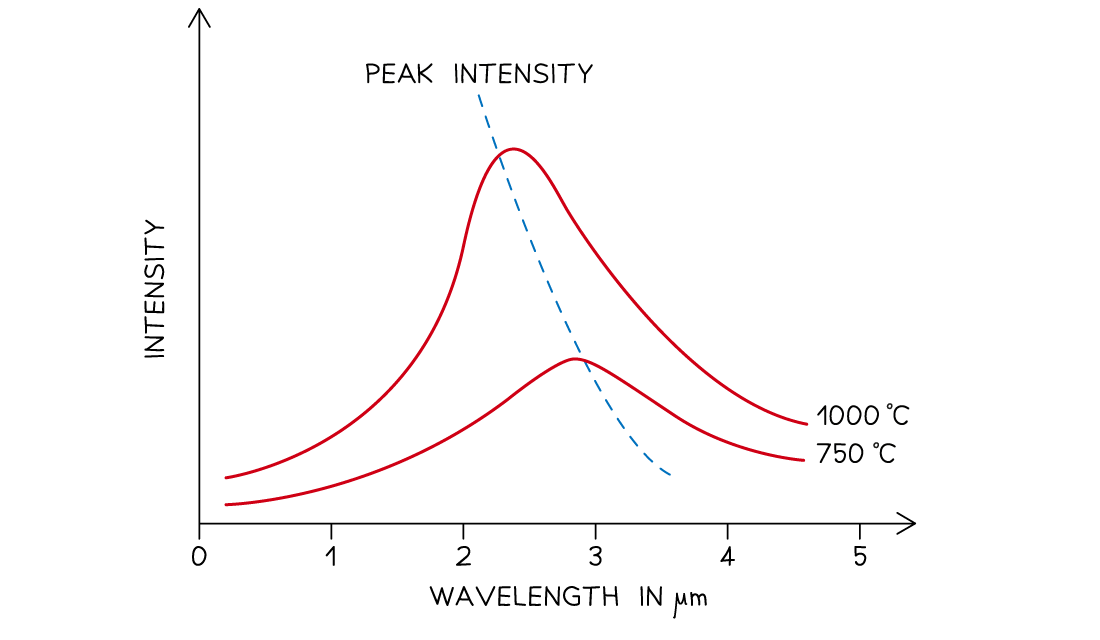
Smaller wavelength means higher energy
18
What makes an EM wave more dangerous?
Higher frequency - means more energy and more ionising
19
Which EM waves are ionising?
UV, X-rays and Gamma rays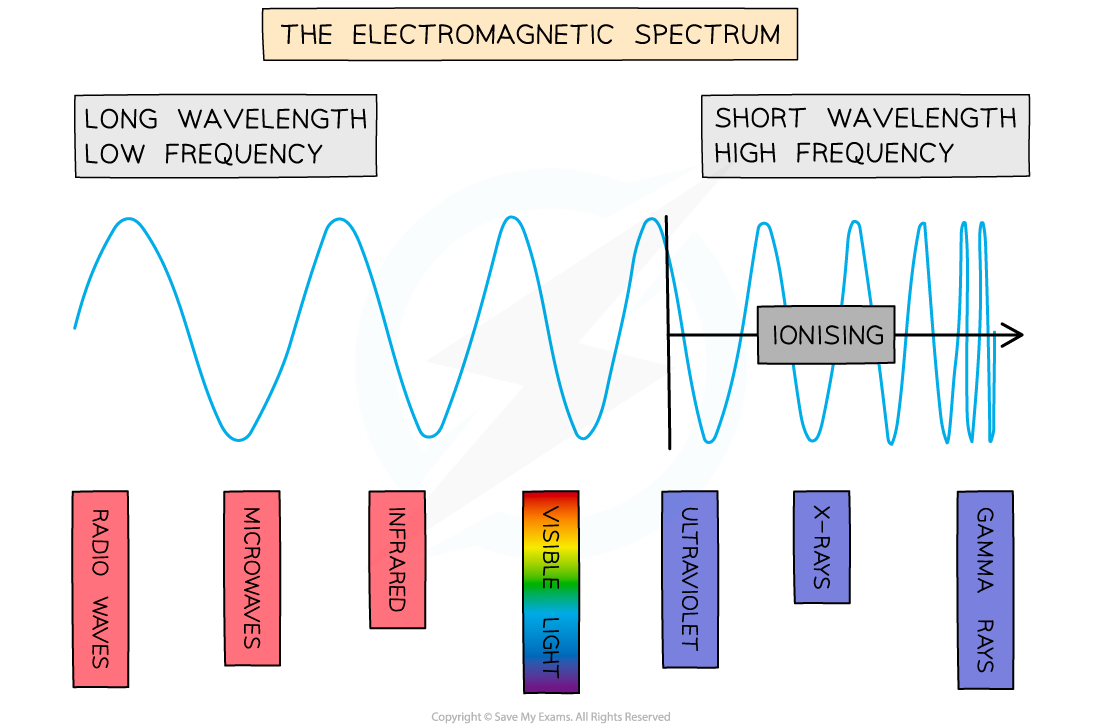
20
Why is ionising radiation dangerous?
They can damage cells and cause mutations, causing cancer.
21
Dangers of radio waves
No known danger
22
Dangers of microwaves
Heat damage to internal organs
The water molecules absorb microwaves and heat up
The water molecules absorb microwaves and heat up
23
Dangers of infrared waves
Skin burns
24
Dangers of visible light
Bright light can cause eye damage
25
Dangers of UV waves
Eye-damage
Sunburn
Skin cancer
Sunburn
Skin cancer
26
Dangers of X-rays and Gamma rays
Kills cells
Mutations
Cancer
Mutations
Cancer
27
Uses of radio waves
Broadcasting
Communications
Satellite transmissions
Communications
Satellite transmissions
28
Uses of microwaves
Cooking
Communications (WiFi and mobile phones)
Satellite transmissions
Communications (WiFi and mobile phones)
Satellite transmissions
29
Uses of infrared waves
Cooking
Thermal imaging
Short-range communications
Optical fibres
Television remote controls
Security systems
Thermal imaging
Short-range communications
Optical fibres
Television remote controls
Security systems
30
Uses of visible light
Vision
Photography
Illumination
Photography
Illumination
31
Uses of UV waves
Security marking
Fluorescent lamps
Detecting forged bank notes
Disinfecting water
Fluorescent lamps
Detecting forged bank notes
Disinfecting water
32
Uses of X-rays
Medical x-rays
Airport security scanners
Observing internal structures of objects
Airport security scanners
Observing internal structures of objects
33
Uses of gamma rays
Sterlising food and medical equipment
Detection of cancer
Treatment of cancer
Detection of cancer
Treatment of cancer
34
Why are radio waves useful for long-range communications?
They can be reflected from the Earth’s atmosphere
35
Why can microwaves be used for satellite communications?
They can penetrate the Earth’s atmosphere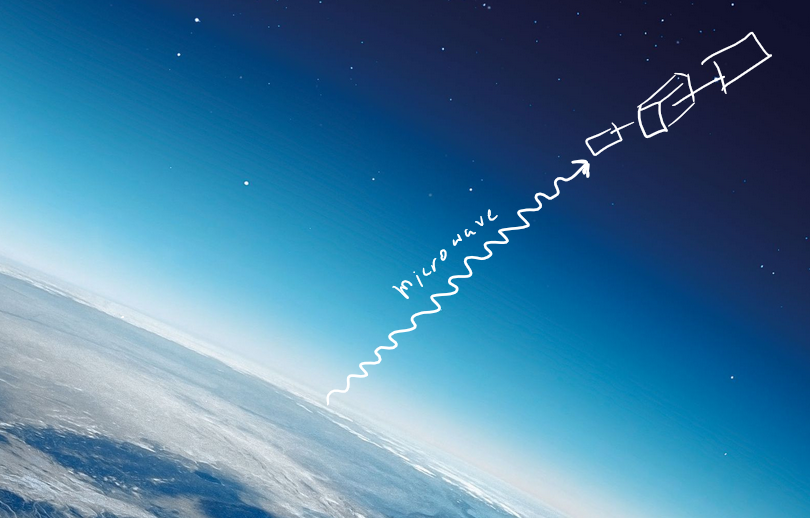
36
Why are infrared waves useful for optical fibre?
They can undergo total internal reflection (TIR)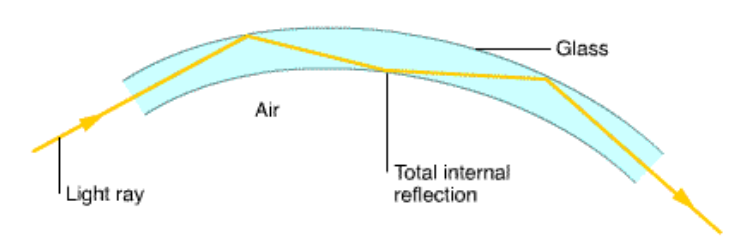
37
Why are x-rays useful for photographing bones?
X-rays can penetrate soft tissue but not bone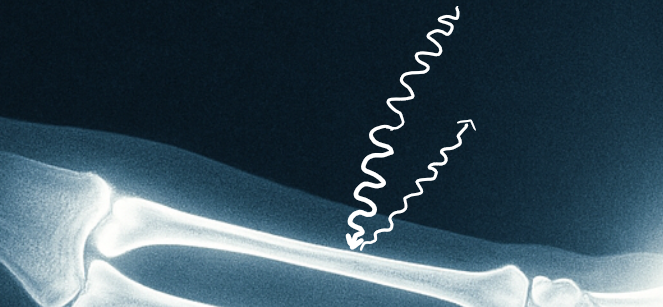
38
Why are gamma rays useful for sterilising food and medical equipment?
Gamma rays are ionising and kill bacteria
39
What happens when an EM wave hits an atom?
The wave can be absorbed by an electron
Electron moves up to higher energy level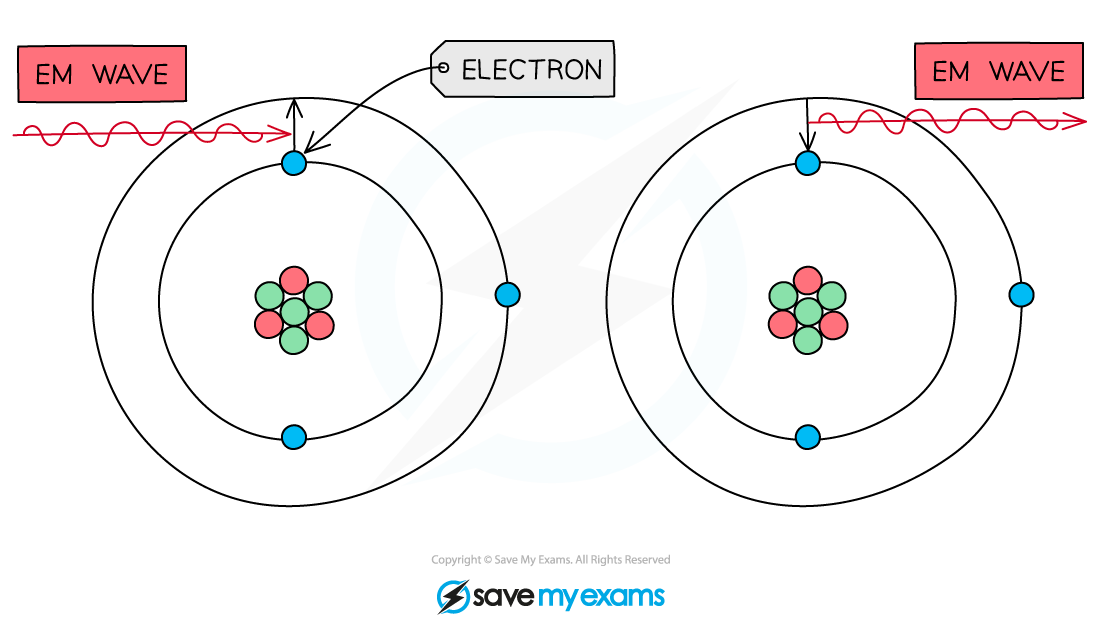
Electron moves up to higher energy level
40
What happens when an electron moves down to a lower energy level?
It will emit an EM wave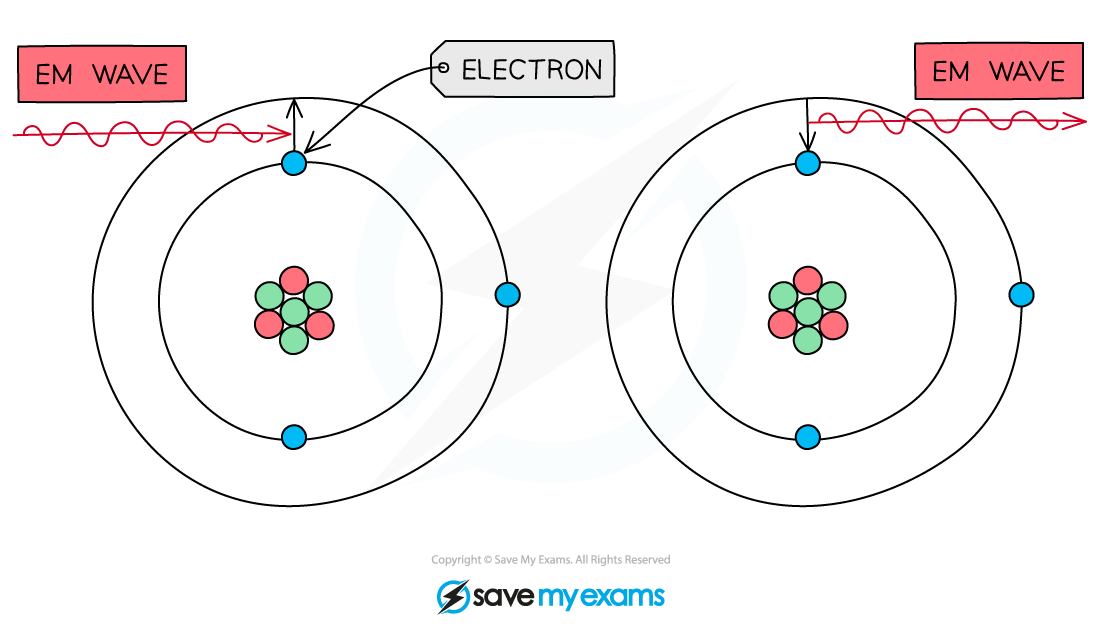
41
Which waves can be absorbed and emitted by electrons?
Visible and ultraviolet EM waves