GCSE Edexcel Physics 4.1 - Waves
Study these flashcardsFree · spaced repetition · iPhone, Android, Mac & web
All cards
1
What do waves transfer?
Energy (and sometimes information)
2
Do waves transfer matter when they move?
No
3
Describe the motion of particles in water waves
Water waves are transverse waves
Meaning particles vibrate perpendicular to the direction of the wave
Meaning particles vibrate perpendicular to the direction of the wave
4
Do the particles in water waves move with the wave?
No, they vibrate up and down around a fixed position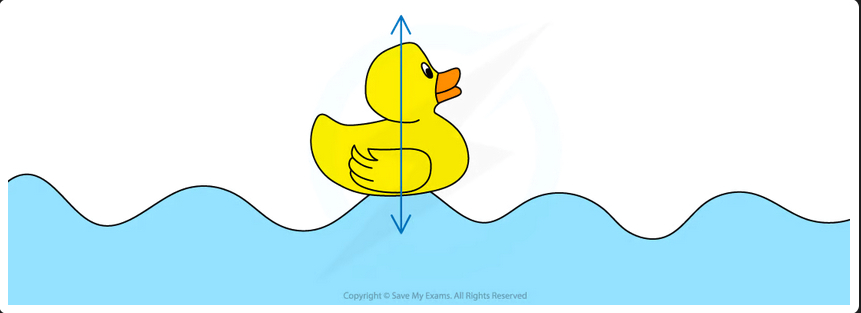
5
Describe the motion of particles in a sound wave
Sound waves are longitudinal waves
Meaning particles vibrate parallel to the direction of the wave
Meaning particles vibrate parallel to the direction of the wave
6
Do the particles in sound waves move with the wave?
No, they vibrate in the same direction as the wave around a fixed point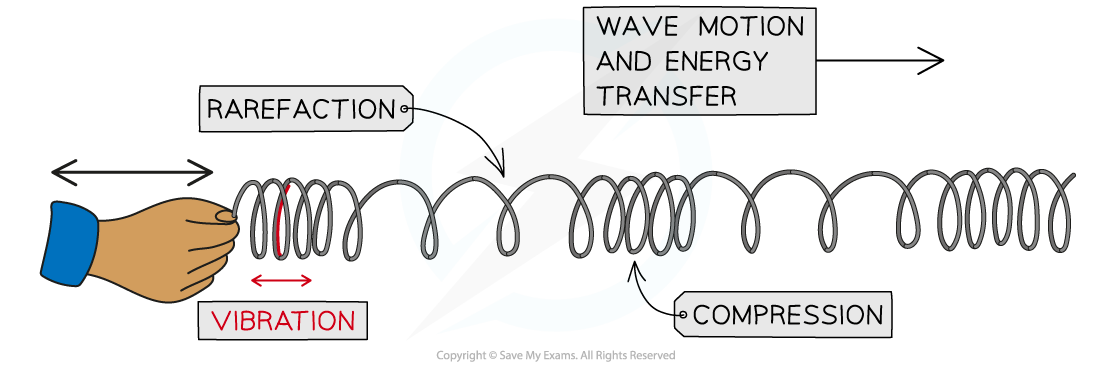
7
Define frequency
The number of waves passing a point in a second
Frequency (Hz) = 1 / Time Period (s)
f = 1 / T
Frequency (Hz) = 1 / Time Period (s)
f = 1 / T
8
Define wavelength
The distance from one point on the wave to the same point on the next wave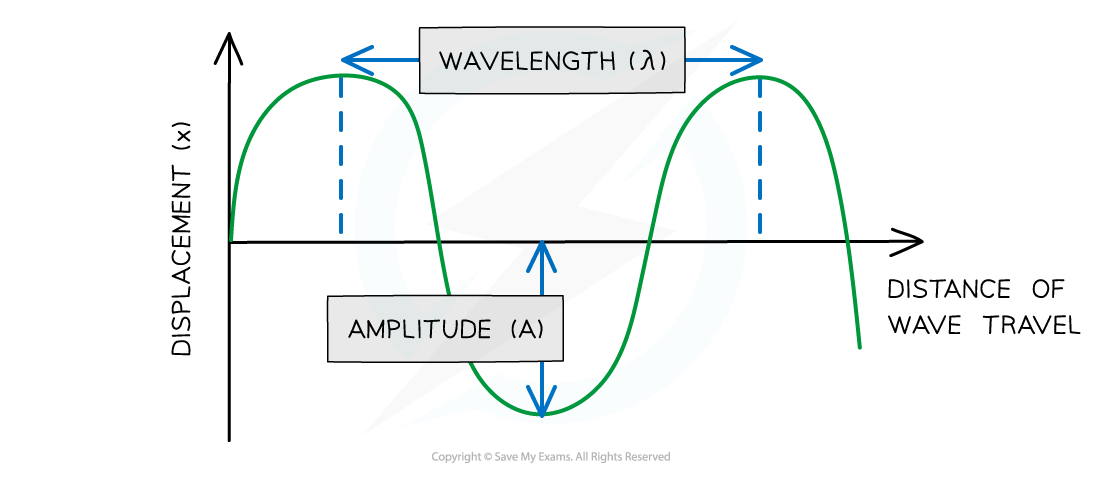
9
Define amplitude
The distance from the rest position to the peak or trough of a wave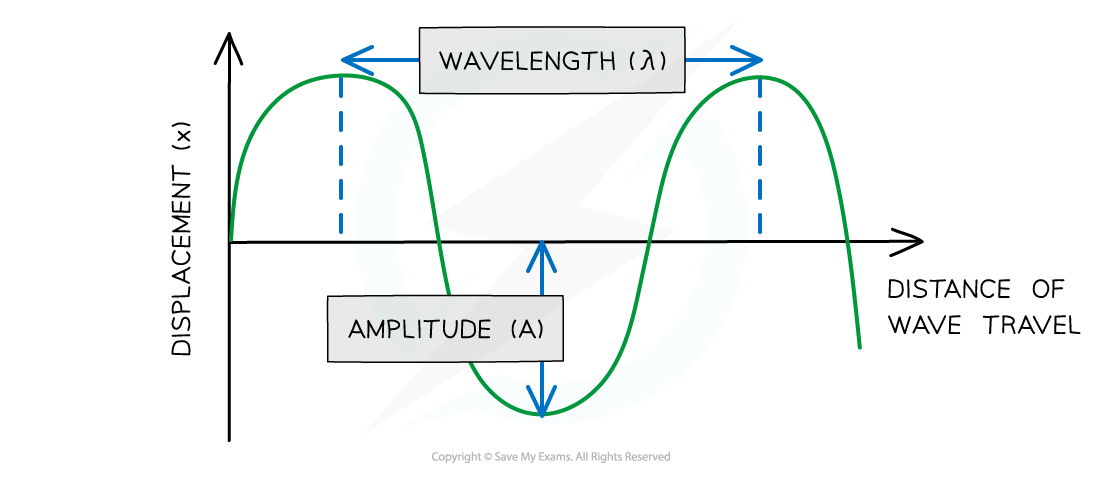
10
Define time period
The time taken for a single wave to pass a point
Time Period (s) = 1 / Frequency (Hz)
T = 1 / f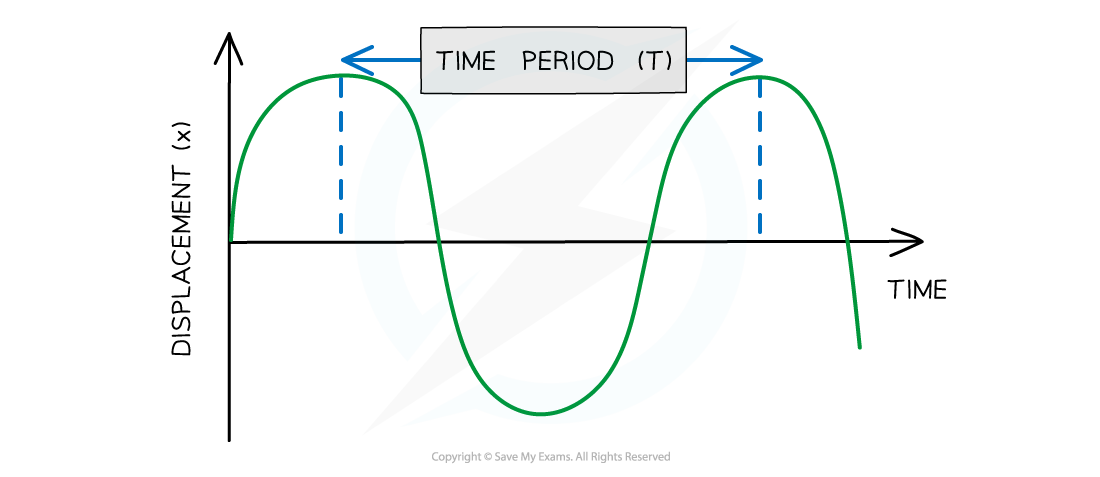
Time Period (s) = 1 / Frequency (Hz)
T = 1 / f
11
Define wave speed/velocity
The distance travelled by a wave every second
12
In Transverse waves…
Vibrations are perpendicular to the direction of the wave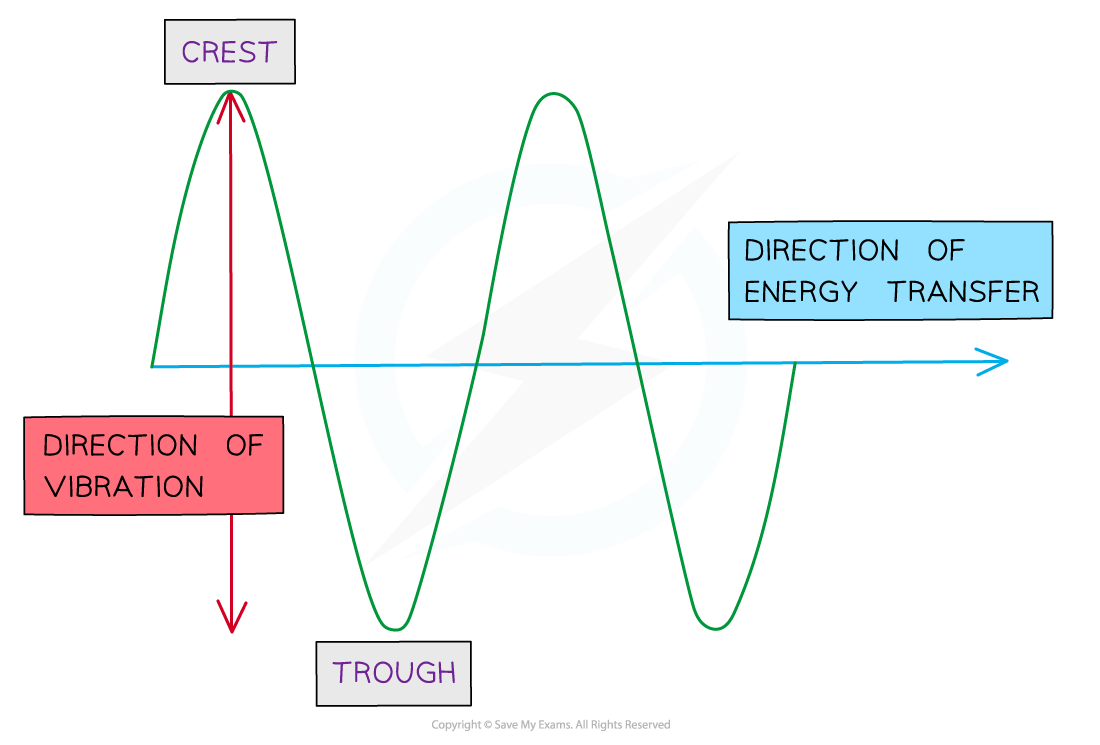
13
Describe the motion of particles in transverse waves
Particles vibrate perpendicular to the direction of the wave around a fixed position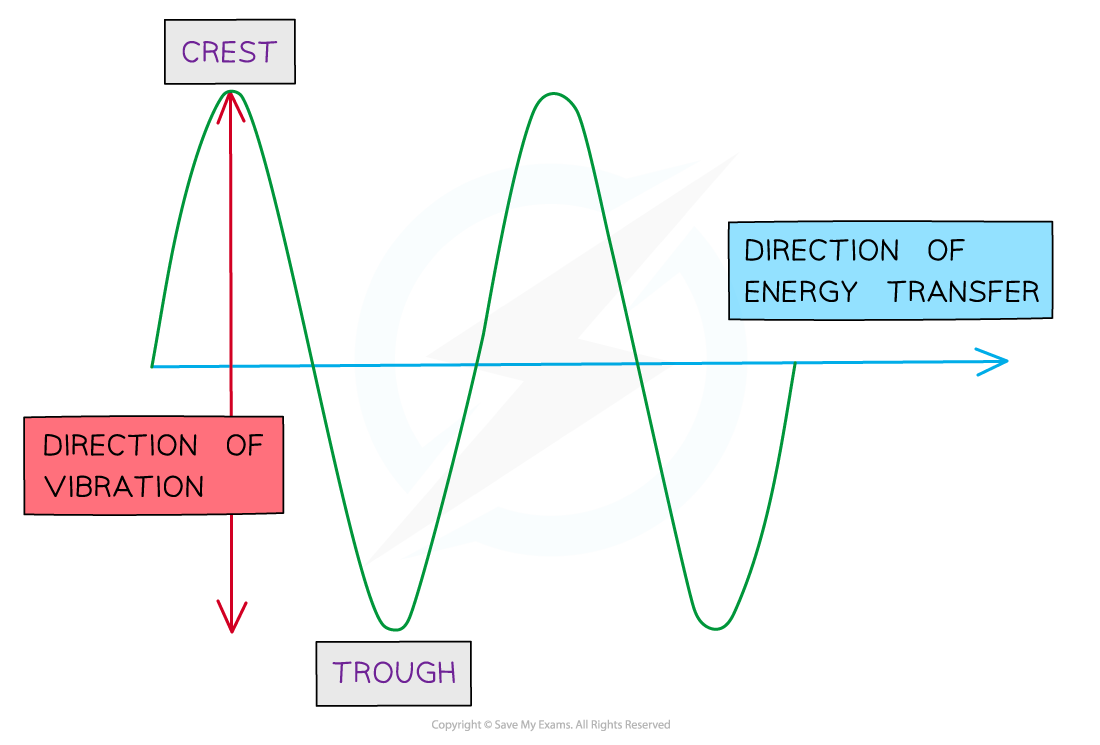
14
In Longitudinal waves…
Vibrations are parallel to the direction of the wave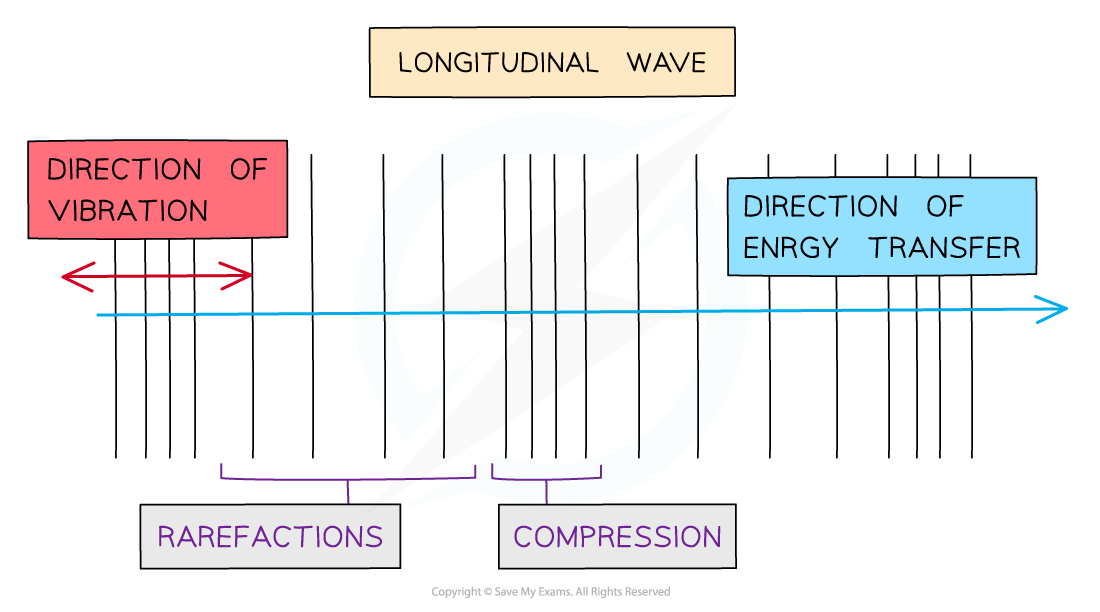
15
Describe the motion of particles in longitudinal waves
Particles vibrate parallel to the direction of the wave around a fixed position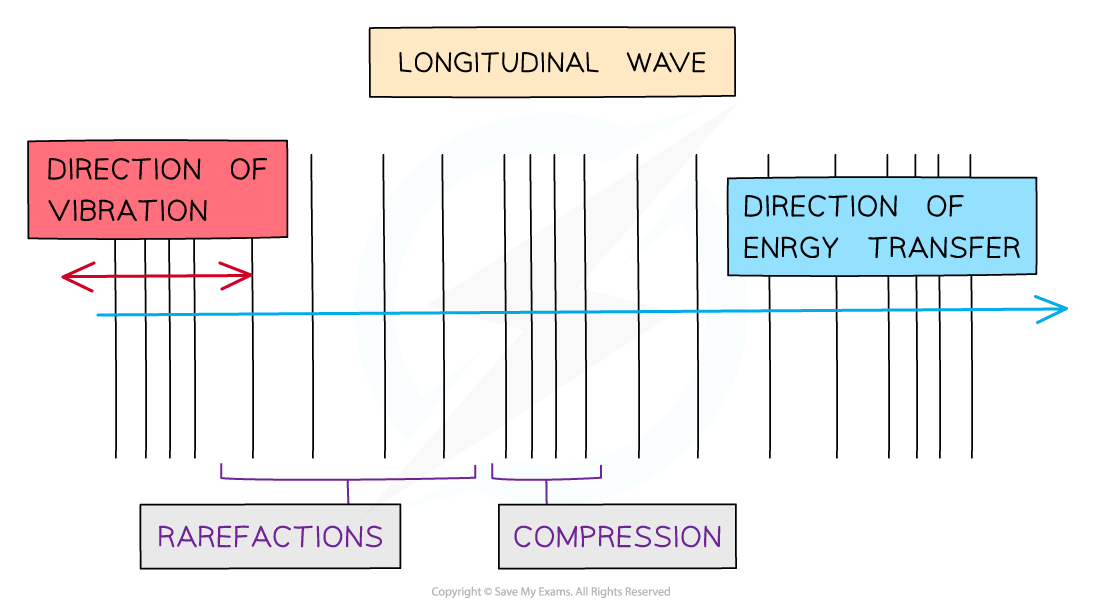
16
Difference between transverse and longitudinal waves
In a transverse wave, vibrations are perpendicular to the direction of the wave.
In a longitudinal wave, vibrations are parallel to the direction of the wave
In a longitudinal wave, vibrations are parallel to the direction of the wave
17
Some transverse waves (electromagnetic waves) can move in…
Solids, liquids, gases and in vacuums
18
Examples of transverse waves
Ripples in water
Vibrations in guitar strings
S-waves
EM waves
Vibrations in guitar strings
S-waves
EM waves
19
Longitudinal waves can move in…
Solids, liquids and gases (not in a vacuum - no particles)
20
Examples of longitudinal waves
Sound waves
P-waves
Pressure waves in liquids or gases
P-waves
Pressure waves in liquids or gases
21
Peaks/crests and troughs
In transverse waves
Peaks/crests - the highest point above the rest position
Troughs - the lowest point below the rest position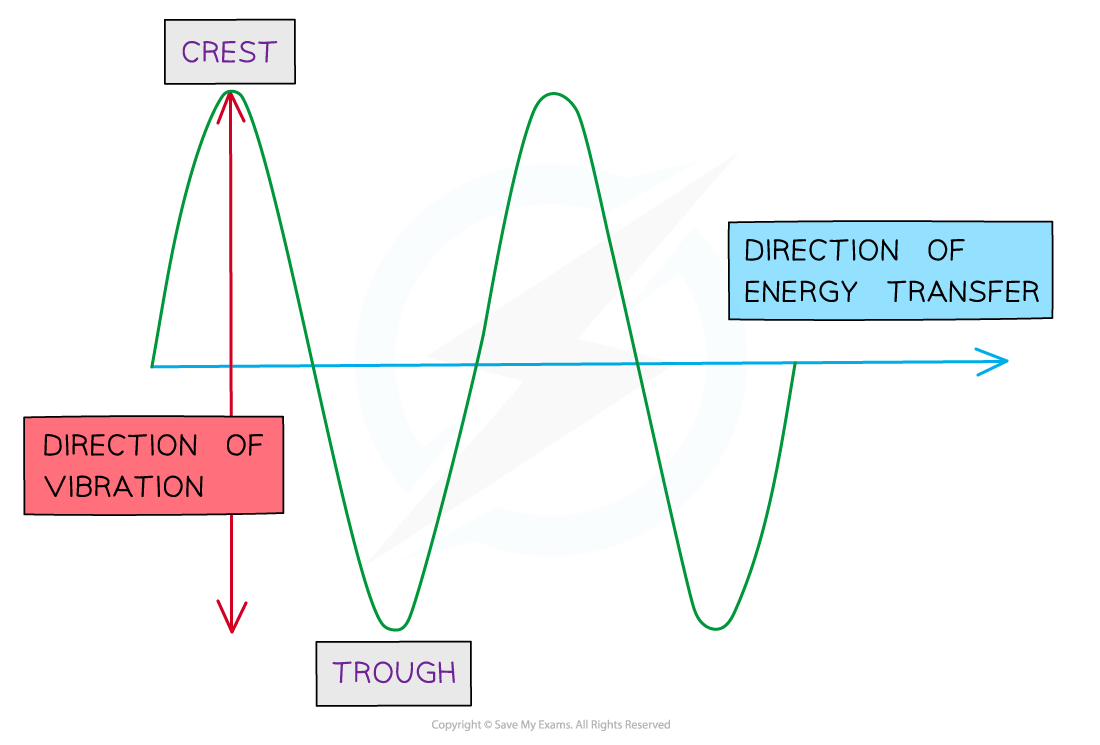
Peaks/crests - the highest point above the rest position
Troughs - the lowest point below the rest position
22
Compressions and rarefactions
In longitudinal waves
Compressions - where points are close together
Rarefactions - where points are spaced apart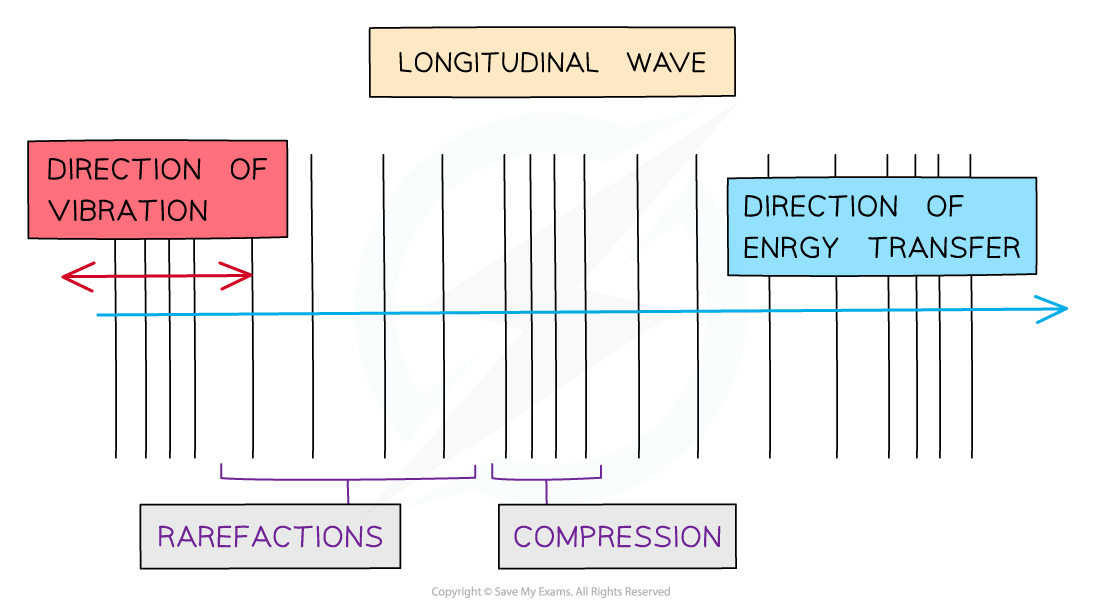
Compressions - where points are close together
Rarefactions - where points are spaced apart
23
Wave speed equations
wave speed (m/s) = frequency (Hz) x wavelength (m)
v = f x λ
wave speed (m/s) = distance (m) / time (s)
v = d / t
v = f x λ
wave speed (m/s) = distance (m) / time (s)
v = d / t
24
Measuring speed of sound between two points
Use a trundle wheel to measure the distance between two points (around 100m).
At one point one person bangs two wooden blocks
At the other person starts the stopwatch when they see the first person bang the blocks together
They stop the stopwatch when they hear the sound
Repeat several times
Use the distance and time taken to calculate the wave speed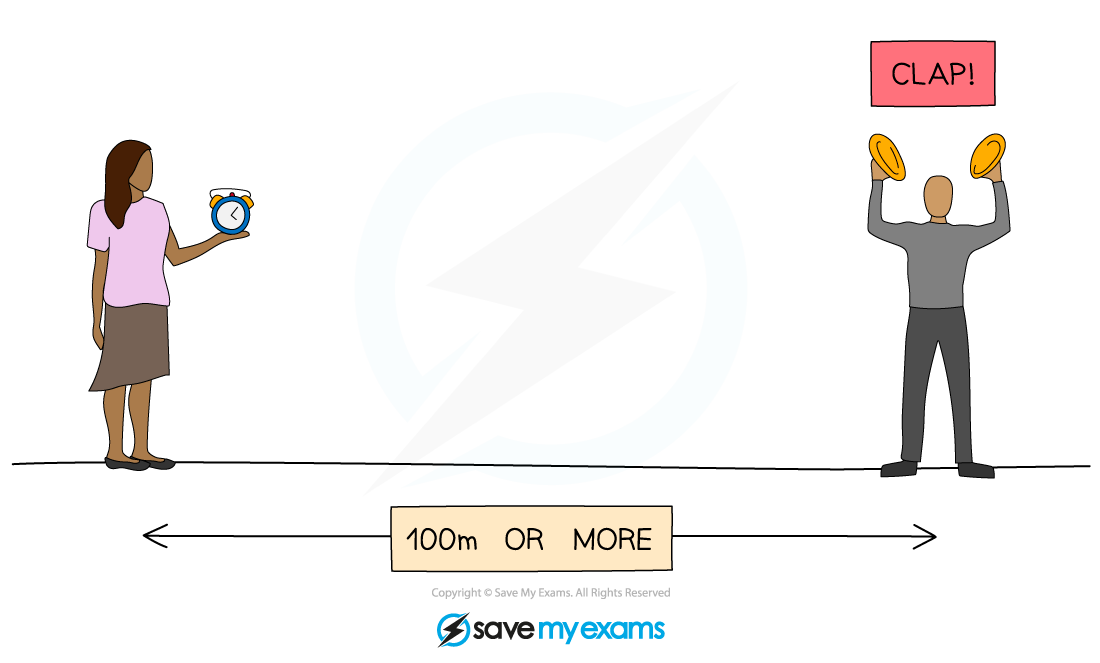
At one point one person bangs two wooden blocks
At the other person starts the stopwatch when they see the first person bang the blocks together
They stop the stopwatch when they hear the sound
Repeat several times
Use the distance and time taken to calculate the wave speed
25
Measuring speed of sound using echoes
Use a trundle wheel to measure a point 50m away from the wall
A person at the point claps two wooden blocks in time with the echo
Use a stopwatch to measure the time between 20 claps
For every clap, the distance is 2 x 50m
Use the distance and time taken for 20 claps to calculate the wave speed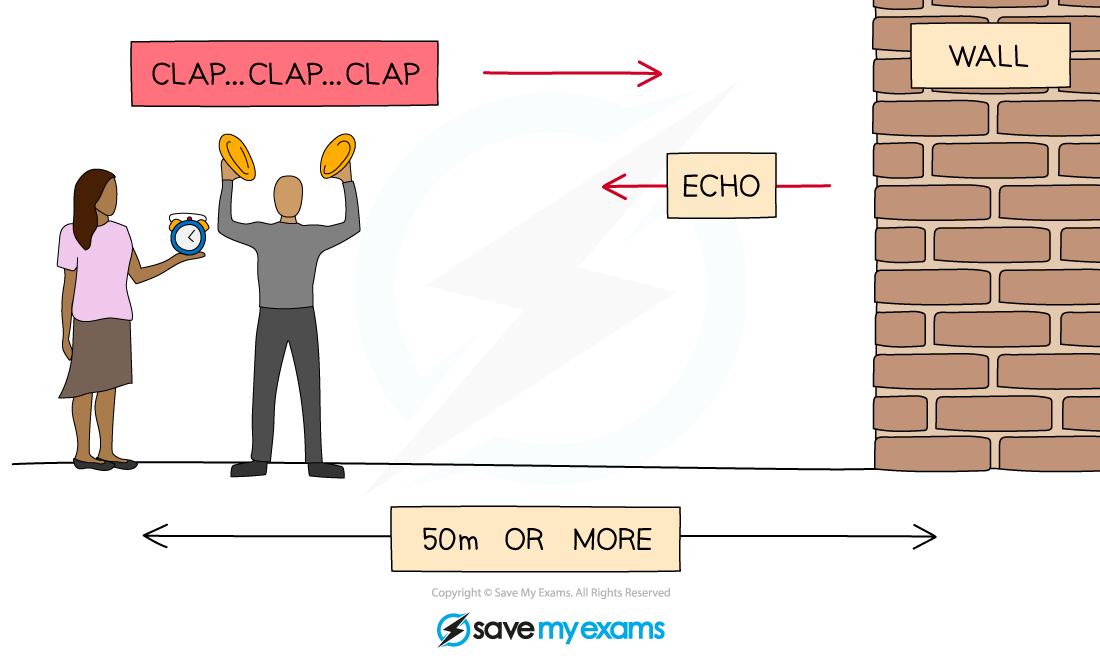
A person at the point claps two wooden blocks in time with the echo
Use a stopwatch to measure the time between 20 claps
For every clap, the distance is 2 x 50m
Use the distance and time taken for 20 claps to calculate the wave speed
26
Measuring speed using an oscilloscope
Connect two microphones 5m apart to an oscilloscope
Adjust time base so sound arriving at both microphones can be seen on screen
Use wooden blocks to make a sound
Find the time between peaks
Use the distance and time taken to calculate wave speed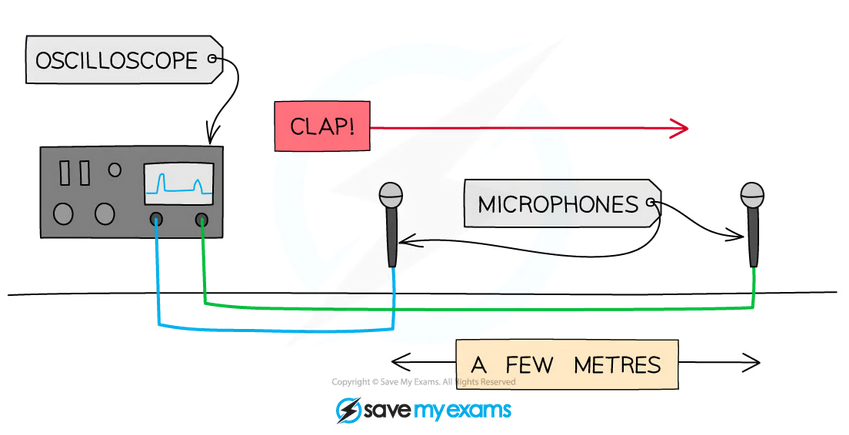
Adjust time base so sound arriving at both microphones can be seen on screen
Use wooden blocks to make a sound
Find the time between peaks
Use the distance and time taken to calculate wave speed
27
Measuring speed of ripples on water
Use a tape measure to measure the distance between two points
Make a ripple and start the stopwatch when the ripple passes the first point
Stop the timer when the stopwatch passes the second point
Use the distance and time taken to calculate wave speed
Make a ripple and start the stopwatch when the ripple passes the first point
Stop the timer when the stopwatch passes the second point
Use the distance and time taken to calculate wave speed
28
Using ultrasound to calculate water depth
An ultrasound wave is reflected off the ocean floor
Calculate the time it takes for the wave to return
The distance the wave travels is twice the depth of the ocean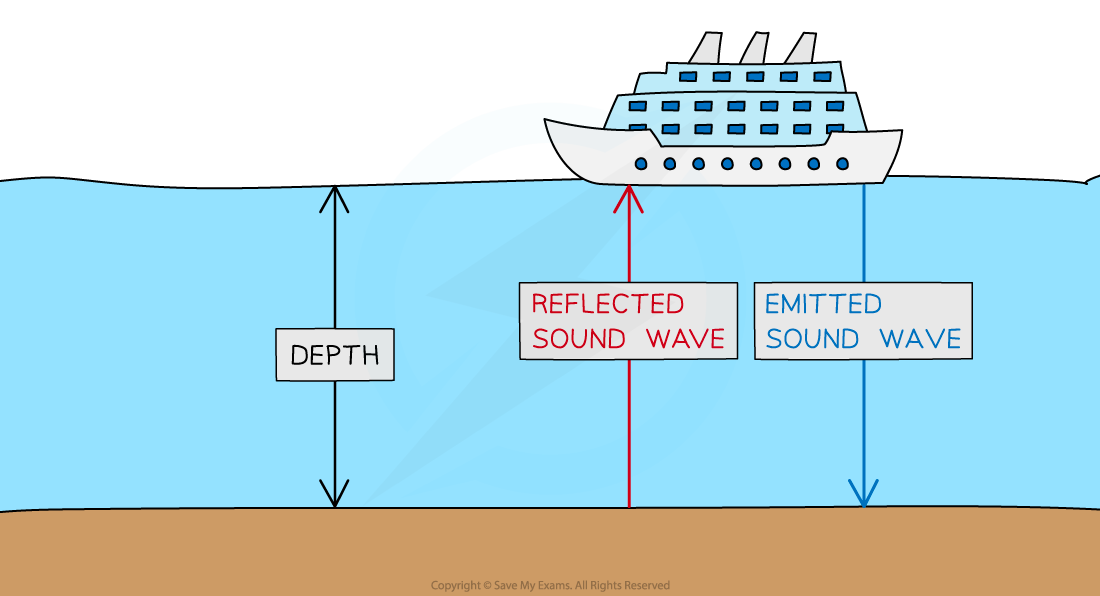
Calculate the time it takes for the wave to return
The distance the wave travels is twice the depth of the ocean
29
Define reflection
A wave hits a boundary between two media and does not pass through
It bounces back and stays in the original medium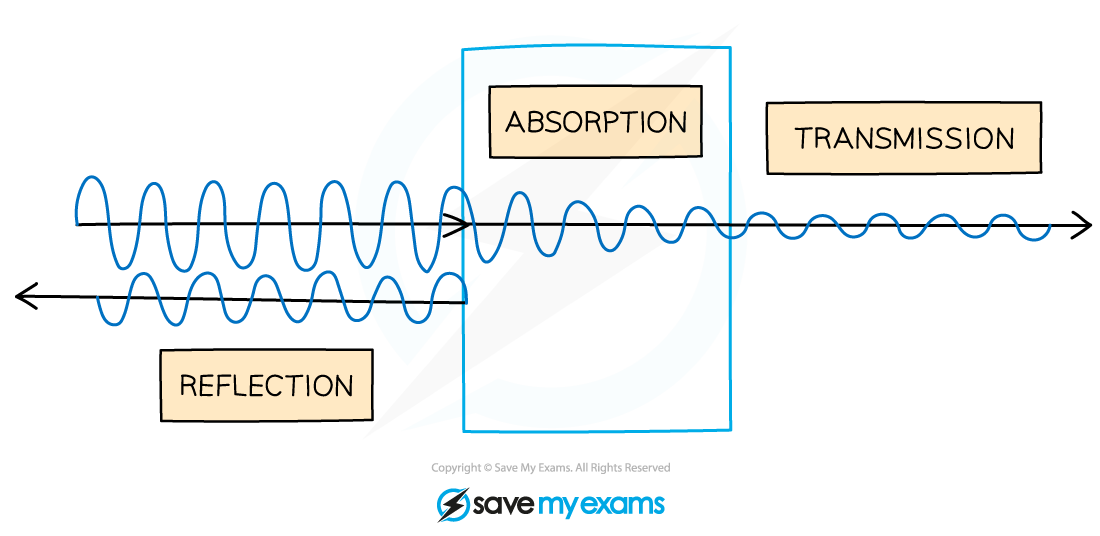
It bounces back and stays in the original medium
30
Reflectiveness of flat, rough and opaque surfaces
Flat surfaces are most reflective
Rough surfaces are least reflective
Opaque surfaces reflect light not absorbed by the material
Rough surfaces are least reflective
Opaque surfaces reflect light not absorbed by the material
31
Define refraction
A wave changes speed at the boundary between two materials of different densities
The change in speed can cause the wave to change direction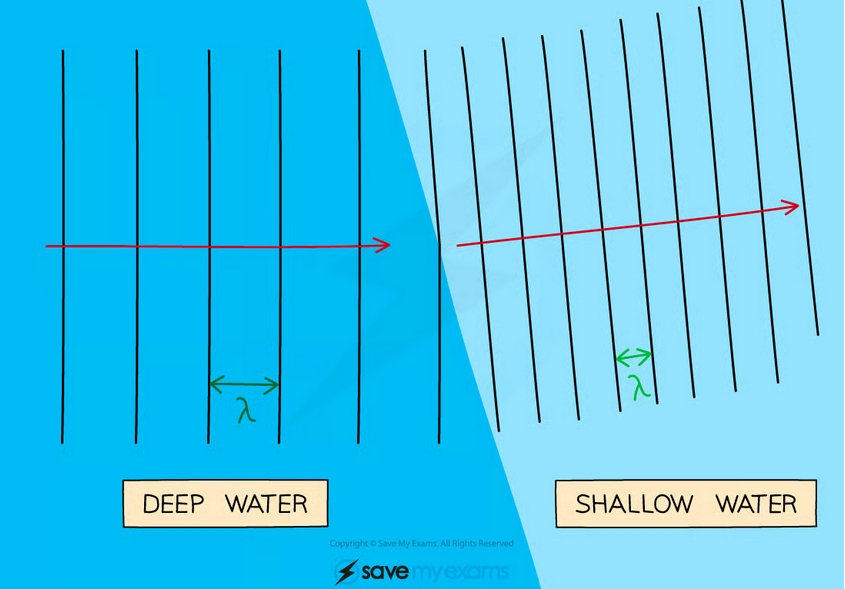
The change in speed can cause the wave to change direction
32
Define transmission
When a wave passes through a substance
The more transparent the material, the more light will pass through
During transmission some of the wave can be absorbed meaning a lower amplitude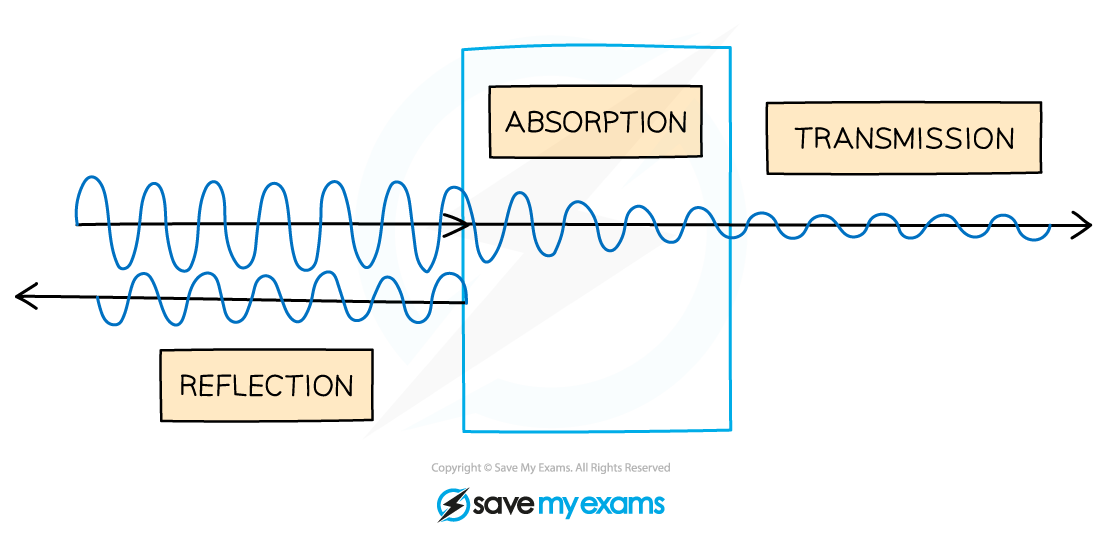
The more transparent the material, the more light will pass through
During transmission some of the wave can be absorbed meaning a lower amplitude
33
Define absorption
When energy is transferred from the wave into the particles of the substance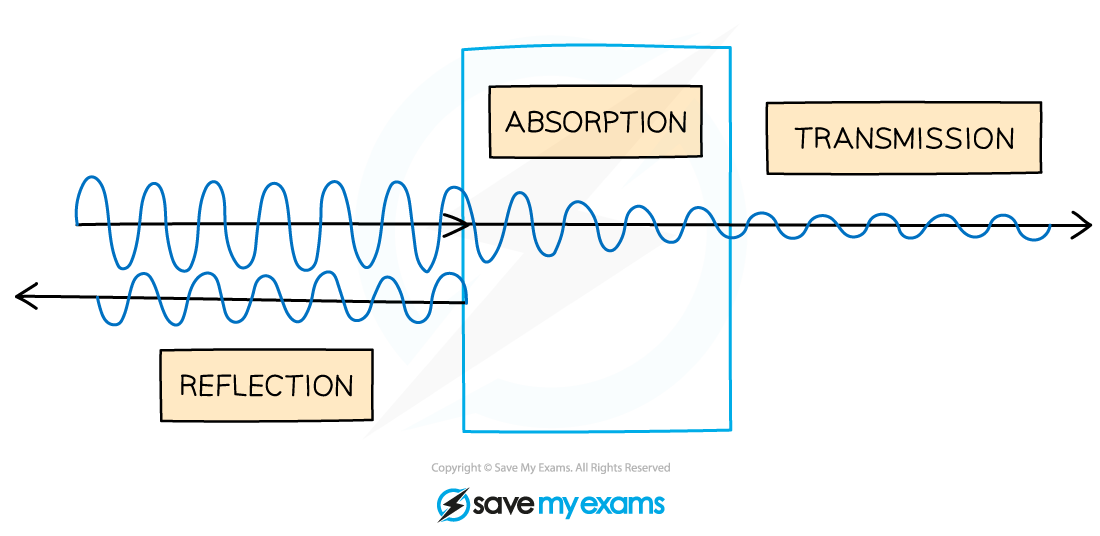
34
When light travels from a less dense to a more dense medium…
The wave will travel slower in the denser medium
Light bends towards the normal
Angle of refraction is less than angle of incidence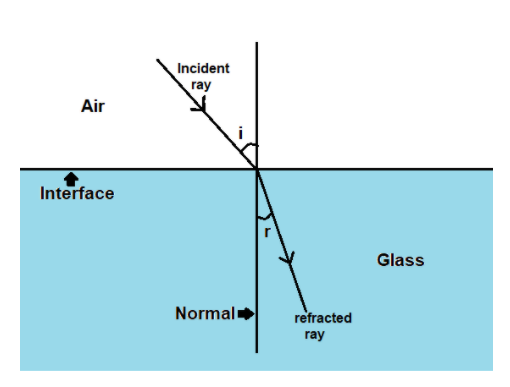
Light bends towards the normal
Angle of refraction is less than angle of incidence
35
When light travels from a more dense to a less dense medium…
Light bends away from the normal
Angle of refraction is more than angle of incidence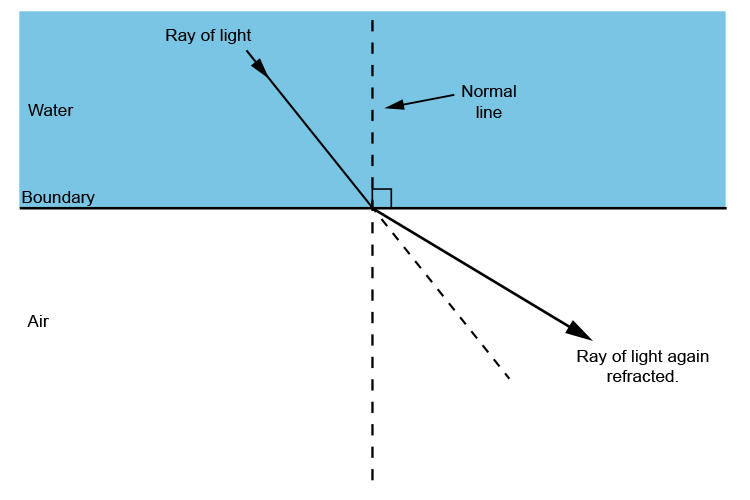
Angle of refraction is more than angle of incidence
36
Why does light refract when it passes between mediums of different densities?
Light travels faster in less dense mediums
Light travels slower in more dense mediums
Light travels slower in more dense mediums
37
What can happen to a wave when it moves from one substance to another?
It can be transmitted, absorbed, reflected and/or refracted.
38
Name the four types of processes which a wave can undergo when it reaches a boundary between two materials
Transmission, Absorption, Reflection, Refraction