GCSE Edexcel Physics 2.1 - Describing Motion
Study these flashcardsFree · spaced repetition · iPhone, Android, Mac & web
All cards
1
Scalar quantities
Have magnitude (size) but no direction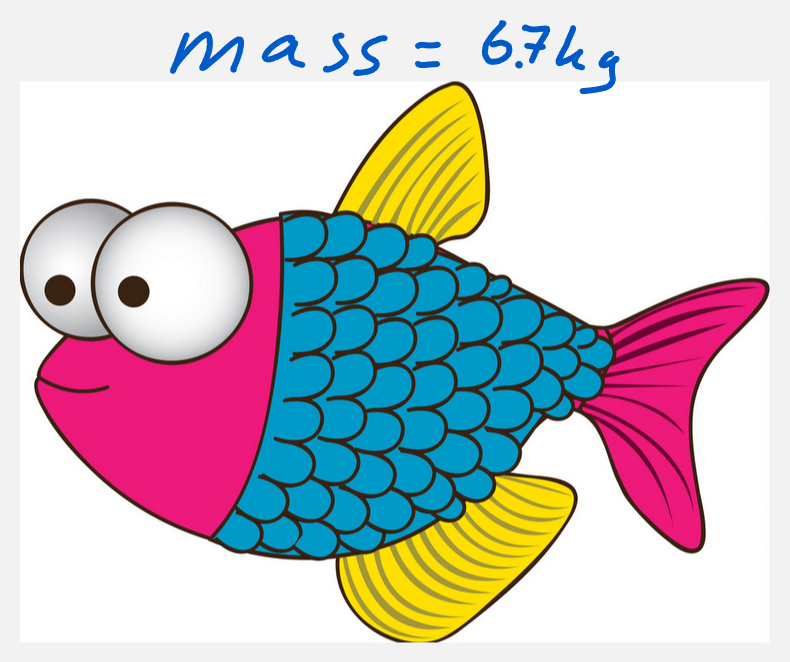
2
Vector quantities
Have magnitude (size) and direction
Can be represented with arrows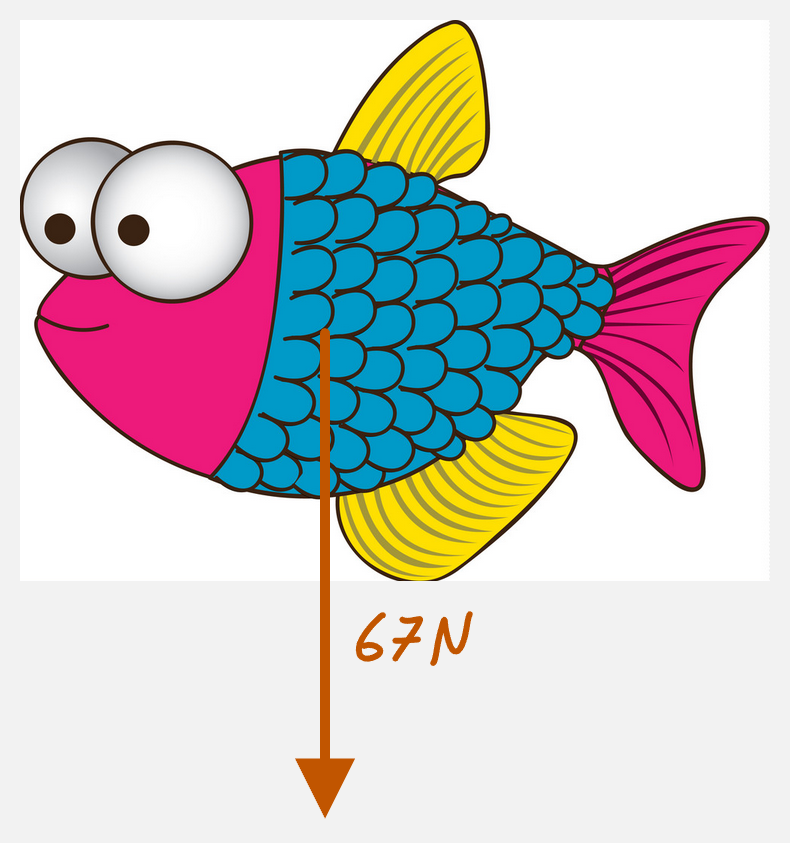
Can be represented with arrows
3
Distance (definition)
How far an object travels (m)
Scalar - has magnitude only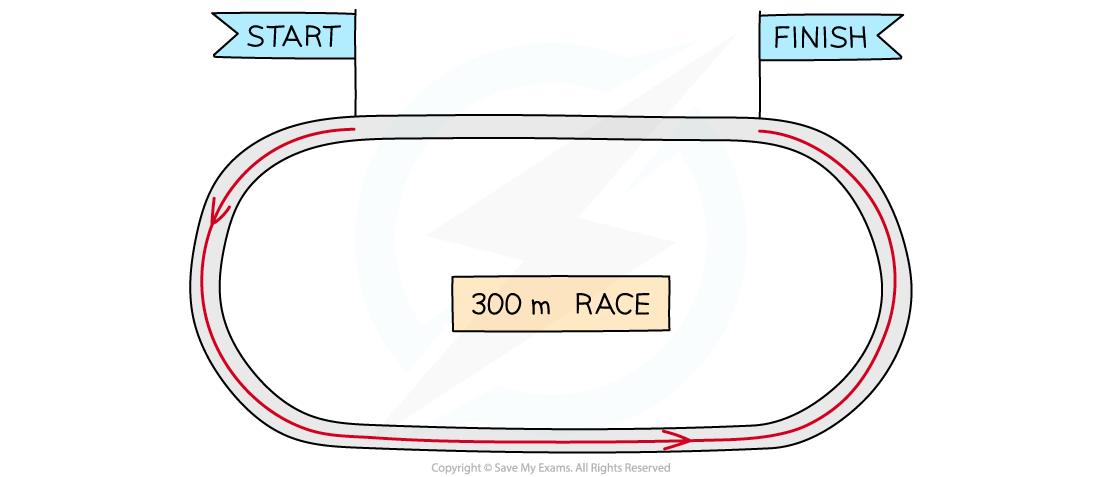
Scalar - has magnitude only
4
Displacement (defintiion)
Straight-line distance from object's starting position + direction (m)
Vector - has magnitude and direction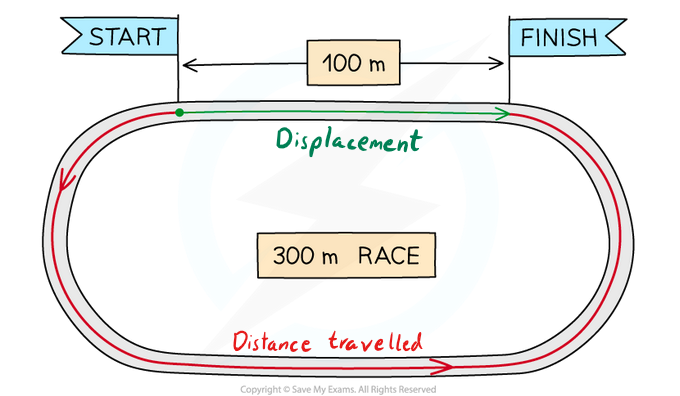
Vector - has magnitude and direction
5
Speed (definition)
Distance an object travels every second (m/s)
Scalar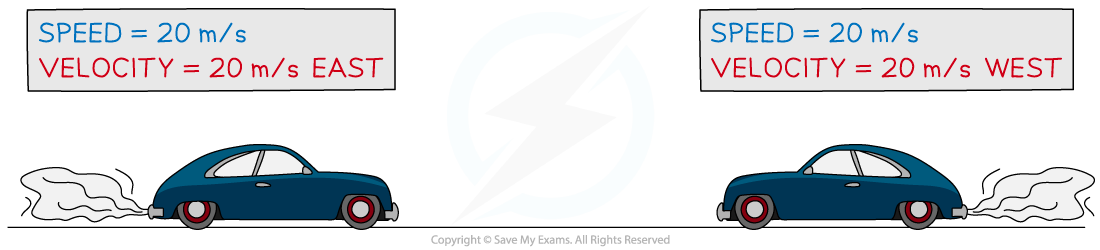
Scalar
6
Velocity (definition)
Distance an object travels every second (m/s)
and direction
Vector - has magnitude and direction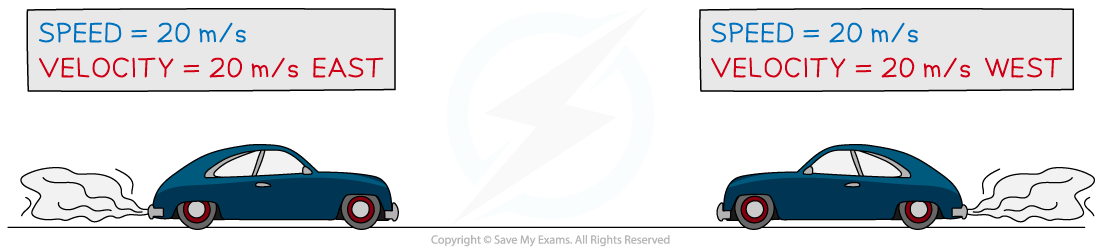
and direction
Vector - has magnitude and direction
7
Velocity/Speed if object is stationary
0m/s
8
Describe the difference between distance and displacement
Distance is a scalar quantity (has magnitude only).
Displacement is a vector quantity (has magnitude and direction).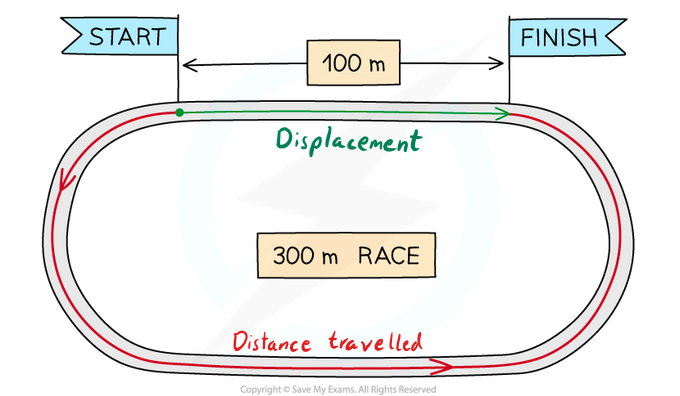
Displacement is a vector quantity (has magnitude and direction).
9
Describe the difference between speed and velocity
Speed is a scalar quantity (has magnitude only).
Velocity is a vector quantity (has magnitude and direction).
Velocity is speed in a specific direction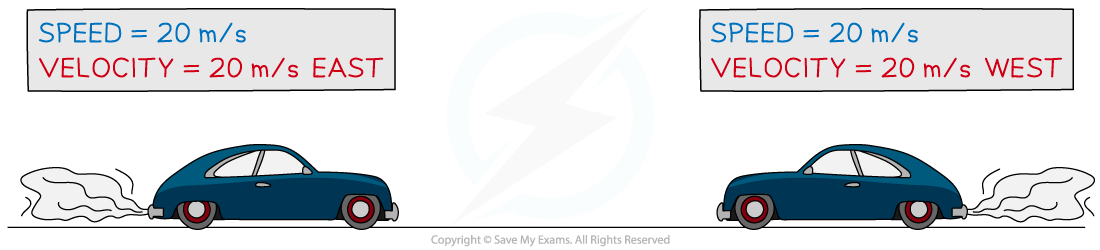
Velocity is a vector quantity (has magnitude and direction).
Velocity is speed in a specific direction
10
Describe the difference between weight and mass
Mass is a scalar quantity (has magnitude only).
Weight is a vector quantity (has magnitude and direction).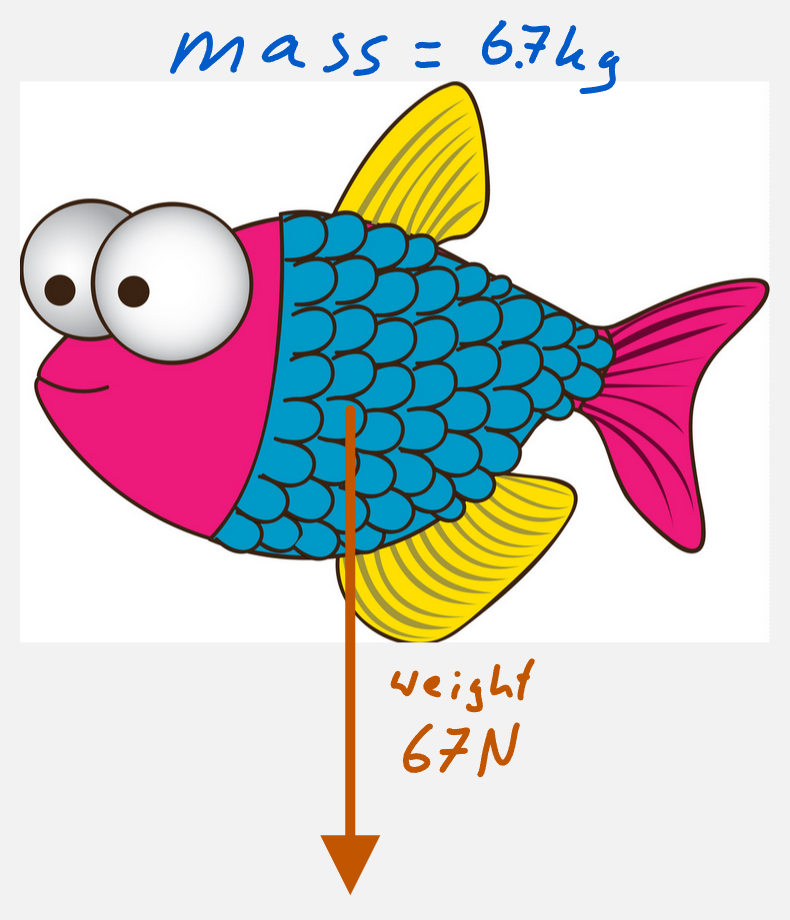
Weight is a vector quantity (has magnitude and direction).
11
What type of quantities are energy and power?
Scalar quantities
12
What type of quantities are volume and density?
Scalar quantities
13
What type of quantities are force and temperature?
Force is a vector, temperature is a scalar
14
What type of quantities are acceleration and momentum?
Vector quantities
15
(Average) Speed Equation
Speed (m/s) = distance (m) / time (s)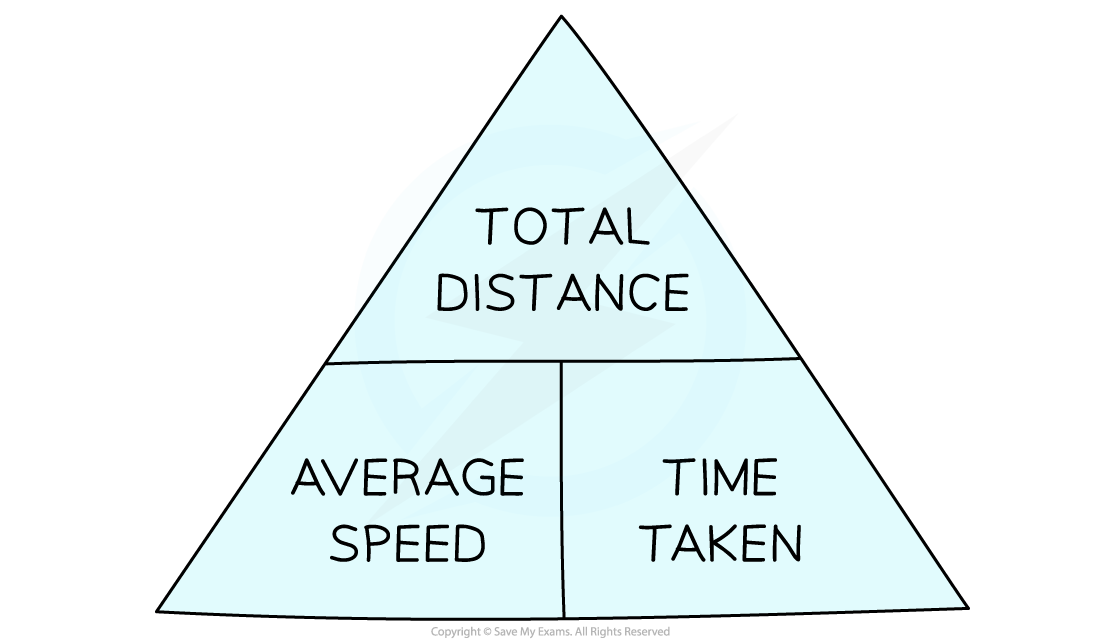
16
Meaning of Δ
Δ = Difference in
(Δh means Difference in height)
(Δh means Difference in height)
17
Gradient Equation
Gradient = Δx/Δy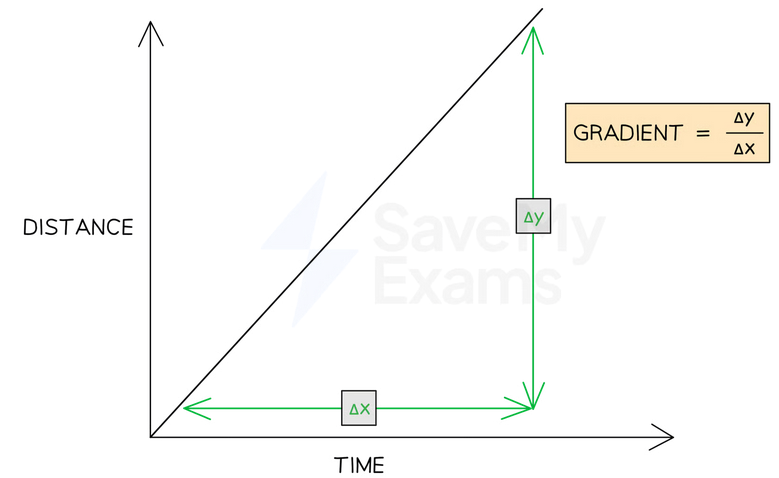
18
Gradient (in a distance-time graph)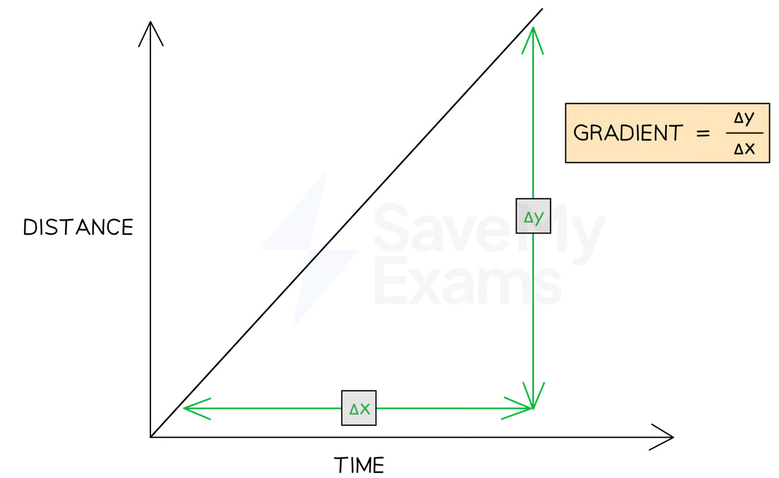
Speed
19
(In a distance-time graph) if the line is horizontal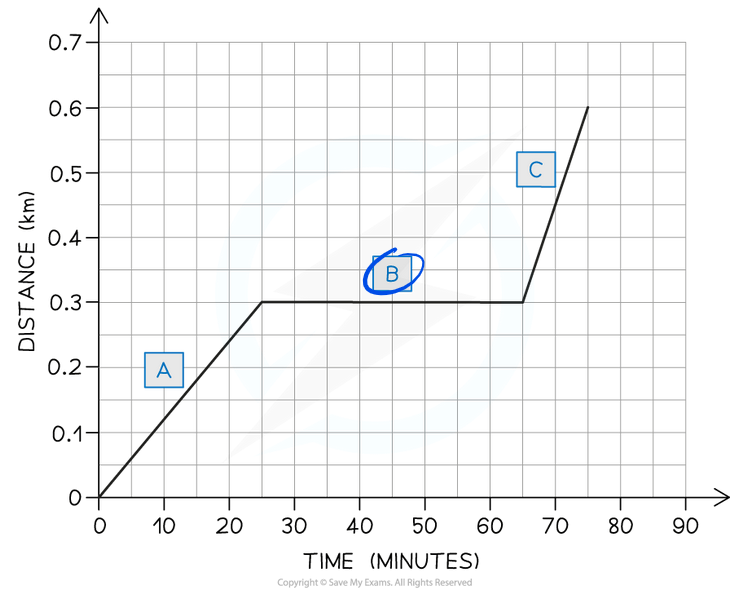
The object is stationary
20
(In a distance-time graph) the steeper the gradient…
The greater the speed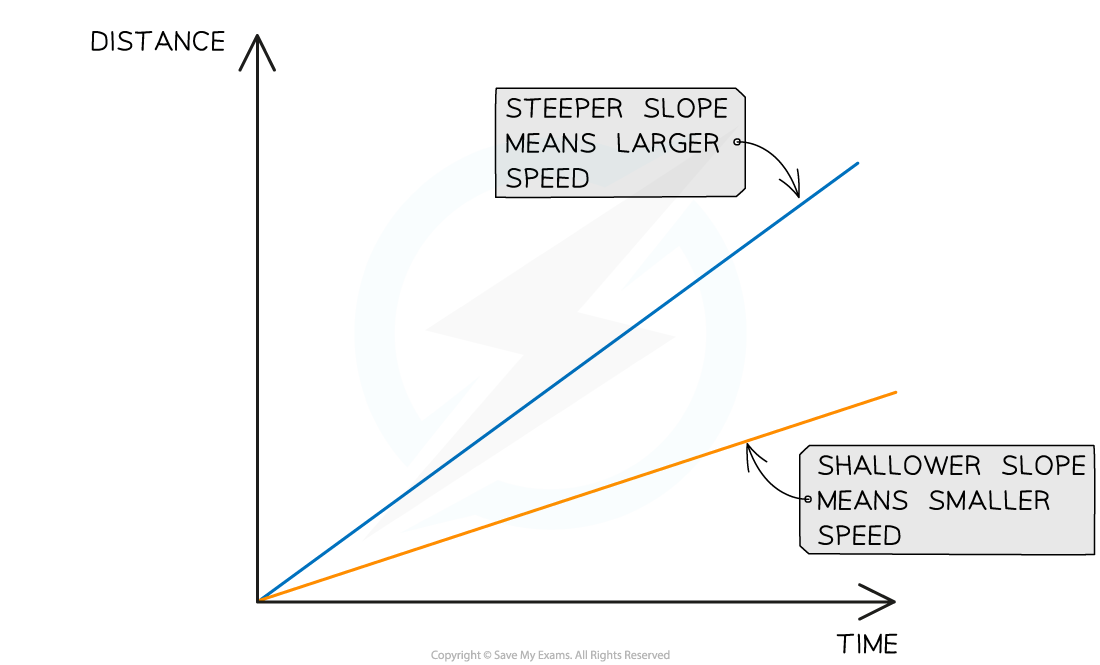
21
(In a distance-time graph) what does it mean if the slope is increasing/decreasing?
Increasing slope - speed is increasing (accelerating)
Decreasing slope - speed is decreasing (decelerating)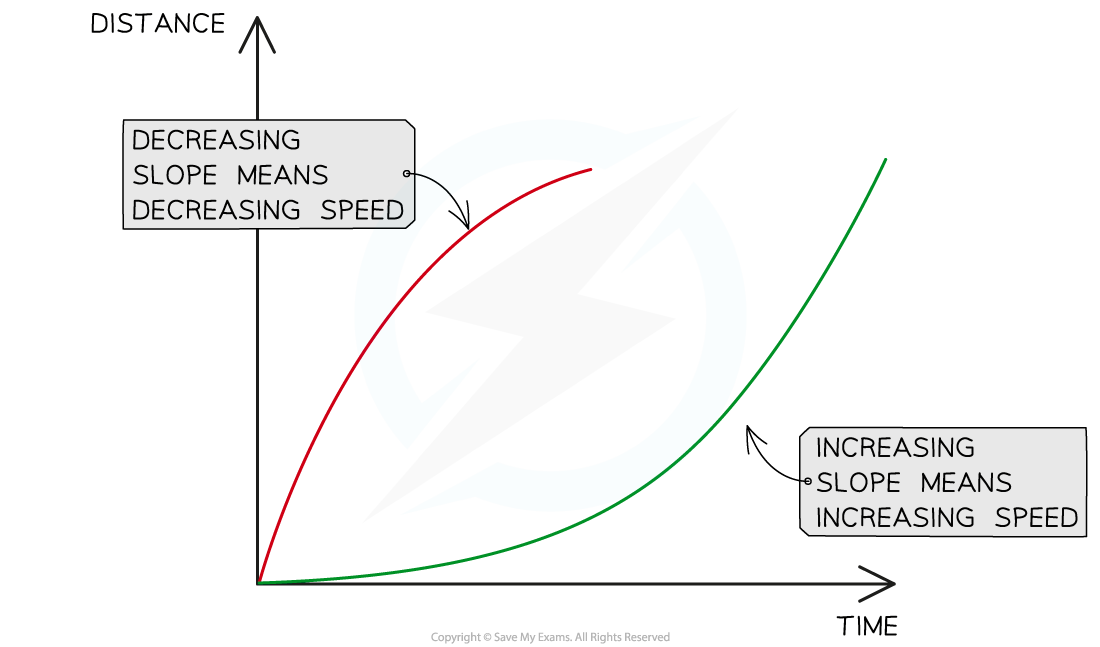
Decreasing slope - speed is decreasing (decelerating)
22
Acceleration (m/s²) = [final velocity (m/s) - initial velocity (m/s)] / time (s)
a = (v- u)/t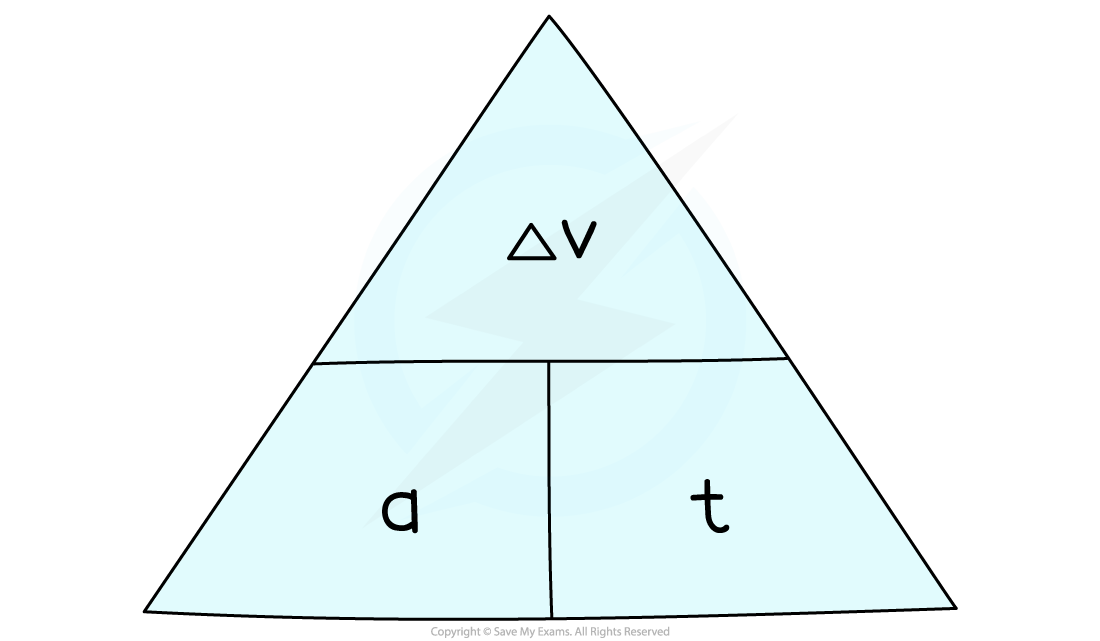
a = (v- u)/t
23
(In a velocity-time graph) the steeper the gradient…
The greater the acceleration
24
Gradient (in a velocity-time graph)
Acceleration
25
(In a velocity-time graph) if the line is horizontal…
The object is at a constant speed
26
(In a velocity-time graph) What does a negative gradient mean?
The object is decelerating
27
Area (under a velocity-time graph)
Displacement/distance travelled
28
Area of a rectangle and triangle
Area of rectangle = base x height
Area of triangle = ½ x base x height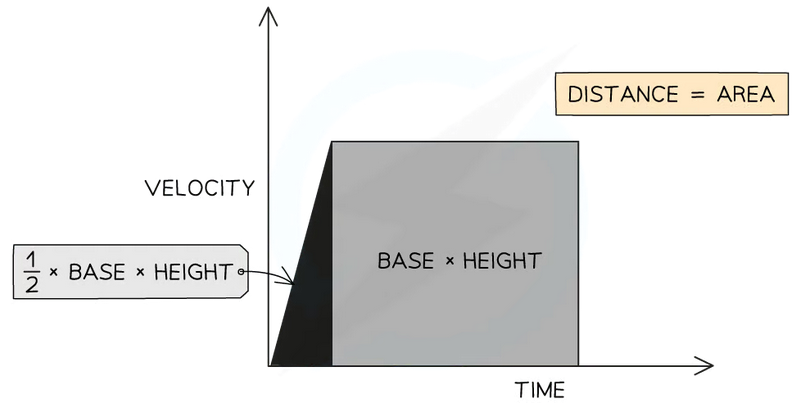
Area of triangle = ½ x base x height
29
Area of trapezium
Area of trapezium = ½ x (a+b) x height
a and b are the two parallel sides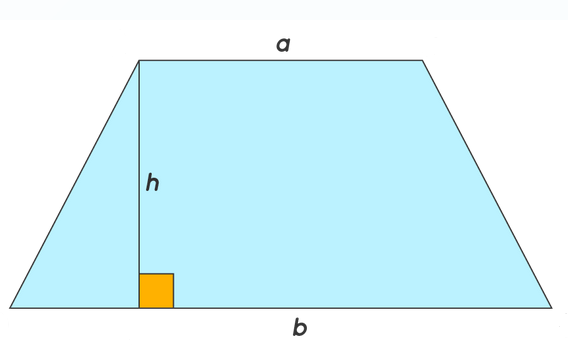
a and b are the two parallel sides
30
Equipment for measuring different sized distances
Short - Metre Ruler
Medium - Tape Measure
Long - Trundle Wheel
Medium - Tape Measure
Long - Trundle Wheel
31
Equipment for measuring time (errors?)
Timer/Stopwatch (Human reaction time)
Light Gates (Digital - more accurate)
Light Gates (Digital - more accurate)
32
A measurement for time is taken with a stopwatch. How can you obtain a more accurate value?
Use an electronic timer or light gate to eliminate reaction time.
33
When calculating the speed of an object, distance is one of the quantities measured. How can you obtain a more accurate value for speed if time taken is measured with a stopwatch?
Increase the distance/height to reduce the effect of reaction time
34
Using two light gates to measure time (3 marks)
Flag on top of object blocks a beam of light as it passes through the first light gate.
This starts the timer.
Timer stops when the object passes through the second light gate.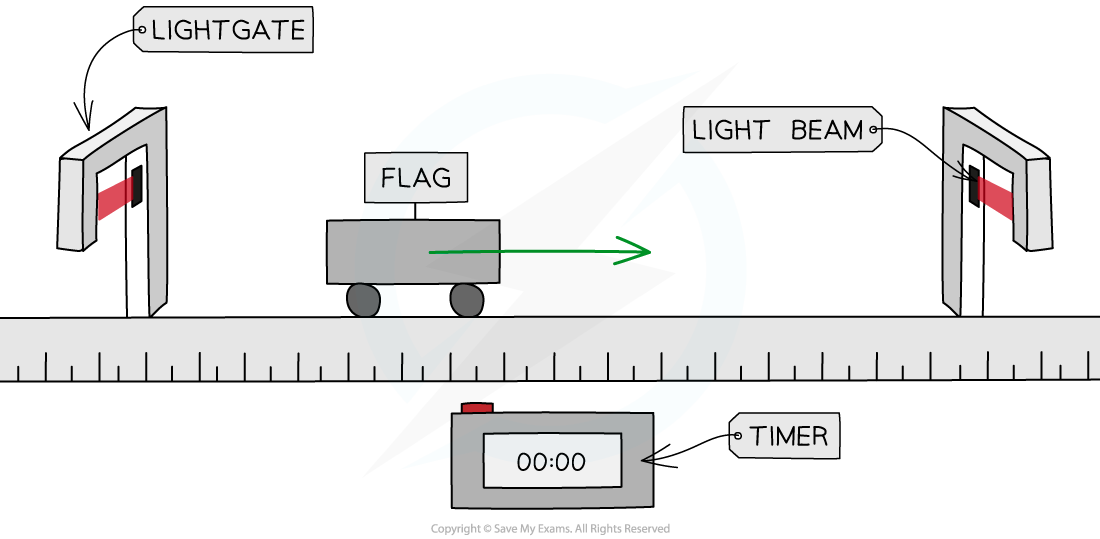
This starts the timer.
Timer stops when the object passes through the second light gate.
35
Using a single light gate to calculate speed (3 marks)
Timer measures how long the light is blocked for.
Distance travelled is the length of the flag.
Use s = d/t to find the speed.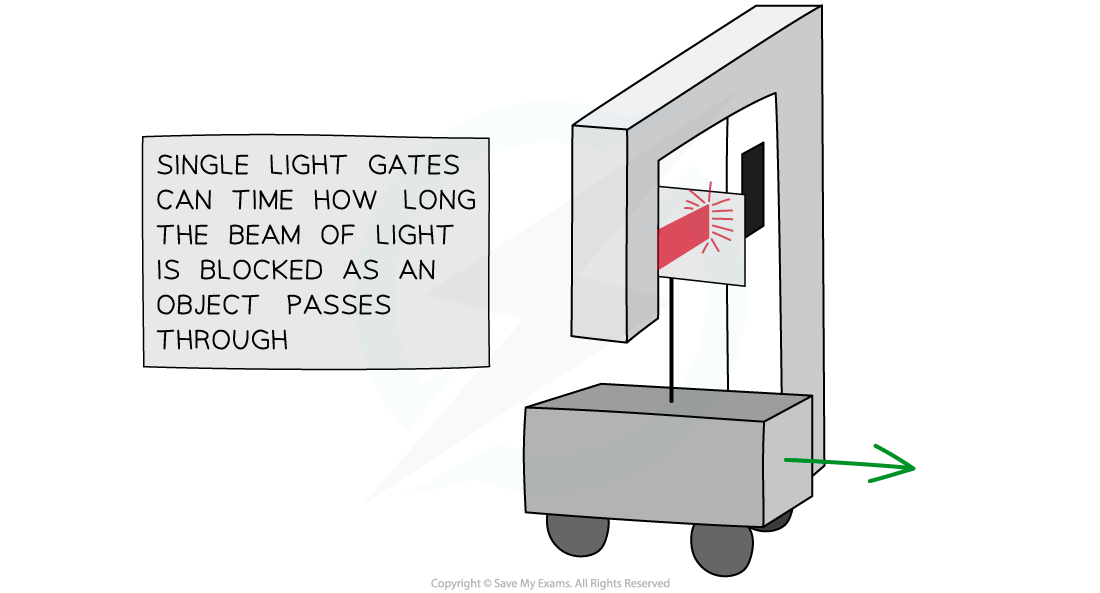
Distance travelled is the length of the flag.
Use s = d/t to find the speed.
36
Typical speeds of a person walking, running and cycling
Walking - 1.0m/s
Running - 3m/s
Cycling - 6m/s
Running - 3m/s
Cycling - 6m/s
37
Factors affecting speed of a person walking, running or cycling
Age
Terrain
Fitness
Distance
Terrain
Fitness
Distance
38
Typical speeds of cars and passenger planes
Car - 10-30m/s
Passenger Plane - 200-250m/s
Passenger Plane - 200-250m/s
39
Factors affecting speeds of transportation systems (like cars and planes)
Shape
Design
Cost
Purpose
Design
Cost
Purpose
40
Speed of sound
330-340m/s
41
Acceleration due to gravity on earth (or if not stated)
g = 10m/s²
(Also known as the gravitational field strength)
(Also known as the gravitational field strength)
42
If something starts falling on earth, what would be its acceleration?
10m/s² (if there is no air resistance)
43
Typical accelerations of a family car, falling object, rocket
Family car - 2-3m/s²
Falling object - 10m/s²
Rocket - 30m/s²
Falling object - 10m/s²
Rocket - 30m/s²
44
Typical accelerations of a formula 1 car and fighter jet
Formula 1 car: 50m/s²
Fighter jet: 90-120m/s²
Fighter jet: 90-120m/s²