GCSE Edexcel Physics 5.1 - Optics
Study these flashcardsFree · spaced repetition · iPhone, Android, Mac & web
All cards
1
How do you measure angles of incidence, reflection and refraction
Always measure from the normal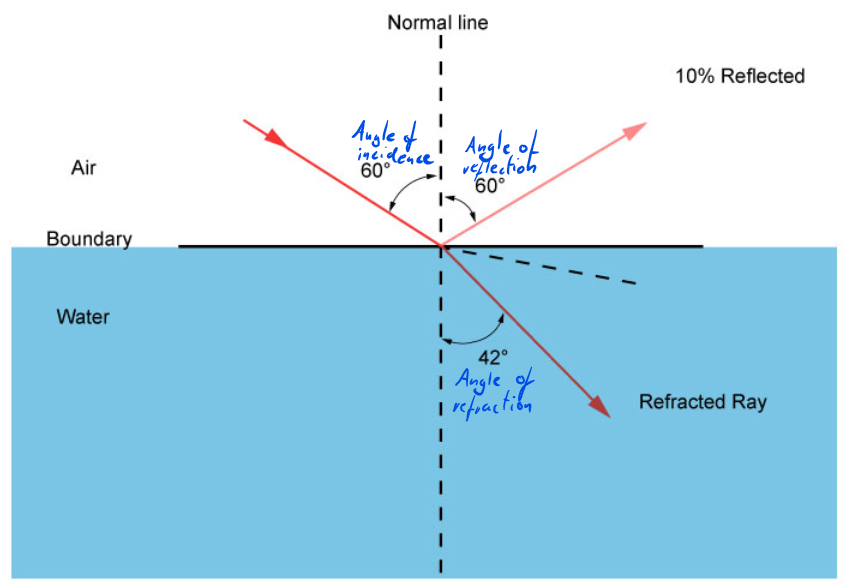
2
Law of reflection
Angle of incidence = Angle of reflection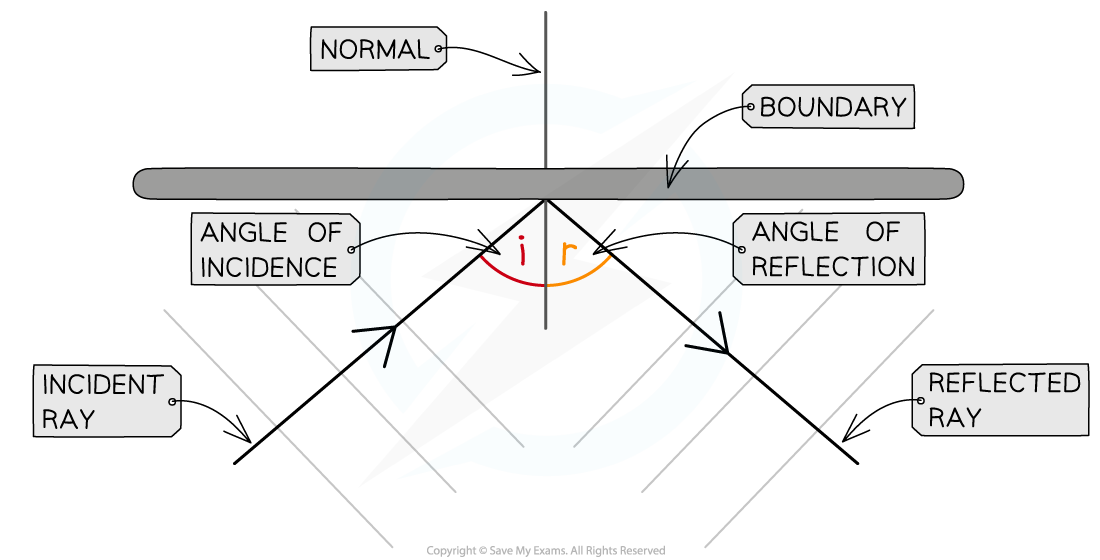
3
A light ray travelling from a less dense to a more dense medium
Bends towards the normal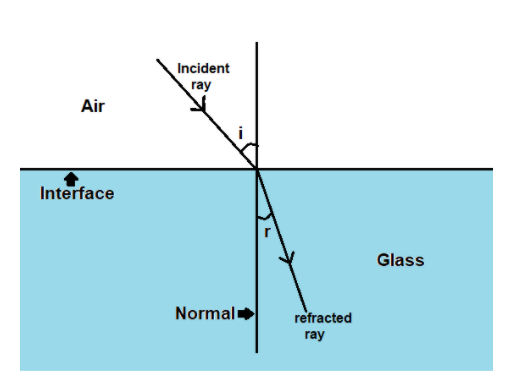
4
A light ray travelling from a more dense to a less dense medium
Bends away from the normal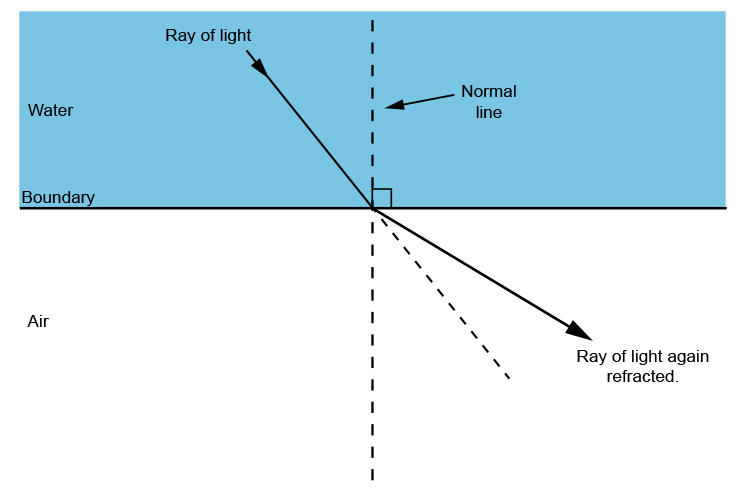
5
A light ray travelling from air to glass
From less dense to more dense
Bends towards the normal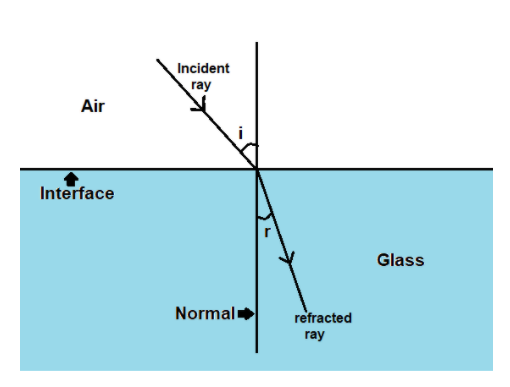
Bends towards the normal
6
A light ray travelling from glass to air
From more dense to less dense
Bends away from the normal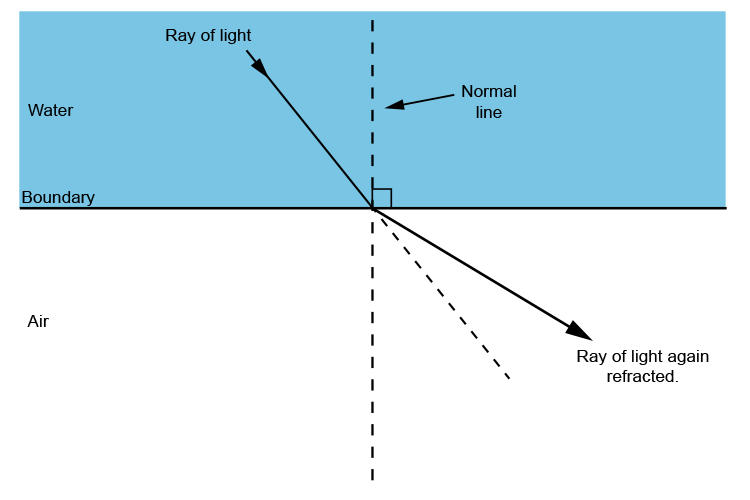
Bends away from the normal
7
What is the critical angle
Angle of incidence at which the angle of refraction is 90 degrees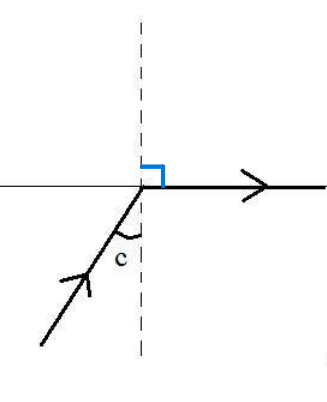
8
When does Total Internal Reflection (TIR) occur?
The angle of incidence is greater than the critical angle
Light is travelling from more dense to less dense material
Light is travelling from more dense to less dense material
9
What can change when a wave travels between different mediums?
Wave speed
Wavelength
Direction
Wavelength
Direction
10
Specular reflection
Reflection from a smooth surface in a single direction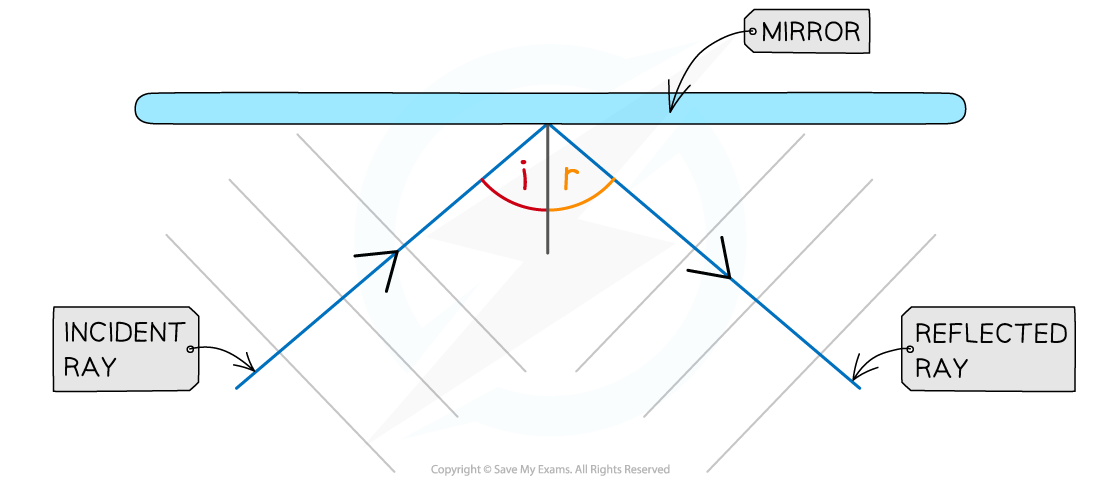
11
Diffuse reflection
Reflection from a rough surface causing scattering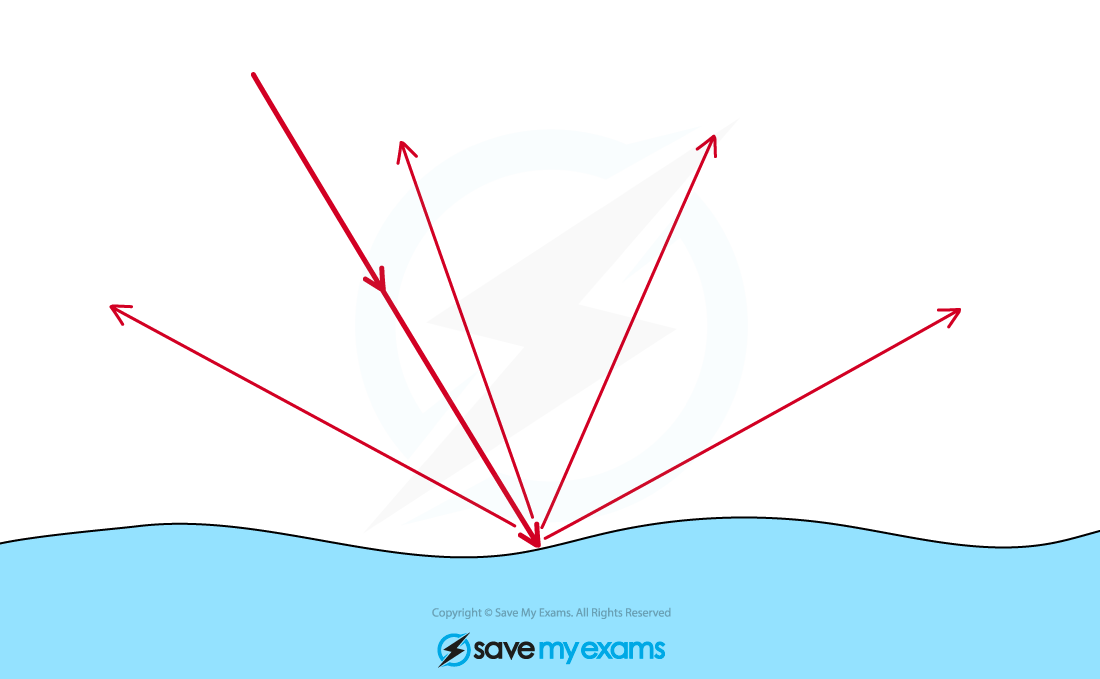
12
Explain why a mirror gives clear images
It is smooth
There is no scattering (specular reflection)
There is no scattering (specular reflection)
13
Why does the intensity of light decrease as it travels through materials
Some light is reflected from the first boundary
Some light is absorbed by the material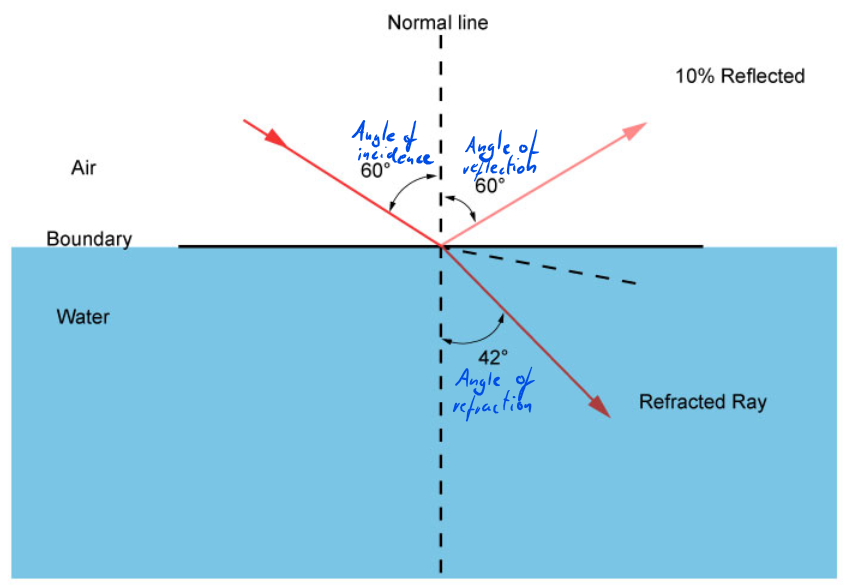
Some light is absorbed by the material
14
Explain why a red ball appears red under white light
White light is made up of all frequencies of visible light
The ball reflects red light
And absorbs all other frequencies of visible light.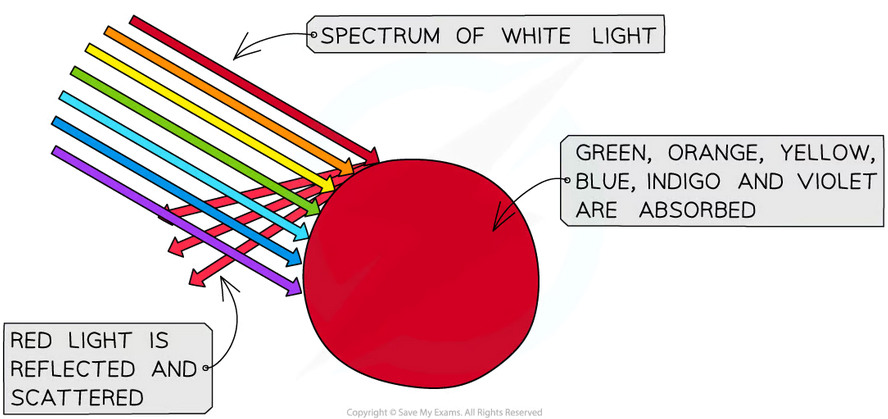
The ball reflects red light
And absorbs all other frequencies of visible light.
15
Which frequencies of light are absorbed by materials and what happens afterwards?
Frequencies which match the energy levels of the electrons are absorbed
The energy is re-emitted as heat.
The energy is re-emitted as heat.
16
How do colour filters work?
They absorb some wavelengths and transmit others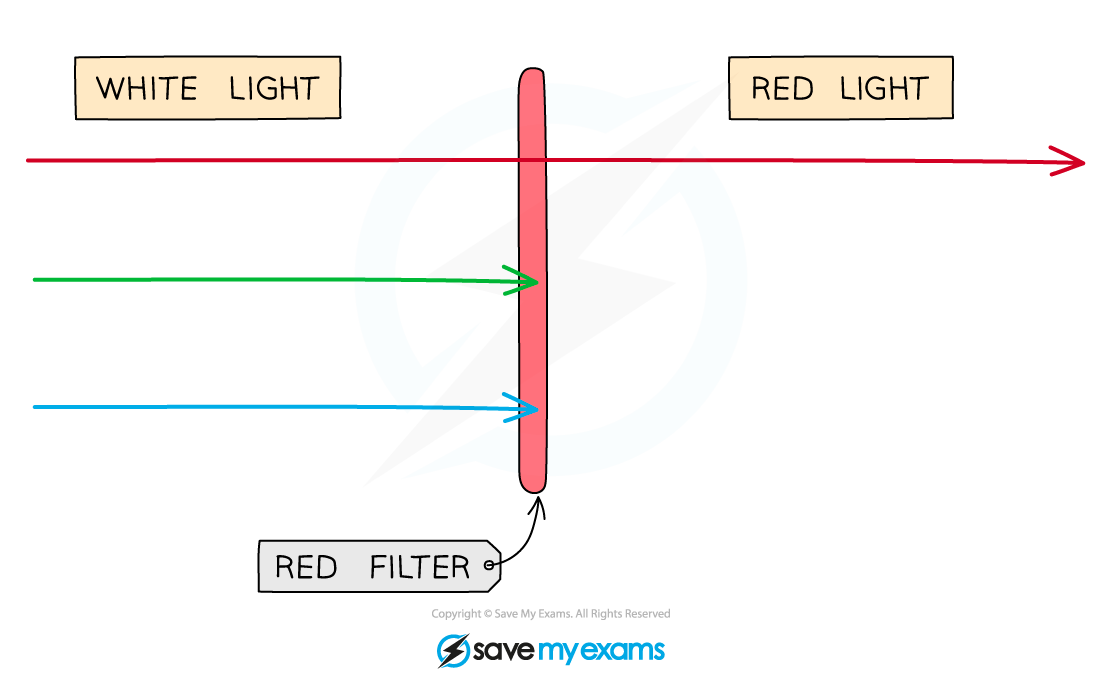
17
Explain what happens when white light passes through a red colour filter
White light is made up of all frequencies of visible light
The filter transmits only red light
And absorbs all other frequencies of visible light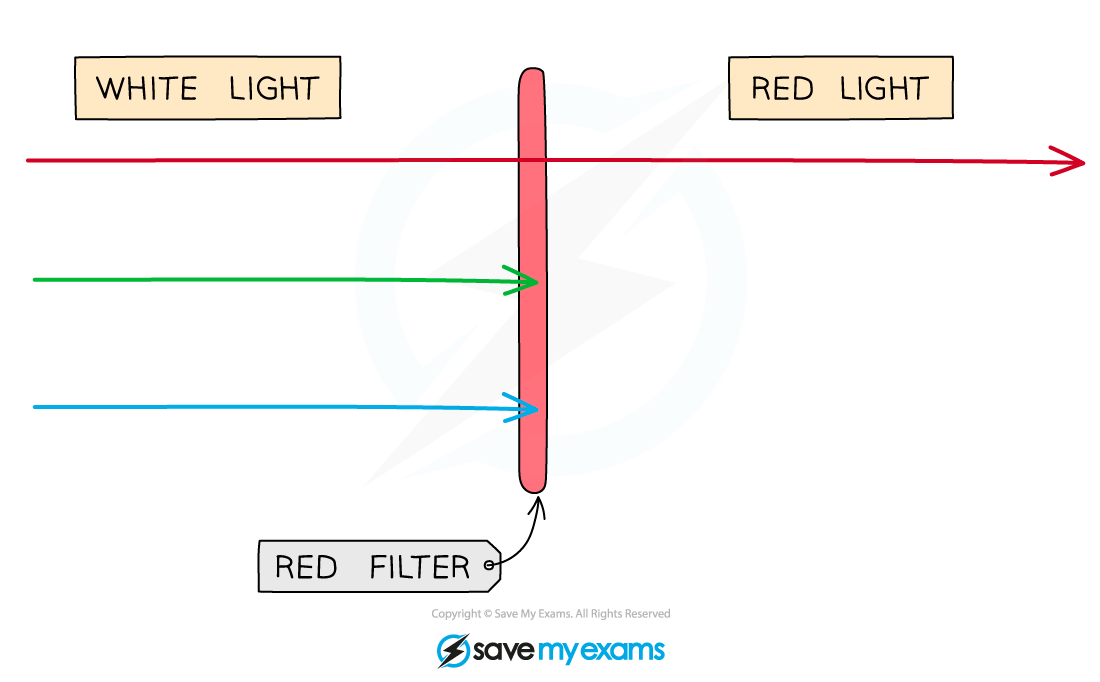
The filter transmits only red light
And absorbs all other frequencies of visible light
18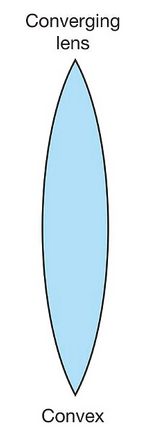
Shape of a convex/converging lense
19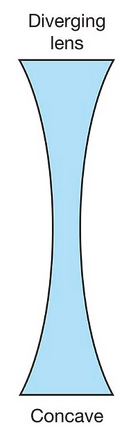
Shape of a concave/diverging lens
20
In a convex/converging lens the principal focus is…
The point at which the parallel rays are brought to a focus.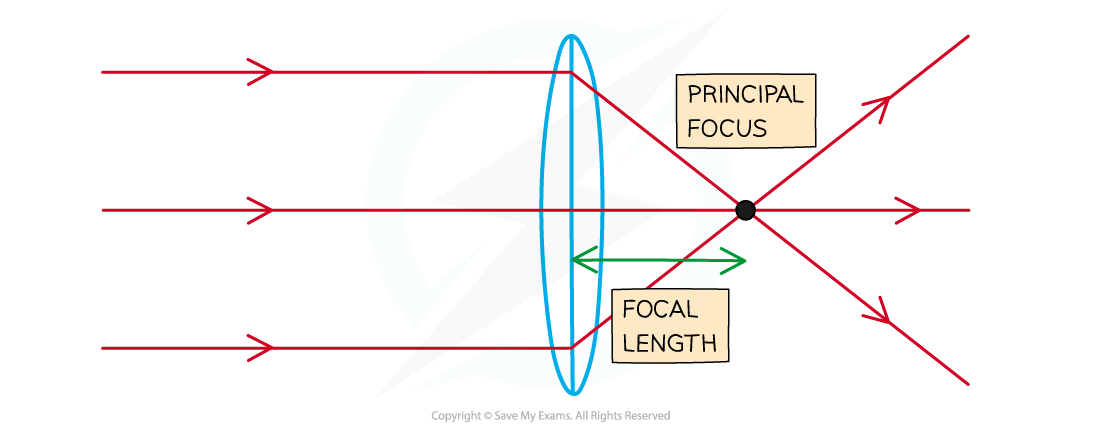
21
In a concave/diverging lens the principal focus is….
The point from which rays appear to diverge from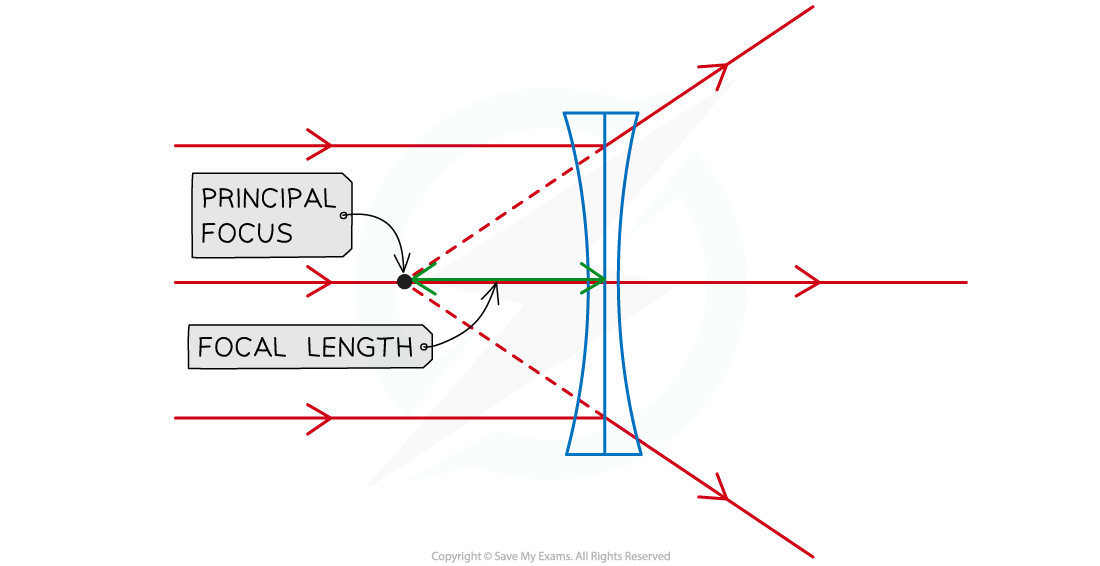
22
What is the focal length?
Distance between lens and principal focus
23
What affects the power of a lens?
The focal length
The shape
The shape
24
Relationship between shape, focal length and power of a lens
The more curved the lens, the shorter the focal length
The shorter the focal length, the greater the power of a lens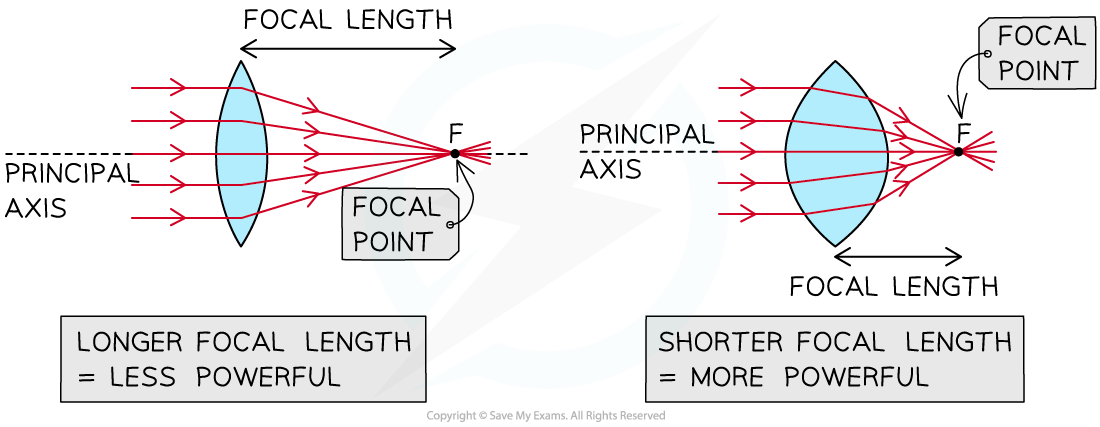
The shorter the focal length, the greater the power of a lens
25
What is the power of a lens measured in?
Dioptres
26
Equation for power of a lens
Power (dioptres) = 1 / focal length (m)
27
Real images
Formed when light rays converge toward a focus
Always inverted
Can be projected onto a screen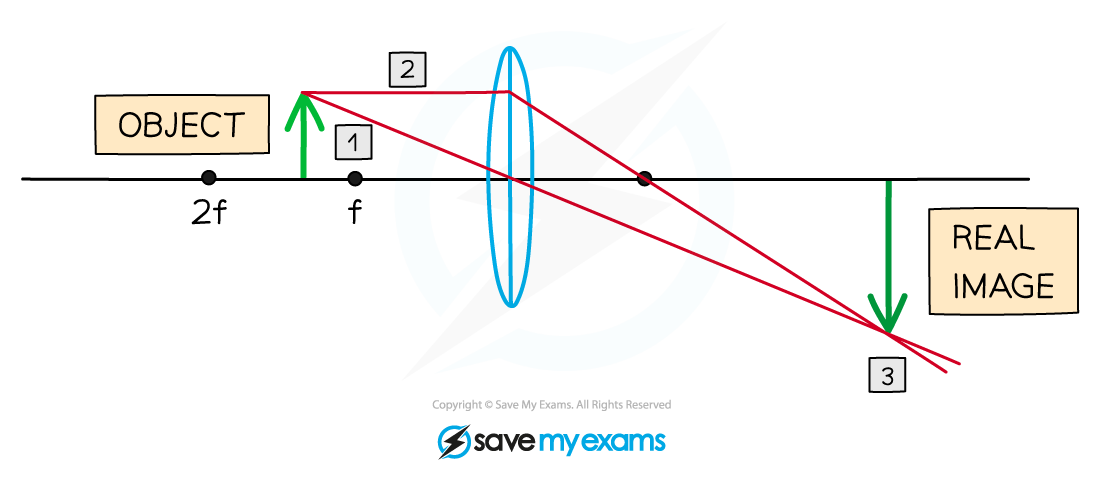
Always inverted
Can be projected onto a screen
28
Virtual images
Formed when light rays diverge from a point
Always upright
Cannot be projected onto a screen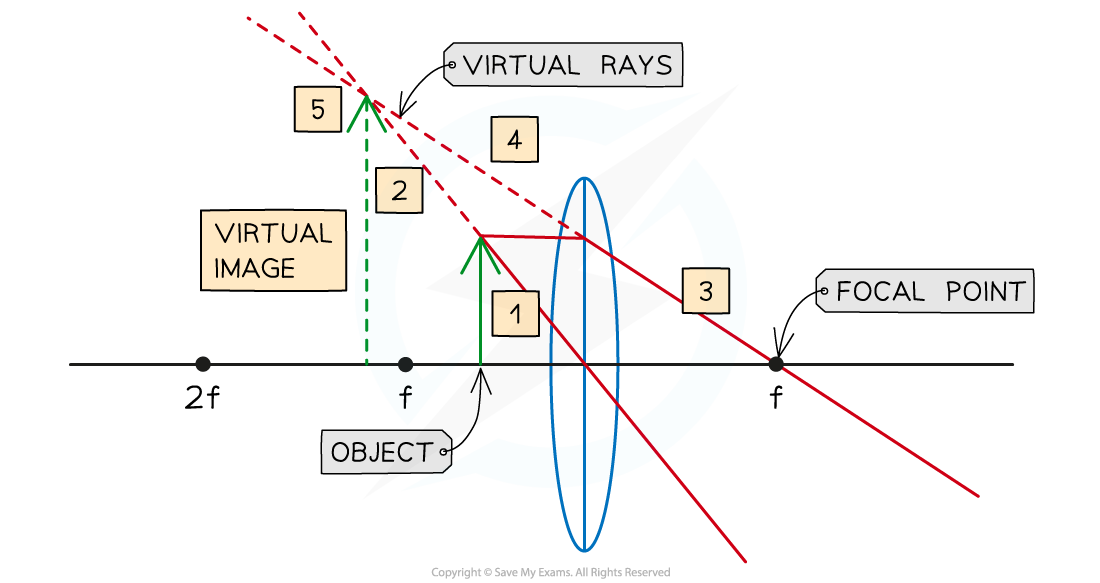
Always upright
Cannot be projected onto a screen
29
What images can convex lenses form?
Real images if the object is placed further than the focal length
Virtual images if the object is placed closer than the focal length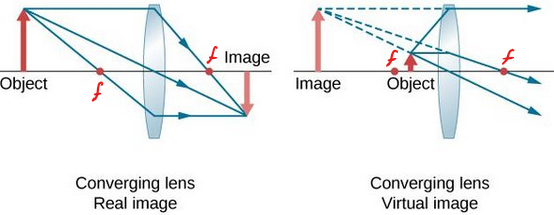
Virtual images if the object is placed closer than the focal length
30
What image will be formed if an object is further from a convex lens than its focal length?
Real image - the image will be inverted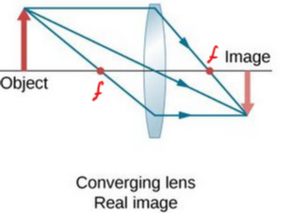
31
What image will be formed if an object is closer to a convex lens than its focal length?
Virtual image - the image will upright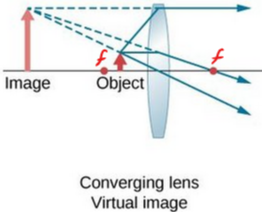
32
What images can concave lenses form?
Only virtual