midterm 4.2
Study these flashcardsFree · spaced repetition · iPhone, Android, Mac & web
All cards
1
directional selection
populations traits moves in a particular direciton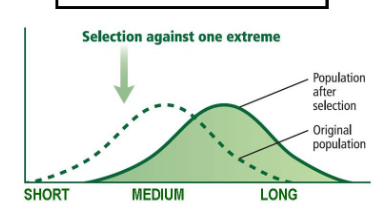
2
stabalizing selection
average organism has the highest firness extreme varisants are selected against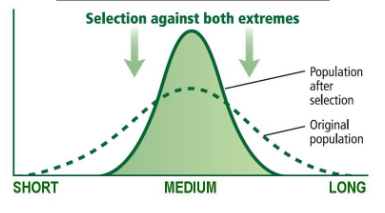
3
diversifying selection
most common variant has the lowest fitness leas to evolution of a population with 2 or more variants (can result in speciation)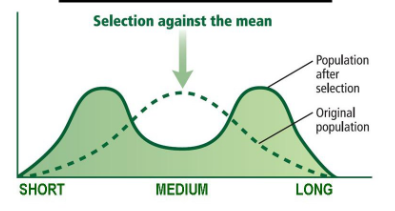
4
misconceptions: origin of new traits
all traits come from alleles, if circumstances change quickly there might not be an allele that that help(adaptations are random)
5
misconceptions: lack of perfect organisms
organisms do not predict the future as there are often tradeoffs associated with a adaptation
6
misconceptions: progressions towards a goal
organisims dont choose when to evolve or change
7
biological species
a group of organisms that in nature can interbreed and produce fertile offspring(a group hwose memebrs have the greatest resemblance)
8
Behavioral isolation
ritual displays prepare partners to mate (birds peacocks)
9
Temporal isolation
if mating occurs at different times then two species in the same area may be separated in time even though they could poetentially mate (skunks)
10
mechanical isolation
the genitals of two different species do not physcially fit together, plants; plants
11
spatial isolation
the two species are separated in space they do not contact one another and therefore do not mate
12
hybrid sterility
inerspecies hybrid produces is unable to mate with other byhrids or with either parent species (donkey and horse to make mule)
13
hybrid inviability
zygot cannot ocmplete development because it does not have all of the genes
14
hybrid reduced viability
interspecies hybrid is simply less successful and does not survive to mate in the wild
15
gamete incompatability
actual egg and sperm cells are unable to fuse with egg/sperm from another species
16
define speciation (3 requiments)
evolution of 1 or more species from an ancestral form
1. isolation:populations of original species must be iolated into gene pools
2. divergence: evolutionary change occurs to on e or both of the isolated populations
3. reproductive isolation: Evolutionary change produces reproductive isolation between these populations, preventing mating if the popuylations are unisolated
1. isolation:populations of original species must be iolated into gene pools
2. divergence: evolutionary change occurs to on e or both of the isolated populations
3. reproductive isolation: Evolutionary change produces reproductive isolation between these populations, preventing mating if the popuylations are unisolated
17
what is allopatric isolation
occurs when a population is separated and isolated either by distance of a barrier
18
what is the founder effect, how doe this relate to populations on remote islands
the founder effect is a small population of individuals is relocated to a far away area; islands usually have few competitive species so new species will grow and adapt to the new habitat
19
what is sympatric speciation; is it more or less common that allopatric; give examples
occurs when populations live near one another but become reproductively isolated for some alternate reason (ex. african cichlids only breed to people of the same color) is more common
20
descrive how instantaneous speciation may occur
results from a chromosome copying mistake in plants (self fertilization in plants allow for them to create instant new species)
21
Generally describe the concept of divergence. How come specific amounts of divergence do not always
lead to reproductive isolation?
lead to reproductive isolation?
divergence is the timeperiod between separation of the gene pools but before the volution of reproductive isolation (sub species are created such as different dog breeds)
- this does not always lead to reproductive isolation because not all interbreeding leads to genetic incompatabilties
gradualism-diveregence occurs over millions of years
punctualism- divergence occurs over thousands of years and quickly
- this does not always lead to reproductive isolation because not all interbreeding leads to genetic incompatabilties
gradualism-diveregence occurs over millions of years
punctualism- divergence occurs over thousands of years and quickly