midterm 4.4
Study these flashcardsFree · spaced repetition · iPhone, Android, Mac & web
All cards
1
describe the Kingdom Plantae
general: Multicellular eukaryotes that produce food by photosynthesis, have cell walls of cellulose
phyla
- bryophyta: mosses, lack vascular tissue
-pteriophyta: ferns, have vascular tissue, reproduce by spores
-coniferophya: seed producers
- anthophyta: flowering plants, with fruits
phyla
- bryophyta: mosses, lack vascular tissue
-pteriophyta: ferns, have vascular tissue, reproduce by spores
-coniferophya: seed producers
- anthophyta: flowering plants, with fruits
2
describe the kingdom fungi
General:reproduce by dispersing spores, feed by secreting digestive chemicals
forms:
- yeast
-mold
forms:
- yeast
-mold
3
descrivbe kingdom animalia
general:multicellular organisms that ingest other organisms, lack cell walls, usually highly motile
porifera:filter water through loosely organized body
cnidaria: contain stinging cells, radially symmetric
plateyhelminthes: flatworms, with ribbon form
mollusca: soft bodies but protected by a hard shell, have a muscular foot
annelida: segmented worms
Nemotoda: round worms no visible segments
arthropoda segmented specialized body parth
Echniodermata: slow mobing animals with radial symmetry
Chordata: animals with a spinal cord
porifera:filter water through loosely organized body
cnidaria: contain stinging cells, radially symmetric
plateyhelminthes: flatworms, with ribbon form
mollusca: soft bodies but protected by a hard shell, have a muscular foot
annelida: segmented worms
Nemotoda: round worms no visible segments
arthropoda segmented specialized body parth
Echniodermata: slow mobing animals with radial symmetry
Chordata: animals with a spinal cord
4
draw a phylogenetic tree describing the relationship between:
-3 domains of life
-the 6 kingdoms of life
-the phyla of kingdom plantae
-the phyla of kingdom animalia
-3 domains of life
-the 6 kingdoms of life
-the phyla of kingdom plantae
-the phyla of kingdom animalia
5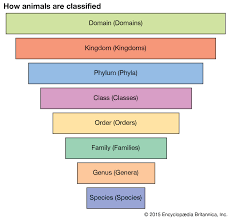
in the order they exist from largest ot smallest describe the categories of the lennaiean heirarchy
6
define the terms population and ecology
population- individuals of a cpecies in a given area
ecology- focus on interacitons of ap opulation in a area and their environment
ecology- focus on interacitons of ap opulation in a area and their environment
7
define/draw the 3 major types of pouplation dispersion patterns that exist in nature
The organisms in a population may be distributed in a uniform, random, or clumped pattern. Uniform means that the population is evenly spaced, random indicates random spacing, and clumped means that the population is distributed in clusters.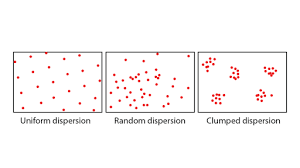
8
define the deifference between exponential and ligsitc shaped population growth (J and S shaped)
J shaped is exponential growth that happens rather quickly
S shaped is when the population increases in size then growth rate slow to zero and levels off
S shaped is when the population increases in size then growth rate slow to zero and levels off
9
Determine the growth rate of a population give the birth rate and the death rate
growth rate=birth rate-death rate
10
Define the term and understand the concept of demographic transition. How have modern changes
lowered the death rate of many countries? What does this seemingly do to the birth rate? How does the
length of demographic transition affect populations.
lowered the death rate of many countries? What does this seemingly do to the birth rate? How does the
length of demographic transition affect populations.
demographic transition is the shift of human birth and death rates. modern changes keep people alive longer meaning more people have children which causes the need for more resources such as food.
11
. Define the term carrying capacity. Discuss how humans have changed the carrying capacity of the
environment over time.
environment over time.
the maximum population that can be supported indefinitely in a given environment
- human has increased it through urbanization and technology
- human has increased it through urbanization and technology
12
Describe the difference between density dependent factors and density independent factors
density dependent factors decrease growth as the popuuation increases
-overcrowding
density independent factors degrease growth for non human caused reason
- drought
-overcrowding
density independent factors degrease growth for non human caused reason
- drought