ASTR107-01 Final Exam Flashcards
Study these flashcardsFree · spaced repetition · iPhone, Android, Mac & web
All cards
1
What does a refracting telescope have?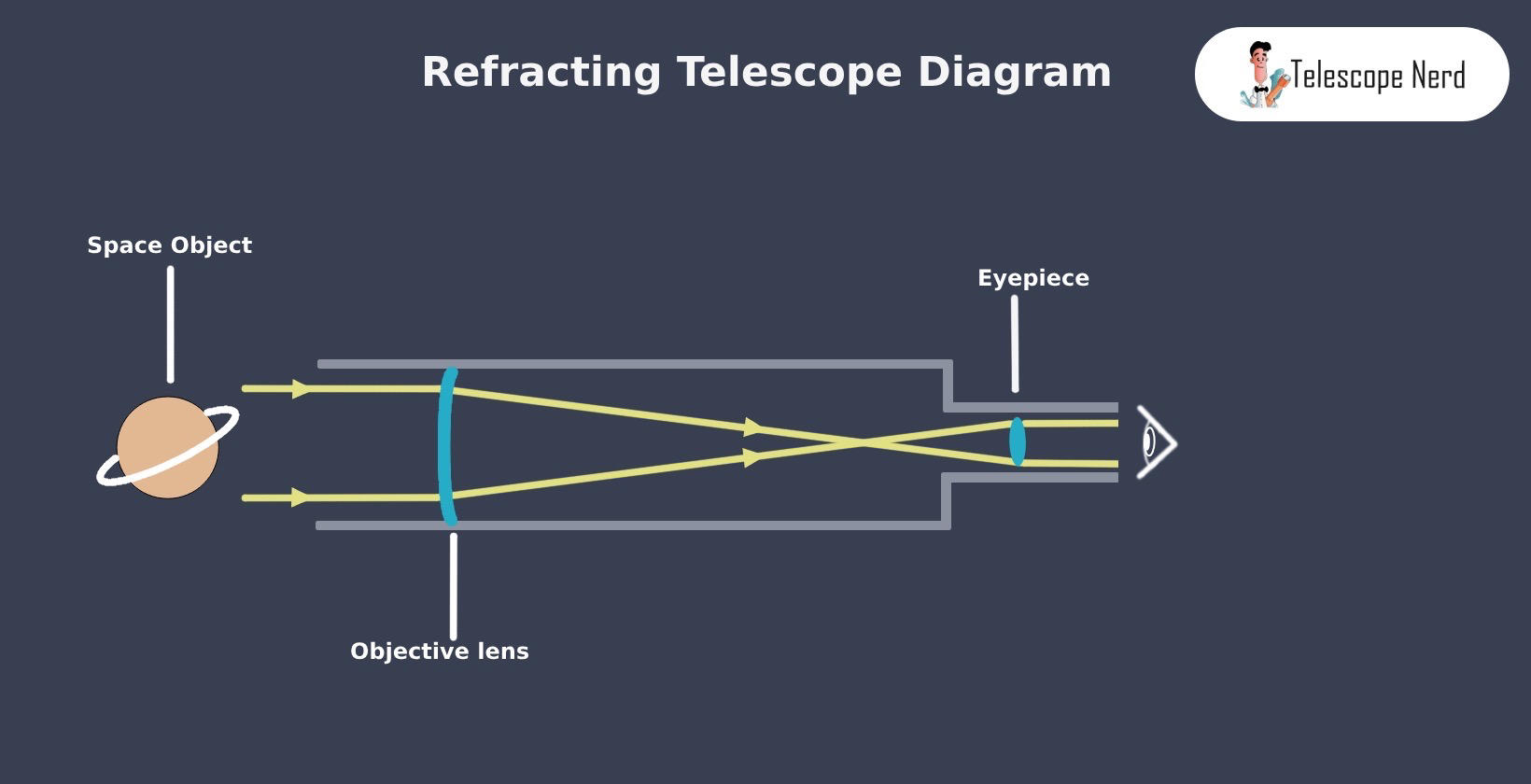
A convex lens (objective lens).
2
What does a reflecting telescope have?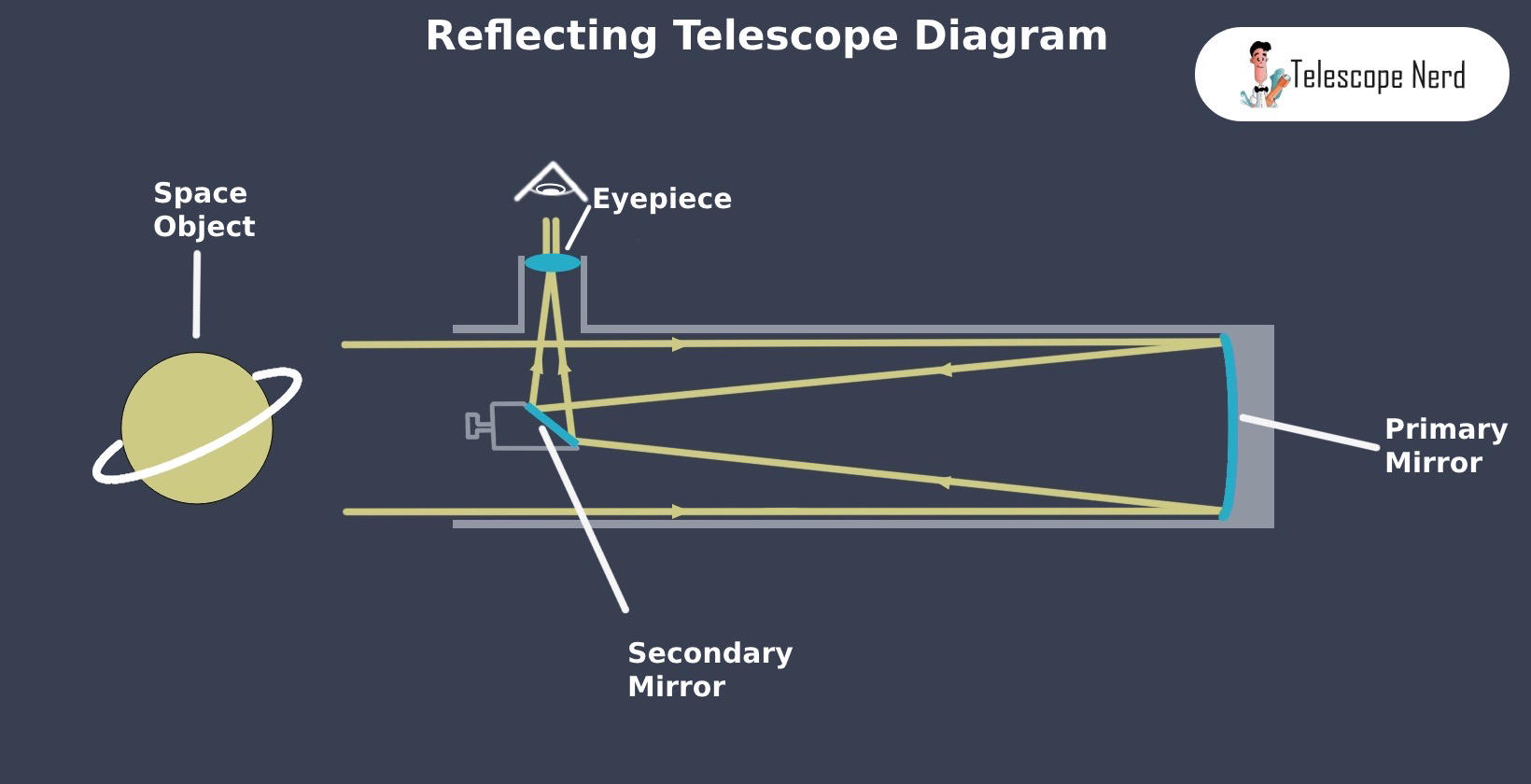
Curved mirrors and a glass back with thin, metal coating on the front.
3
What does a Newtonian telescope have?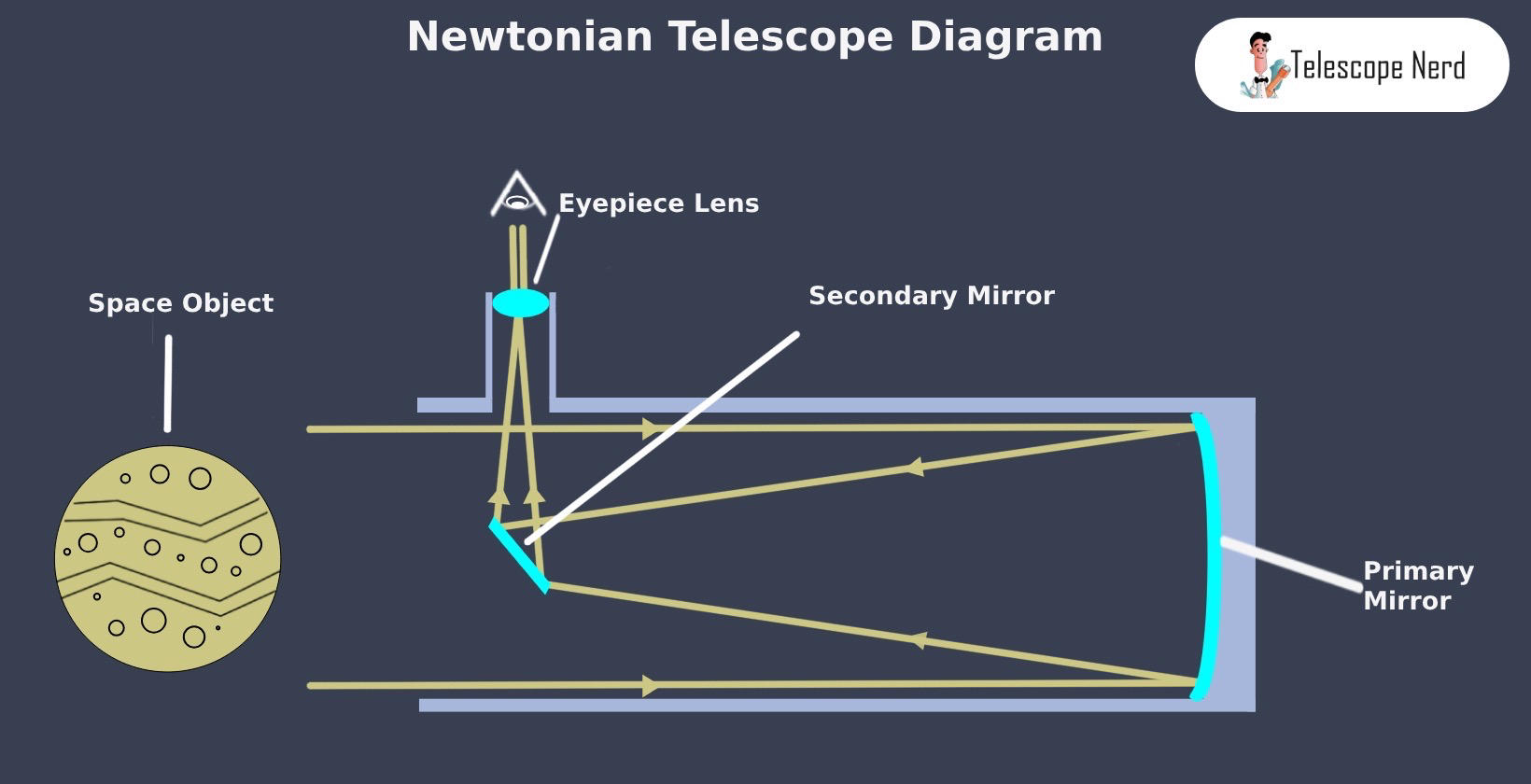
An on-axis concave primary mirror and an on-axis flat secondary mirror.
4
What does a Cassegrain telescope have?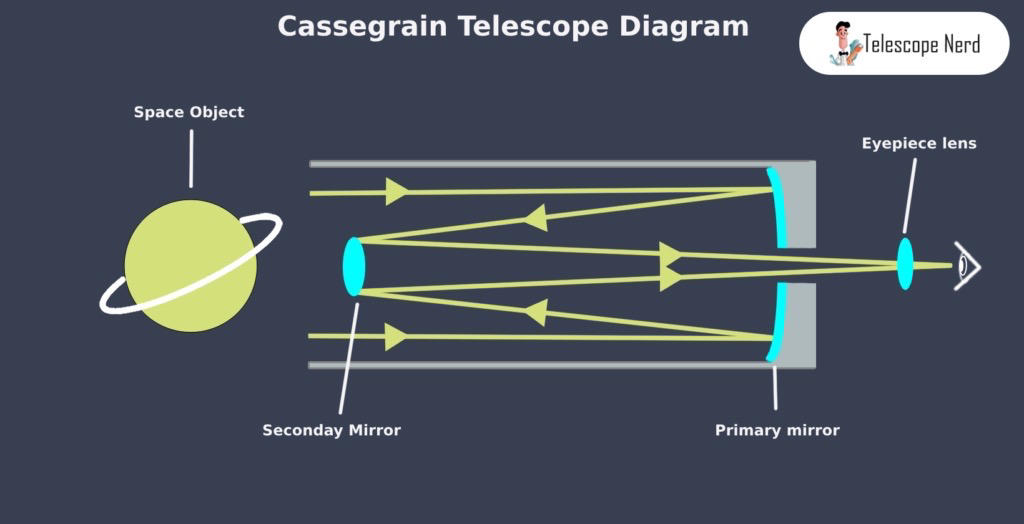
A concave primary mirror with a hole in it, a convex secondary mirror, and an image plane at the back.
5
What kind of telescope is primarily built today?
Reflecting telescopes
6
What is problem #1 with telescopes?
No surface is 100% reflective or 100% transparent.
7
How do you mitigate stray reflections?
Anti-reflective coatings and baffling.
8
What is problem #2 with telescopes?
Optical Aberrations.
9
How do you mitigate optical abberations?
Make good optics, have clever correcting lenses, and active optics.
10
What is problem #3 with telescopes?
Light difrracts.
11
How do you mitigate diffraction?
You need to be very clever, very difficult and complicated.
12
What are the 8 telescopes at the observatory?
Fitz, Metzger, Rosing, Austin-Fellows, Olson, Hunt, Catch, and Weaver.
13
How do most stars move in respect to our coordinate system?
The rotation of Earth sets the motion of stars.
14
Circumpolar stars...
never set.
15
What is Mean Solar Time?
Time where the sun transits at the same time every day (every 24 hours).
16
What is Local Sidereal Time?
Time where the stars are used as a clock.
17
What is a sidereal day?
The time it takes for Earth to rotate once.
18
Why is knowing the Local Sidereal Time and RA useful?
The right ascension of the meridian is equal to your LST.
19
What is the North celestial pole?
Straight up at the north pole.
20
What is the South celestial pole?
Straight down at the south pole.
21
What is the Celestial equator?
Earth's equator projected into the sky.
22
What is declination?
The angle between the star and the celestial equator.
23
What is right ascension?
the angle between the star and the vernal equinox.
24
What is flux?
The amount of energy carried by photons arriving at the telescope.
25
What makes measuring flux difficult?
Detector efficiency, atmospheric transparency, telescope imperfections, and local sources of stray light.
26
What did Hipparchus do?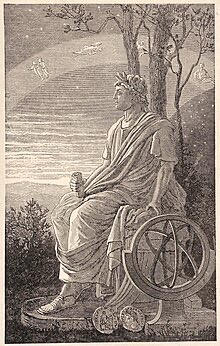
The first known catalogue of stars around 129 B.C.
27
What did Ptolemy do?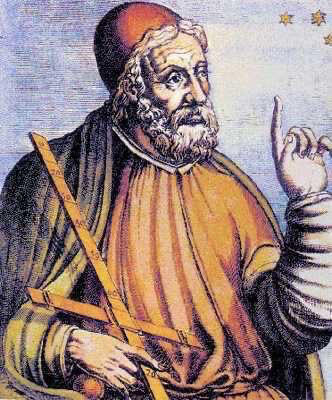
Discovered Ptolemy's "Almagest", laying out 6 steps in brightness in magnitudes.
28
What did al-Battani do?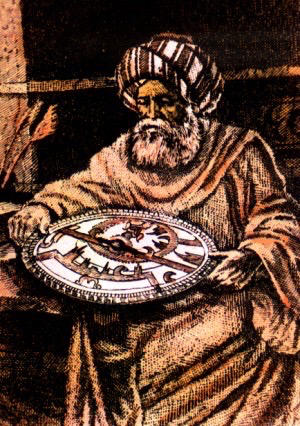
Created catalogue of 500 stars in 899 A.D.
29
What did al-Sufi do?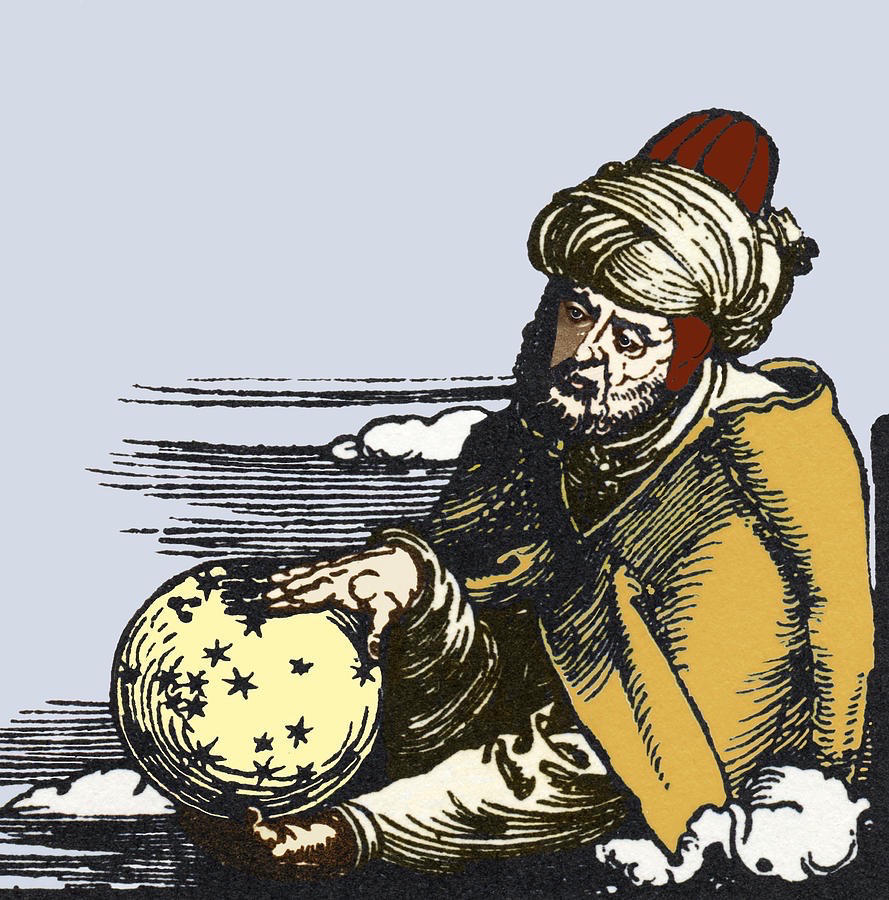
Made the "Book on the Constellations of the Fixed Stars" in 964 A.D.
30
What did Tycho Brahe do?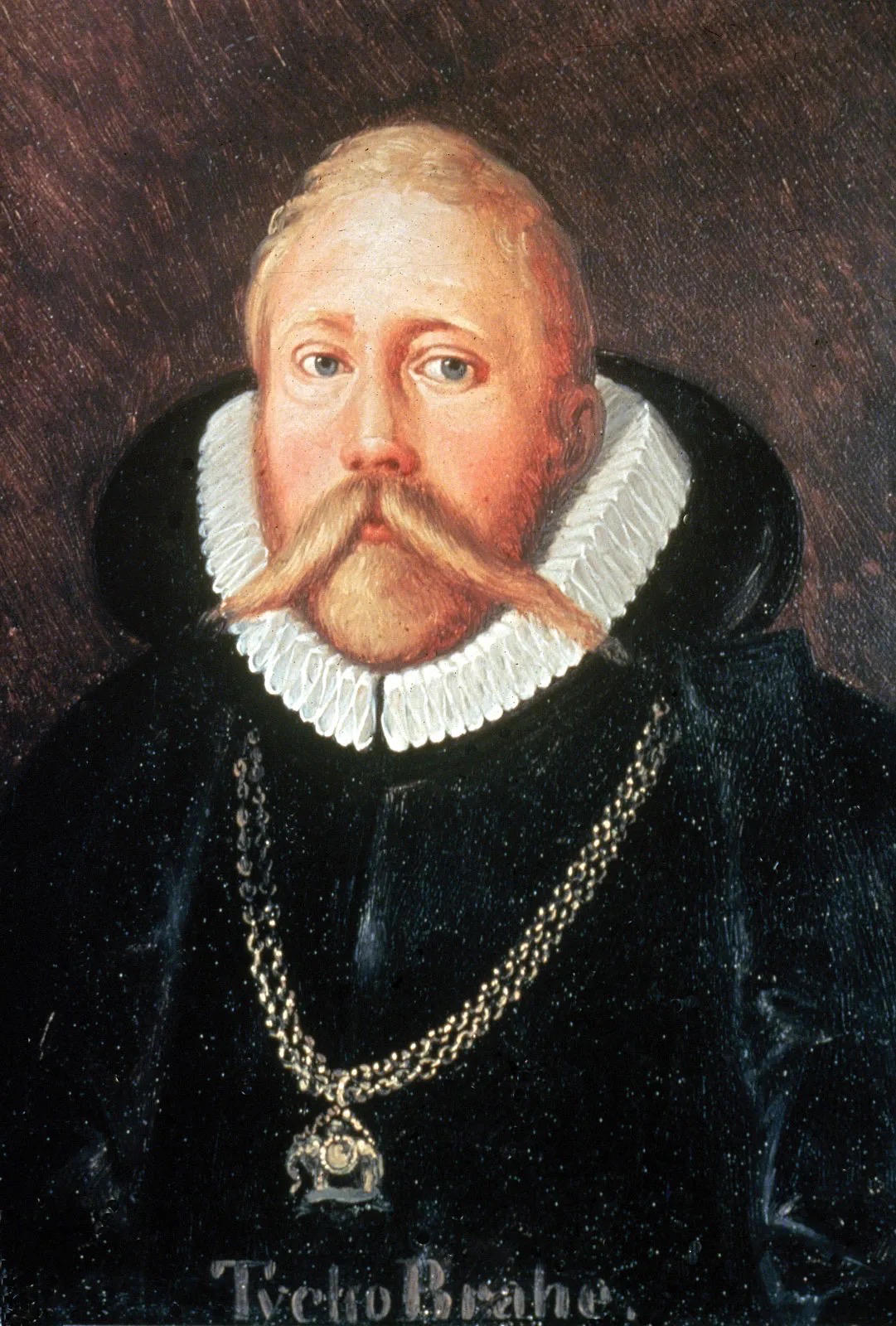
Created "Uranometria" in 1608, containing 777 stars.
31
What did Galileo do?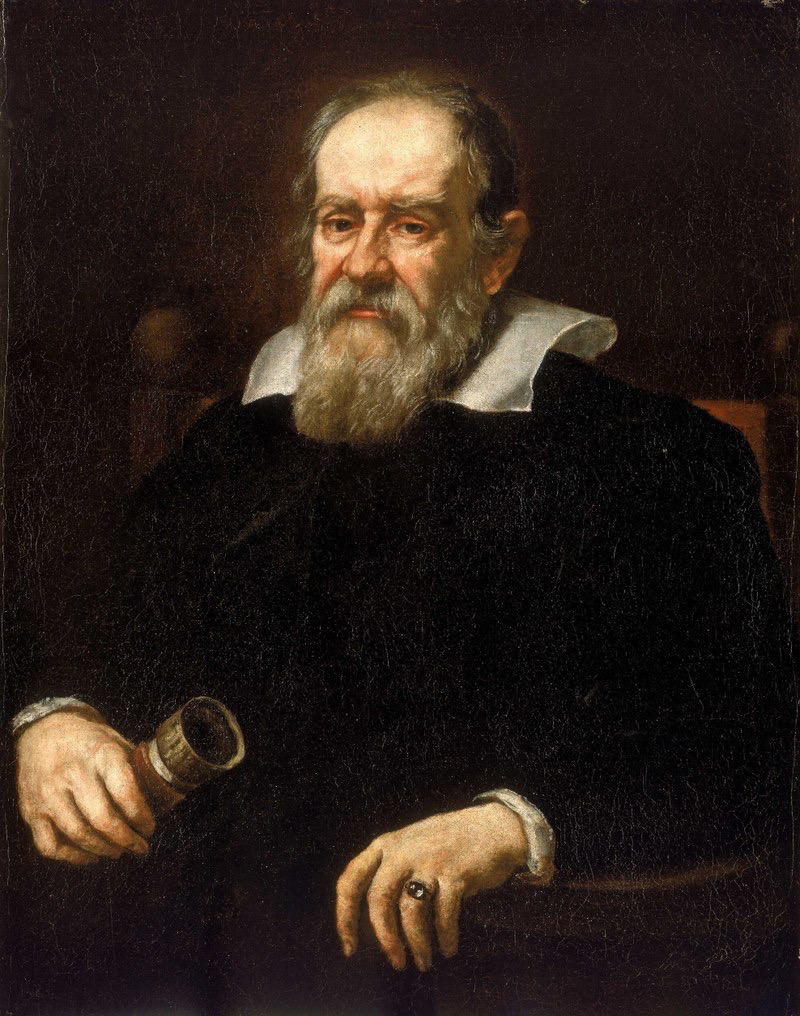
Showed that stars looked 5 magnitudes brighter through telescopes.
32
What did Edmond Halley do?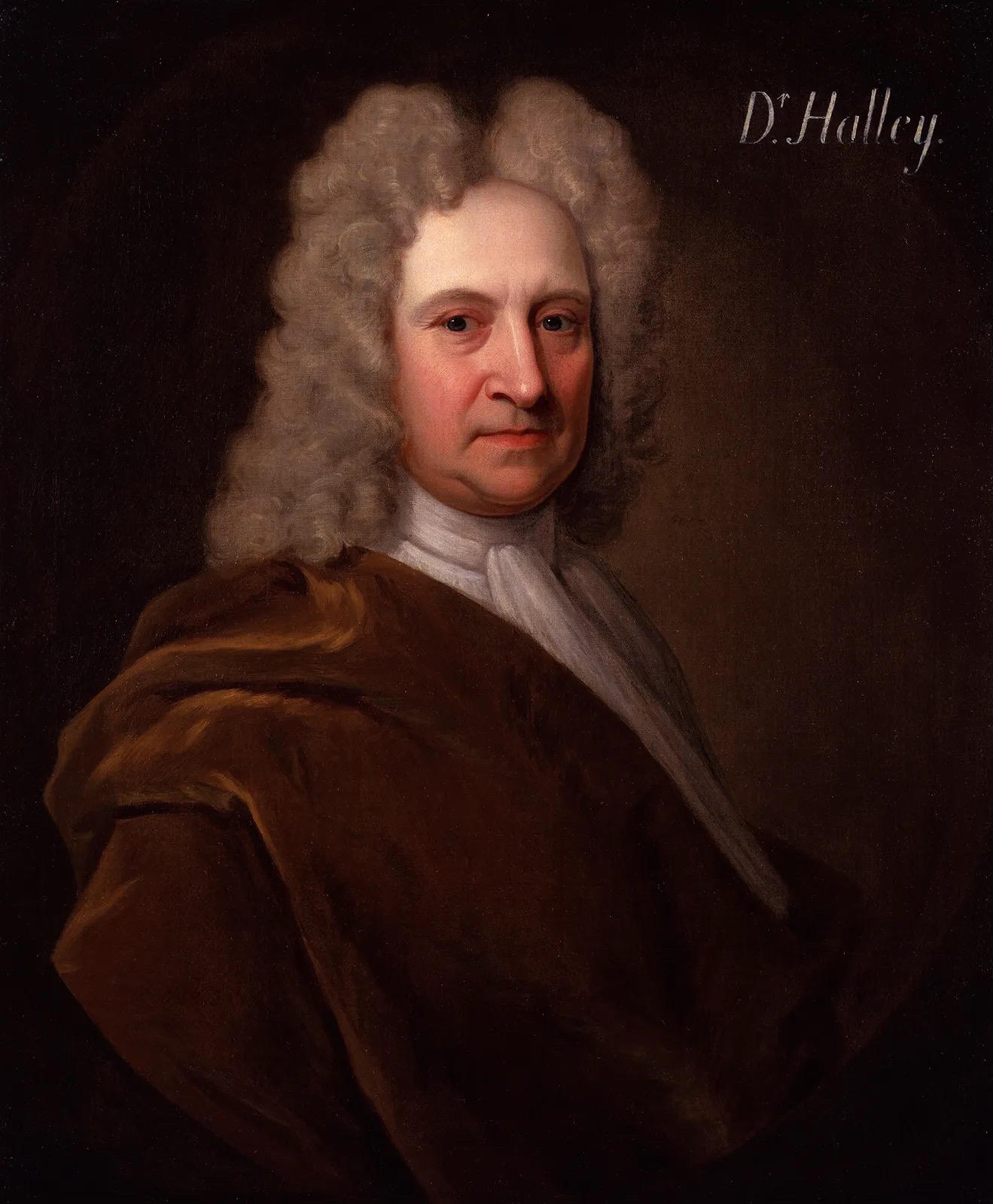
Produced a catalogue of 341 stars in the Southern hemisphere.
33
What did William Herschel do?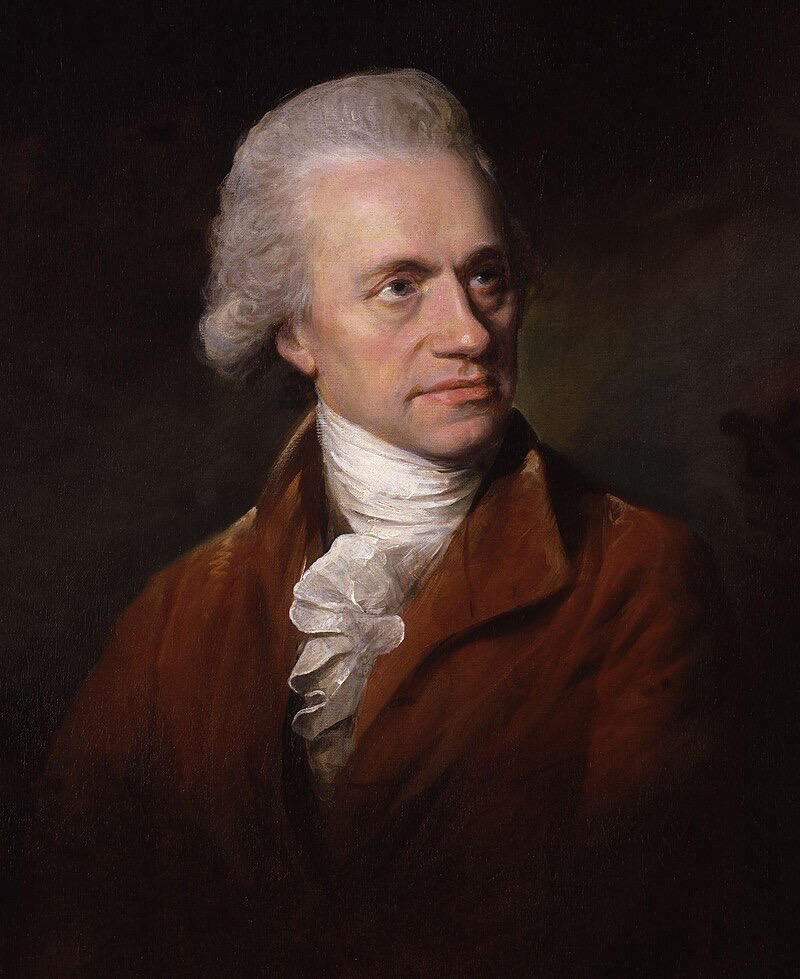
Noticed that measurements of stars were inconsistent with one another.
34
What do telescope filters allow?
Lets specific colors/wavelengths/energies of light through.
35
What is atomospheric Rayleigh Scattering?
Strong wavelength dependence, scattering off of air molecules, blue sky, and red sunsets.
36
What is atomspheric Mie Scaterring?
Weak wavelength dependence, scattering off of larger particles, white clouds, fog, and light halo.
37
What is zodiacal light?
Dust grains in the plane of the solar system with large sizes.
38
What is airglow?
When the atomsphere also emits light.
39
What was a massive improvement in astronomy?
Photographic plates.
40
Who sought out to answer the debate of whether galaxies were nebulae within the Milky Way, or if they were extragalactic "Island Universes"?
Edwin Hubble.
41
What are standard candles?
Celestial objects with known luminosities.
42
What is a cepheid?
Variable stars that oscillate in brightness with a fixed period.
43
What does DASCH stand for?
The Digital Access to a Sky Century.
44
What does CCD stand for?
Charged Coupled Device.
45
What does a CCD allow you to do?
Allows you to count individual photons arriving at our telescope.
46
What is Quantum efficiency?
How efficient the device is at detecting photons.
47
How do you count the amount of photons of a CCD?
With the "bucket brigade system".
48
What does a commercial CCD do?
Measures multiple colors at a time, like red, blue, and green.
49
What does an astronomical filter and CCD do?
Measures one color at a time.
50
How do you mitigate bias?
By taking a zero-second "exposure" and subtracting it from science observations.
51
How do you mitigate dark currents?
By taking long exposure with the lens cap on, and subtract from science image.
52
How do you mitigate flat fielding?
By observing something uniformly bright.
53
How do you mitigate cosmic rays?
By taking multiple exposures.
54
How do you mitigate dead/hot/warm pixels?
By "dithering"/slightly moving the telescope.
55
What do spectrographs do?
Disperse light and measure its intensity as a function of wavelength.
56
The specific amount of light at each wavelength depends on...
the temperature of the object.
57
What is a hydrogen atom without a neutron?
A protium.
58
What is a hydrogen atom with 1 neutron?
A dueterium.
59
What is a hydrogen atom with 2 neutrons?
A tritium.
60
Dueterium is...
Involved in the fusion process that powers stars.
61
Tritium is...
Used in nuclear reactors and bombs.
62
The electrons in the atom can only exist in...
Discrete, quantized energy states.
63
To jump up, an atom needs to...
Absorb a photon.
64
To jump down, an atom needs to...
Emit a photon.
65
What are two, common options for dispersing light?
Prisms and diffraction gratings.
66
What does combining a grating and a prism allow?
To quickly switch between imaging and the spectroscopy.
67
What are dark regions on the moon called?
Mare.
68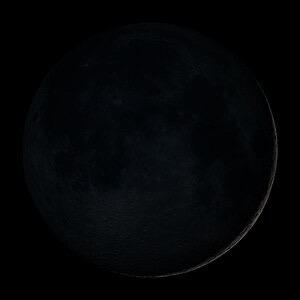
New moon.
69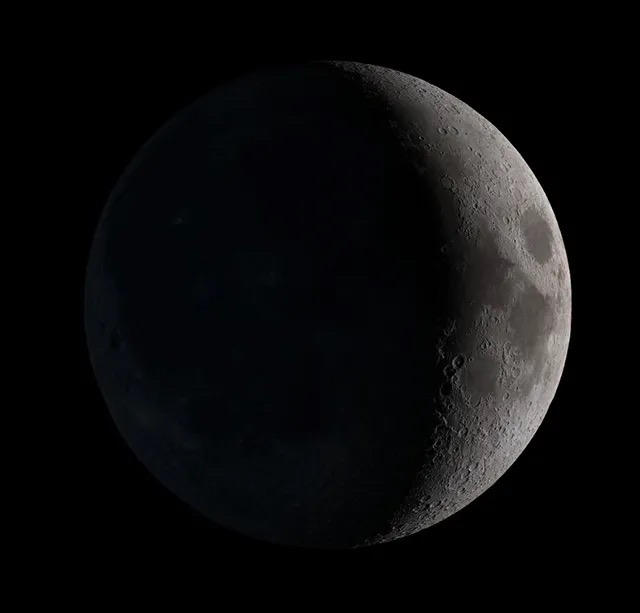
Cresent moon.
70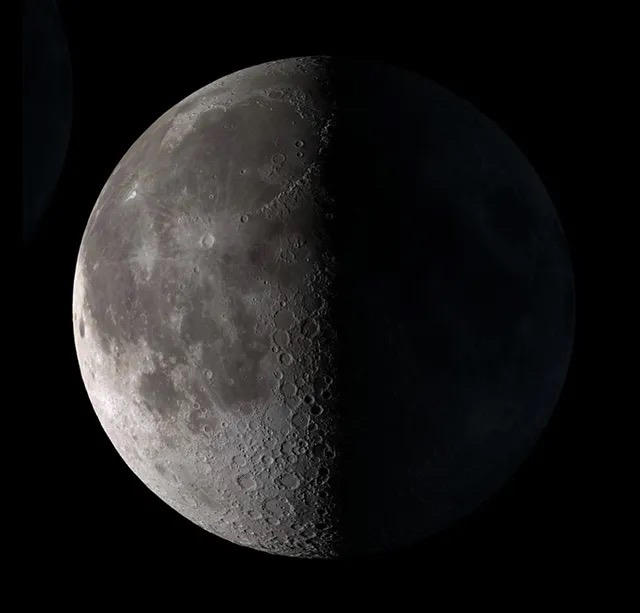
Quarter moon.
71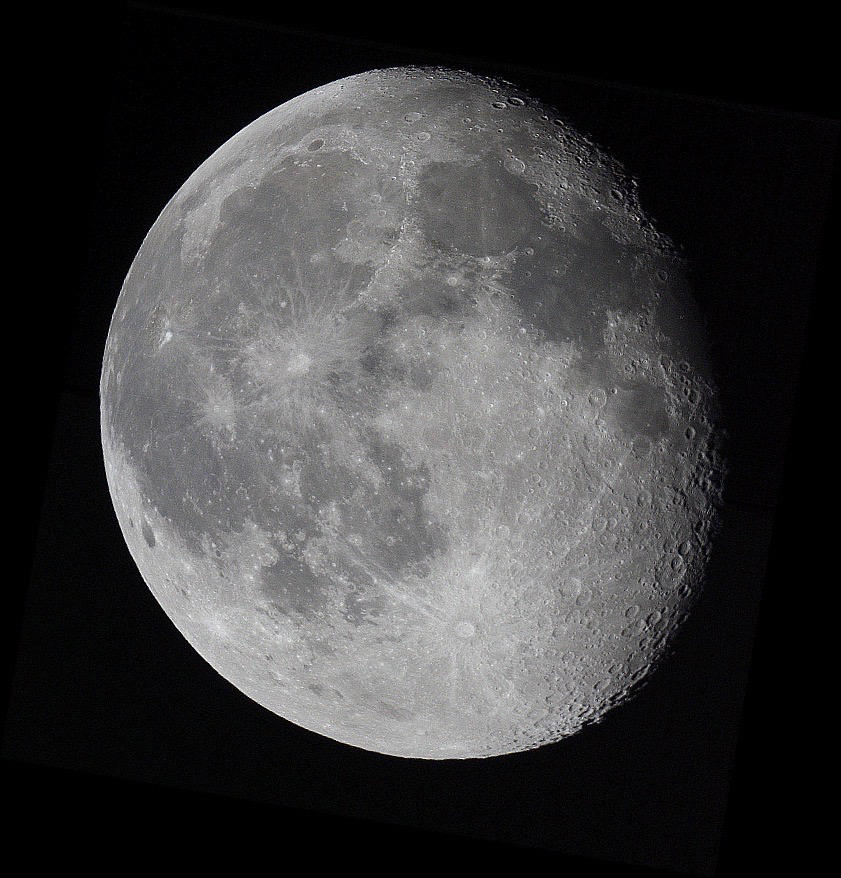
Gibbous moon.
72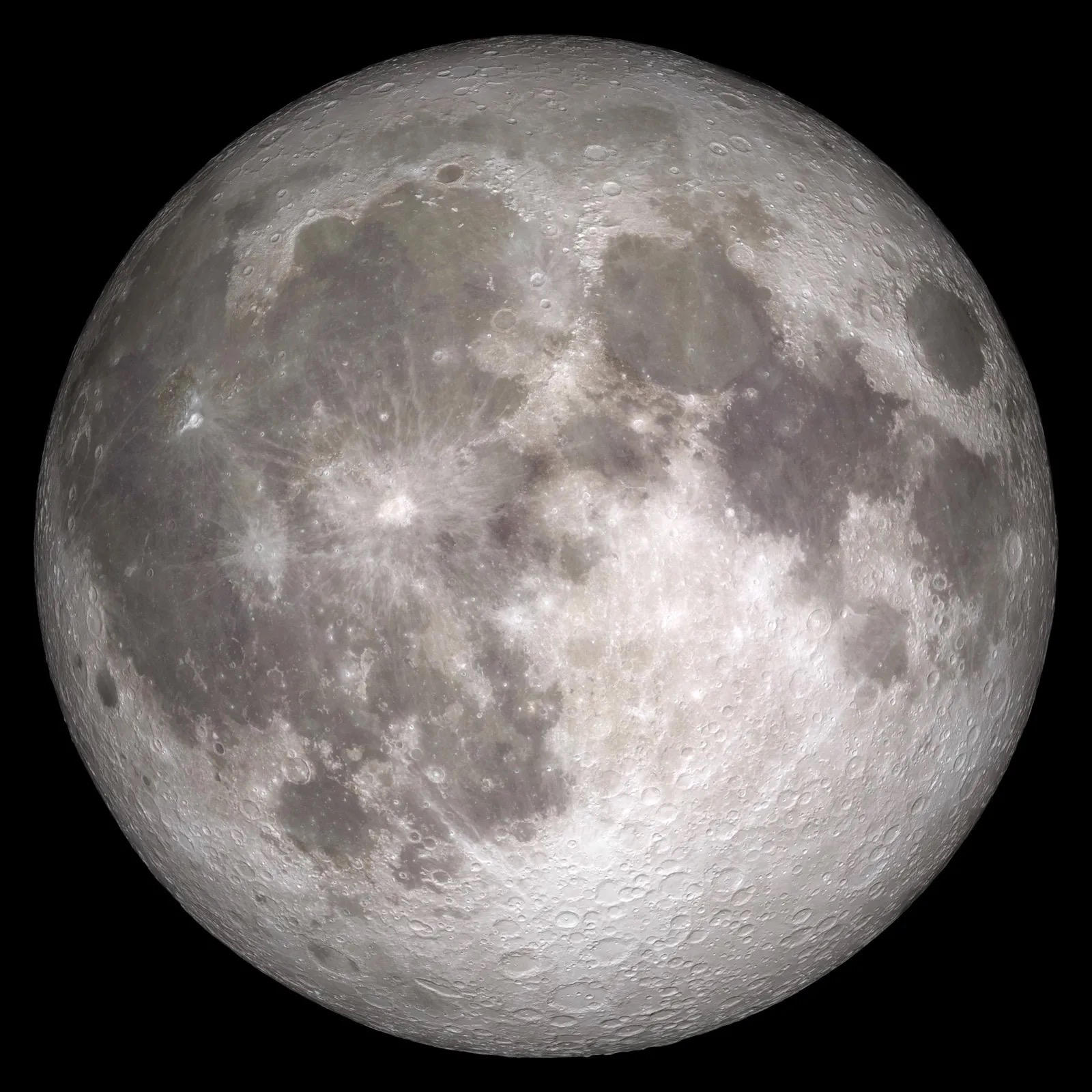
Full moon.
73
More illumination over time means...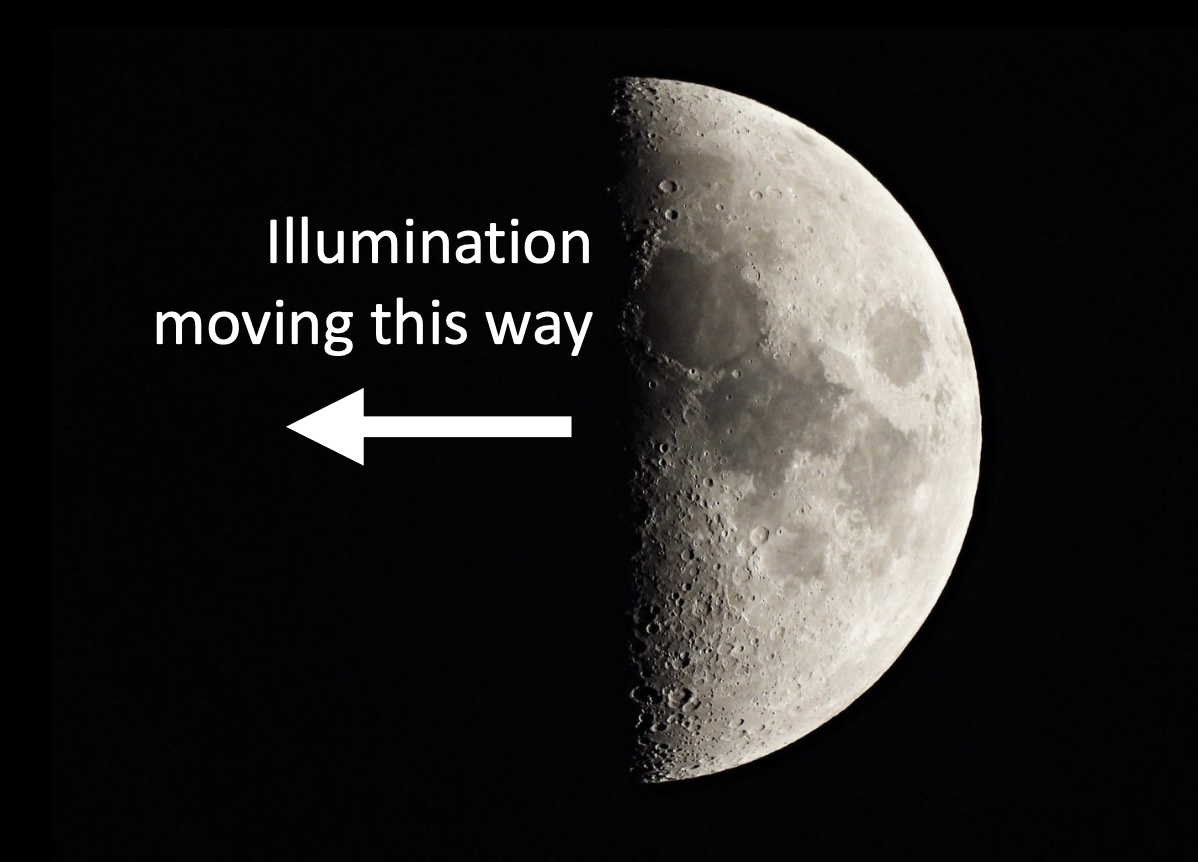
Waxing.
74
Less illumination over time means...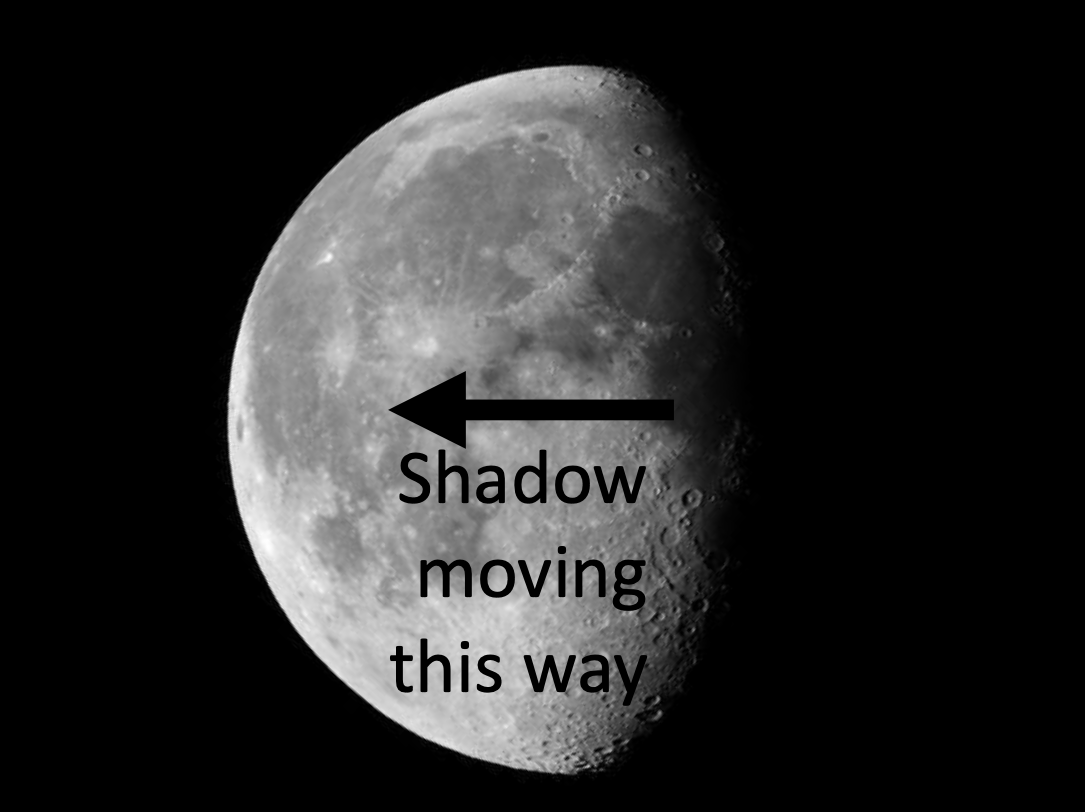
Waning.
75
What kind of eclipse only happens on a new moon?
A solar eclipse.
76
What is a total solar eclipse?
Where the moon completely blocks the sun.
77
What is a partial solar eclipse?
Where only a part of the sun is blocked.
78
What is a annular solar eclipse?
Where the sun appears as a bright ring surrounding the moon.
79
What are the galilean moons of Jupitar?
Io, Europa, Ganymede, and Callisto.
80
How do we better understand how stars work?
By measuring millions of stars at a time.
81
What are some factors that are easy to meaure about stars?
Color and apparent brightness.
82
What are some factors that are somewhat difficult to measure about stars?
Lumonisty, distance, and composition.
83
What are some factors that are much more difficult to measure about stars?
Age, mass, and presence of exoplanets.
84
What is the Main Sequence (MS)?
The continuous, diagonal strip of stars through diagrams.
85
MORE massive stars on the MS are...
Hotter and more luminous.
86
LESS massive stars on the MS are...
Cooler and less luminous.
87
What does Oh Be A Fine Girl/Guy Kiss Me (Less Talk) represent?
OBAFGKM MS arranged by decreasing temperature.
88
What do giant stars eventually do?
Puff out their outer layers and become planetary nebulae.
89
What are white dwarfs?
Remnants of giant stars that have puffed out their outer layers.
90
What are white dwarfs made of?
Carbon and oxygen.
91
What are the most luminous stars of the universe?
Super giants.
92
What are exoplanets?
Planets orbitting around other stars.
93
What is the transit method?
Taking repeated pictures of a star using a telescope for a very long time.
94
How do you explore exoplanetary atomspheres through transit spectroscopy?
As light from the star passes through the planet's atmosphere, imparts "spectral fingerprint" on the merging spectrum.
95
What does the radial velocity method allow you to do?
To measure the mass of the planet.
96
Where do stars and planets form?
In molecular clouds.
97
What happens when a star runs out a fuel?
A supernova.
98
What are remnants of a supernova?
Neutron stars.
99
What are pulsars?
Neutron stars that have brighter spots near their magnetic poles.
100
What are magnetars?
Neutron stars with especially intense magnetic fields.
101
How are black holes caused?
By bigger supernova remnants.
102
What are the 3, descriptive qualntities of a black hole?
Mass, spin, and charge.
103
What is a light year?
The distance that light travels in one year.
104
How old is the universe?
About 13.7 billion years old.
105
How old is the sun?
About 10 billion years old.
106
What is the diameter of the Milky Way?
100,000 light years.
107
How far is the closest galaxy?
2.5 million years.
108
How are galaxies classified?
By their morphology (Hubble Tuning Fork).
109
Collisions between galaxies can lead to...
Irregular galaxies.
110
What lies at the center of a galaxy?
A supermassive black hole.
111
What are accreting supermassive black holes called?
Active Galactic Nuclei.
112
What is a way to measure the stored mass of galaxies?
By using Doppler shifts.
113
What are galactic rotation curves?
A mismatch between light and mass.
114
What is dark matter?
A theory of invisable matter that makes up 2/3rds of our galaxy.
115
What is proven evidence of dark matter?
Gravitational lensing and The Bullet Cluster.
116
What are superclusters made from?
Galaxy clusters.
117
On what cluster is the Milky Way located on?
The Virgo cluster.
118
What are galaxy filaments/sheets?
The largest gravitationally bound objects in the universe, constructed of superclusters.
119
Is our universe rapidly expanding?
Yes.
120
What is the oldest light that we can observe?
Cosmic background radiation.
121
What is causing space to expand?
Dark energy.
122
What are the 3 fates of the universe?
The big freeze, the big crunch, and the big rip.
123
What occurs every 10 years in the field of astronomy?
Feedback is requested and completed on "white papers".
124
What are some future goals set by the astronomy field?
Pathways to habitable worlds, new windows on the dynamic universe, much larger telescope programs.
125
What will HARMONI do?
Take images where you get a spectrum at each pixel.
126
What will MICADO do?
Observes at near-infrared wavelengths.
127
What will METIS do?
Possibly discover a Earth-like planet.
128
What will ANDES do?
Detect spectral lines.
129
What will MOSAIC do?
Map out the dynamics of the inner region of the Milky Way.
130
What makes a site good for astronomical observations?
Remote with no light pollution, high elevations, and very dry climate.
131
What sites are highly effective for observing?
Native American sites.