Airspace
Study these flashcardsFree · spaced repetition · iPhone, Android, Mac & web
All cards
1
Class alpha requirements
- IFR flight plan
- IFR rating
- IFR rated plane
- mode c transponder
- dme / gps system
- IFR rating
- IFR rated plane
- mode c transponder
- dme / gps system
2
Class alpha cloud clearances
IFR
3
Class alpha dimensions
- 12 nm off the coast
- 18,000ft to fl 60
- includes all 48 states and alaska
- requires you to reset altimeter back to 29.92
- 18,000ft to fl 60
- includes all 48 states and alaska
- requires you to reset altimeter back to 29.92
4
Class bravo requirements
- Ppl / student pilot license
- 2 way radio communication
- clearance to enter
- mode c transponder
- 2 way radio communication
- clearance to enter
- mode c transponder
5
Class bravo dimensions
SFC to 10,000ft MSL
6
Class brave cloud clearances
3COC
7
Class bravo speed limits
Above class b: 250 knots
Below class b: 200 knots
Below class b: 200 knots
8
Class charlie requirements
- 2 way radio communication
• abs-b out transponder
- mode c transponder
• abs-b out transponder
- mode c transponder
9
Class charlie cloud clearances
3152
10
Class charlie dimensions
Inner shelf:
- about 5 nm.
- from SFC to 4,000ft
Outer shelf:
- about 10 nm
- 1200ft to 4,000ft
- about 5 nm.
- from SFC to 4,000ft
Outer shelf:
- about 10 nm
- 1200ft to 4,000ft
11
Class delta requirements
- Student pilot license
- 2 way radio communication
- 2 way radio communication
12
Class delta cloud clearances
Below 10,000ft:
3152
Above 10,000ft:
5111
3152
Above 10,000ft:
5111
13
Class delta dimensions
- SFC to 2,500ft
- airport distance is 4 nm
- airport distance is 4 nm
14
Class echo requirements
Greater than 10,000ft MSL
- mode c transponder
- ads-b out
- mode c transponder
- ads-b out
15
Class echo cloud clearances
Below 10,000ft:
3152
Above 10,000ft:
5111
3152
Above 10,000ft:
5111
16
Class echo dimensions
Dashed red:
700ft AGL - 18,000ft MSL
Faded red :
1200ft AGL to 18,000ft MSL
700ft AGL - 18,000ft MSL
Faded red :
1200ft AGL to 18,000ft MSL
17
Class gulf requirements
- Student pilot license
18
Class gulf cloud clearances
Below 1200ft msl:
Day - 1 COC
Night - 3152
Below 10,000ft msl:
Day - 1512
Night - 3152
Day - 1 COC
Night - 3152
Below 10,000ft msl:
Day - 1512
Night - 3152
19
Class gulf dimensions
SFC - 1200ft when under class echo
- can extend up to 18,000ft when not under class echo
- can extend up to 18,000ft when not under class echo
20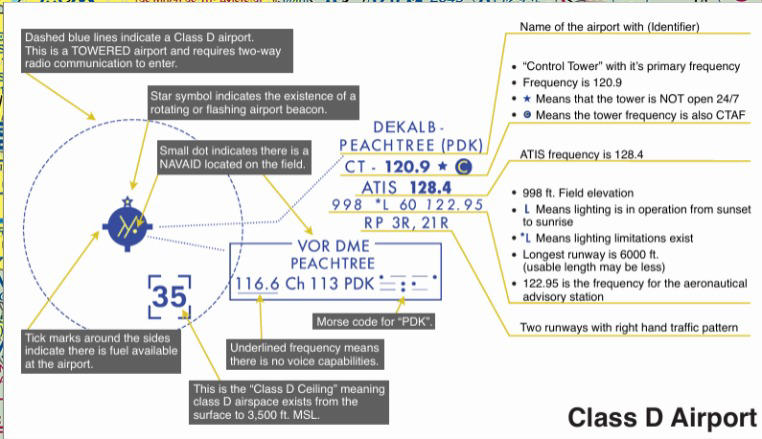
Airspace Notes (Class D)
21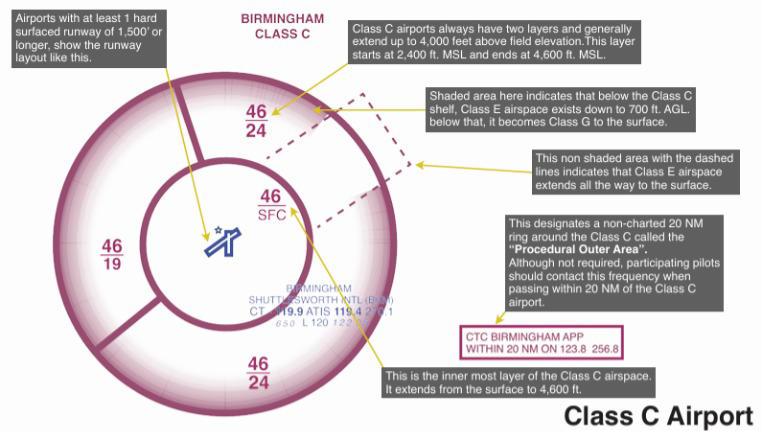
Airspace Notes (Class C)
22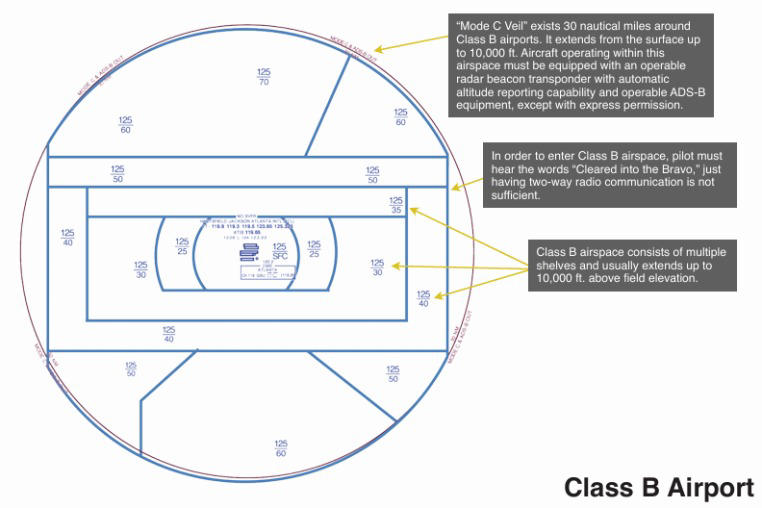
Airspace Notes (Class B)
23
Prohibited Area (pg. 26)
- special use airspace
- not permitted to fly in it
- violating it could mean interception by military aircraft
- not permitted to fly in it
- violating it could mean interception by military aircraft
24
Military Operations Area (MOA)
- special use airspace designed to seperate civilian aircraft from military aircraft
- not always active
- VFR aircrafts are permitted to fly through active MOAs but they must use extreme caution
- not always active
- VFR aircrafts are permitted to fly through active MOAs but they must use extreme caution
25
Restricted Areas
- special use airspace where flying is not wholly prohibited
- subjected to restrictions
- cannot pass through without contacting the controlling agency first
- not always active
- HOT means they are active
- COLD means they can be flown through without permission
- subjected to restrictions
- cannot pass through without contacting the controlling agency first
- not always active
- HOT means they are active
- COLD means they can be flown through without permission
26
National Security Area
- areas that have increased security and safety of ground facilities
- defined with specific vertical and lateral dimensions
- pilots are requested to avoid it but are not prohibited
- can become prohibited airspace when needed and notifies pilots by NOTAMS
- defined with specific vertical and lateral dimensions
- pilots are requested to avoid it but are not prohibited
- can become prohibited airspace when needed and notifies pilots by NOTAMS
27
Alert Area
- area for high volume of pilot training or aerial activity
- pilots of course can fly through this area but use extreme caution
- pilots of course can fly through this area but use extreme caution
28
Warning Area
- defined by dimensions
- extending from 3 NM outward from the coast of the U.S
- area contains activity that might be hazardous to aircraft
- pilots are allowed to fly through these areas but they must use extreme caution
- also if pilot were to fly beyond 3 nm they would have to go through TSA to legally get back to the U.S
- extending from 3 NM outward from the coast of the U.S
- area contains activity that might be hazardous to aircraft
- pilots are allowed to fly through these areas but they must use extreme caution
- also if pilot were to fly beyond 3 nm they would have to go through TSA to legally get back to the U.S
29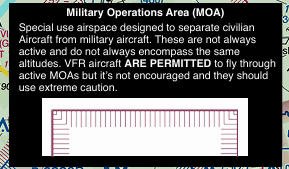
MOA
30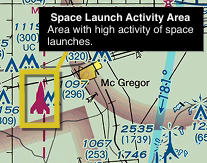
Space Launch Area