Q10 Thunderstorms
Study these flashcardsFree · spaced repetition · iPhone, Android, Mac & web
All cards
1
BL 1 Select the factor which is not related to forming the thunderstorms?
Strong wind
2
BL 2 When the cell transitions to the mature stage?
Starting of precipitation
3
BL 3 The distinguishing feature of the towering cumulus stage is?
strong convective updraft
4
BL4 Weather hazards reach peak intensity toward the end of the __________
mature stage.
5
LV 5 Most severe weather conditions, such as destructive winds, heavy hail and tonadoes, are generally associated with?
Squall line thunderstorms
6
BL 6 Narrow band of thunderstorms ahead of a cold front is called as
Squall line.
7
BL 7 Where is the windshear associated with thunderstorm.
On all sides and underside and inside of the thunderstorm
8
BL 8 Which stage of thunderstorm associated with strong downdraft embedded within the area of precipitation ?
Dissipating.
9
BL 9 Which is always accompanied by a thunderstorm?
lightning and thunder .
10
BL 10 If severe turbulence is encountered nearby or in the thunderstorms, the airplane should be slowed to the __________speed otherwise excess load that can be imposed on the wing.
Va
11
BL 11 Squall line are the thunderstorm type which presents the most effective barrier to air traffic because?
The line is usually too tall to fly over, too dangerous to fly through or under, and difficult to circumnavigate
12
BL. 12 How long microburst will last?
Less than 15 min in most cases
13
BL 13 Maximum downdrafts in a microburst can be as strong as
6,000 feet per minute
14
BL 14 An aircraft experience microburst headwind of 45 knots, the total decrease in speed would be;
90 knots.
15
BL 15 If there is thunderstorm observed in the vicinity of an airport what condition a pilot should expect at landing approach?
Wind shear.
16
BL 16 Which aircraft positions will experience the most severe downdraft?
2 and 3.
17
BL 17 Which aircraft will experience an increase in performance with same power and attitude?
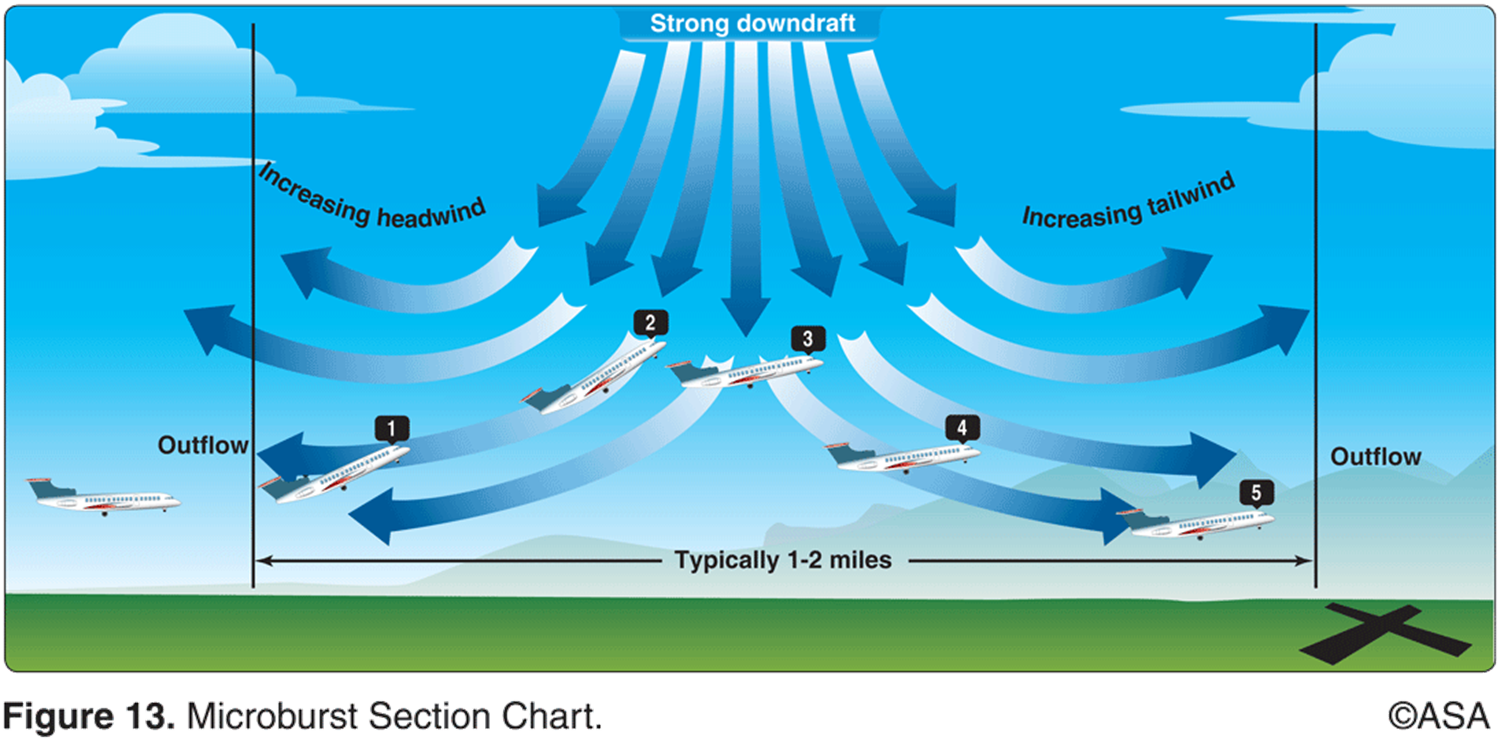
4
18
BL 18 Which microburst effect Aircraft 3 will experience?
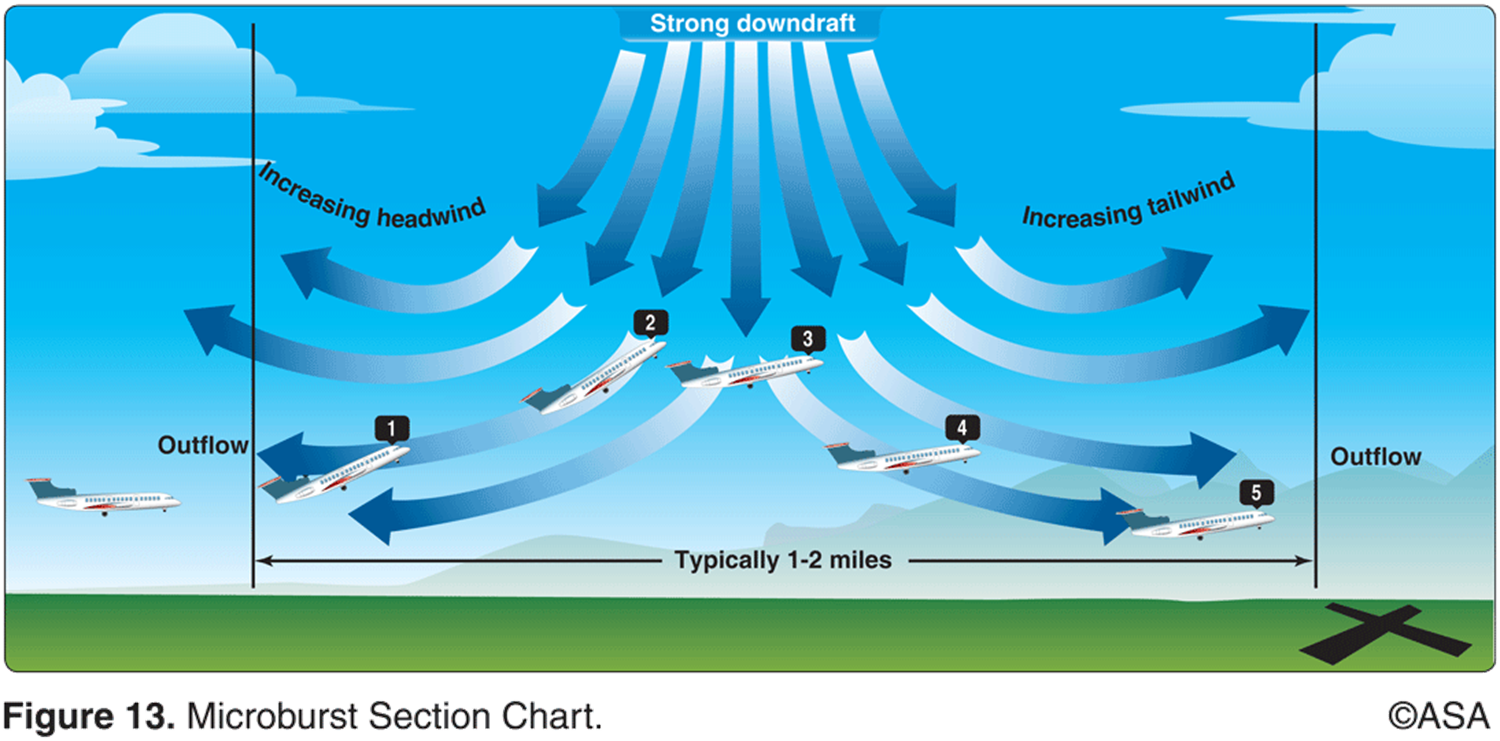
Strong downdraft.
19
BL 19 Which microburst effect Aircraft 4 will experience?
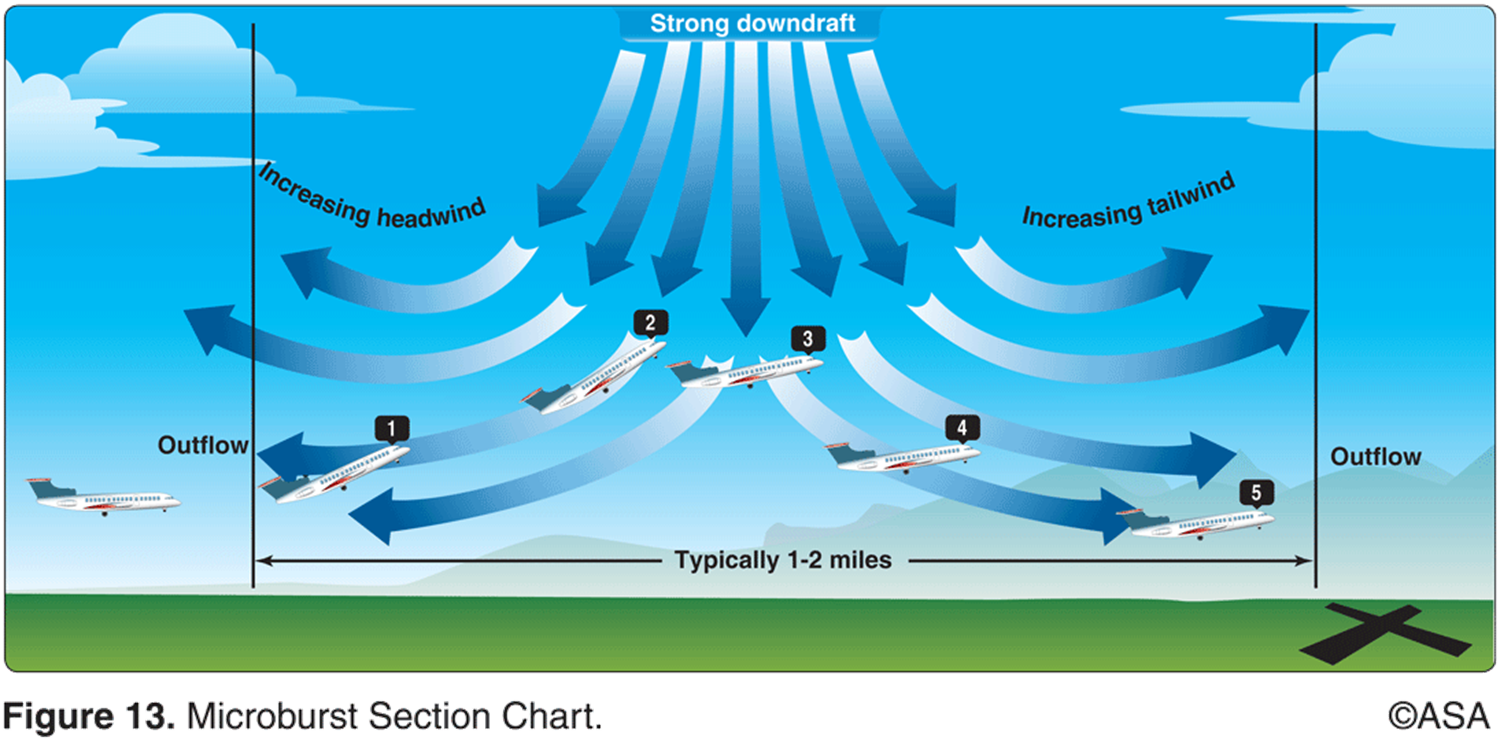
Strong tailwind and decrease in altitude
20
BL 20 During ILS approach, if an aircraft encounter windshear, first tailwind then headwind, what should a pilot do with power.
Increase power then reduce
21
BL 21 While flying an ILS, a constant tailwind shears to a calm wind. What will the pilot observe?
Airspeed and pitch attitude increase and and then airplane will go above glide slope.
22
BL 22 During an ILS constant IAS is maintained, if you encounter windshear from headwind to tailwind what will happen?
PITCH ATTITUDE/Vertical Speed/Indicated Airspeed: Increases then decrease;
REQUIRED THRUST: reduced, then increased
REQUIRED THRUST: reduced, then increased
23
BL 23 During the ILS approach airplane performance increase and now start to discrease. What will happen next?
Decrease in airspeed and pitch attitude and airplane will be below glide slope.
24
BL 24 Which items a pilot should monitor and pay attention to realize the windshear on landing approach?
power and rate of descent to remain on the 3 degree glidepath.
25
BL 25 Which is correct statement regarding turbulence associated with thunderstorms?
Outside the cumulonimbus cloud, turbulence has been encountered several thousand feet above, and 20 miles laterally from, a severe storm.
26
BL 26 What are visible indications of extreme turbulence in thunderstorms?
shelf cloud, very frequent lightning, and roll clouds.
27
BL 27 Select correct statement?
Hail an be encountered in clear air several miles from a thunderstorm.
28
BL 28 LV Of the following cloud types, which is most likely to produce hail?
cumulonimbus clouds.
29
BL 29 The reason you should avoid thunderstorm by 20 miles or should not fly under the anvil is;
hail can be thrown out from the anvil.
30
BL 30 The dangers to an aircraft operating nearby thunderstorms are:
hail and turbulence.
31
BL 31 The weather radar displays the target (precipitation, clouds etc) using the amount of energy returned directly back to the radar after striking a target, which is called:
backscattered energy
32
BL 32 Which is correct; the use of aircraft weather radar:
Enable a pilot to steer between thunderstorms safely