ACG2071 Chapter 2 (Principles of Managerial Accounting)
Diese Karteikarten lernenKostenlos · Spaced Repetition · iPhone, Android, Mac & Web
Alle Karten
1
Cost accounting systems
An accounting system that measure, record, and report product costs.
2
Job order costing system
vs
Process Costing System
vs
Process Costing System
Job order costing system: An accounting system that accumulates costs by job. Used by companies that manufacture unique products or specialized services.
Process Costing System: An accounting system that accumulates costs by process. Used by companies that manufacture identical units through a series of uniform production steps or processes.
Process Costing System: An accounting system that accumulates costs by process. Used by companies that manufacture identical units through a series of uniform production steps or processes.
3
Job Cost Record
*Used for the Job order cost system
A document that shows the direct materials, direct labor, and manufacturing overhead costs for an individual job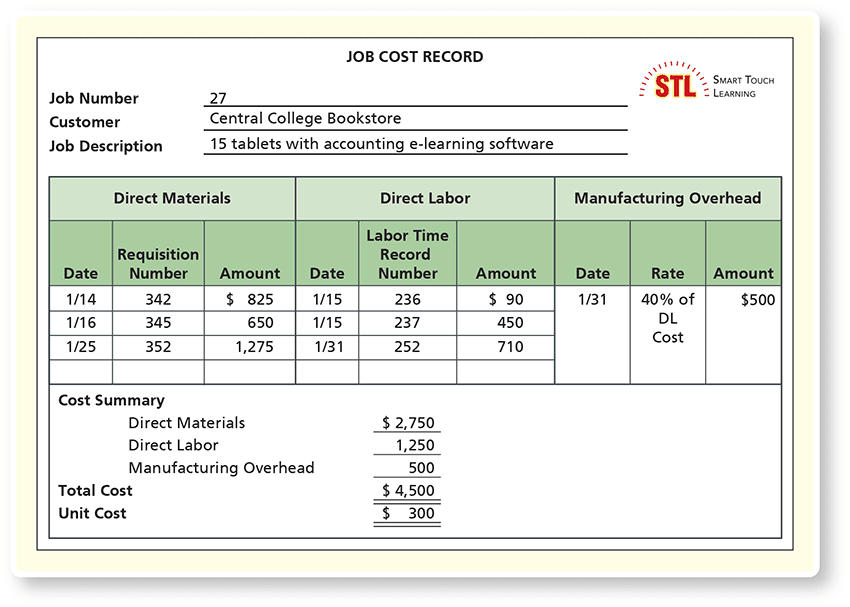
A document that shows the direct materials, direct labor, and manufacturing overhead costs for an individual job
4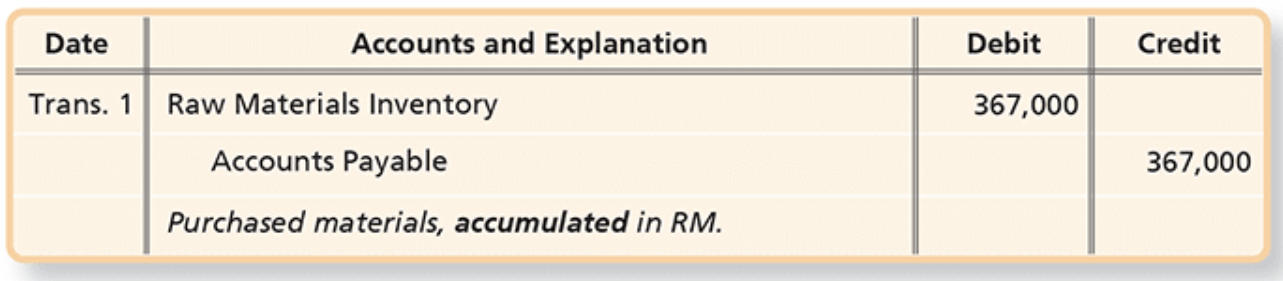
Raw Materials Purchased
5
How is the subsidiary ledger used for raw materials?
There is a separate subsidiary ledger account for each type of raw material, such as for batteries, and then another for processors.
The subsidiary ledger record shows how much of the raw material was purchased (received), used in production (issued), and balance on hand (balance) at all times.
*They used this since it helps them better keep track of each raw material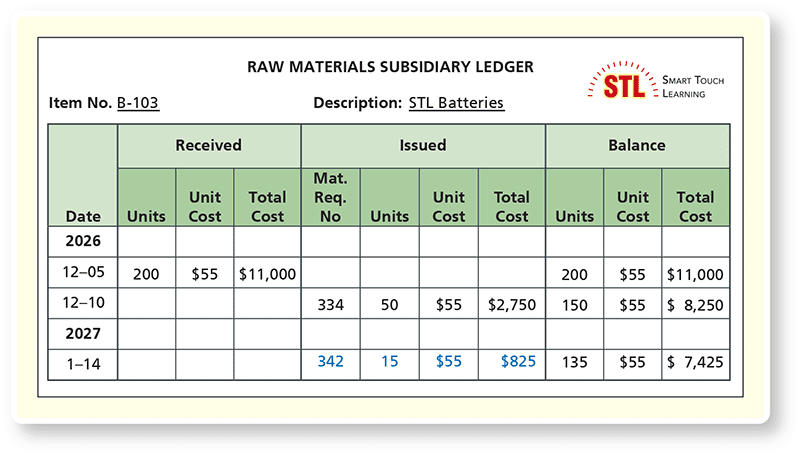
The subsidiary ledger record shows how much of the raw material was purchased (received), used in production (issued), and balance on hand (balance) at all times.
*They used this since it helps them better keep track of each raw material
6
Material Requisition
A document that request the transfer of raw materials to the production floor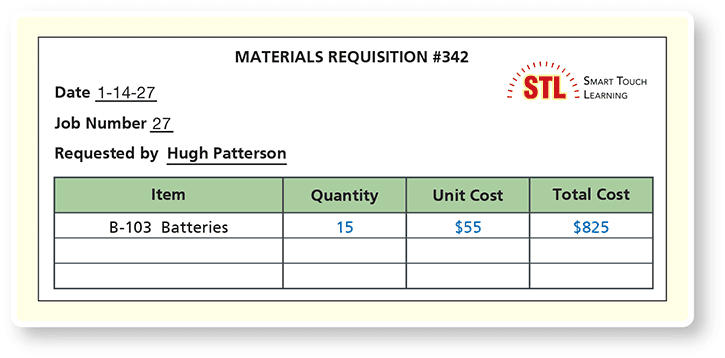
7
Journal entry for using \$372,000 of raw materials to manufacture goods that are still a work in progress.
Only \$355,000 is easily/cost effectively traceable to each good, however, \$17,000 is NOT.
Only \$355,000 is easily/cost effectively traceable to each good, however, \$17,000 is NOT.
The Direct raw materials go into WIP inventory
The indirect raw materials go into Manufacturing Overhead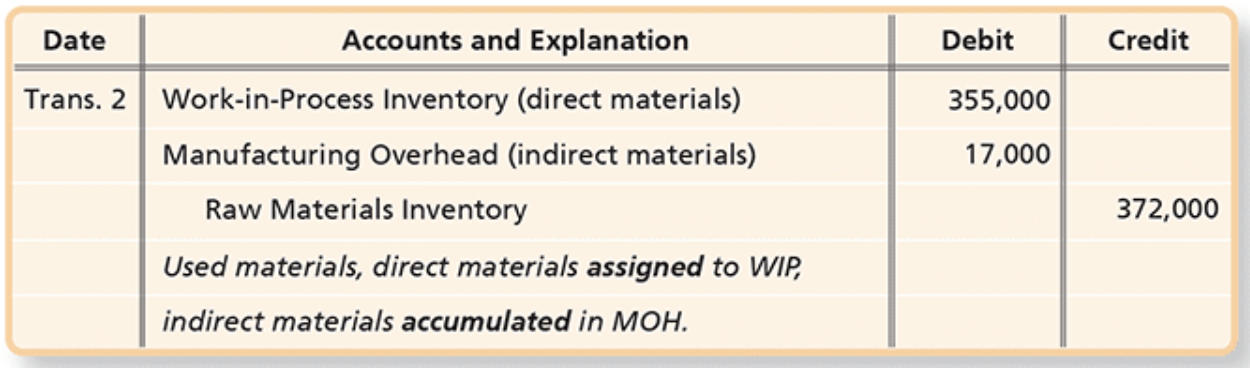
The indirect raw materials go into Manufacturing Overhead
8
Labor Time Record
A record used to assign direct labor cost to a specific job
9
Journal Entry to spend \$197,000 on labor to make goods that are still a work-in-process.
\$169,000 was direct labor and \$28,000 was indirect labor.
\$169,000 was direct labor and \$28,000 was indirect labor.
The direct labor gets transferred to Work-in-process Inventory
The indirect labor gets transferred to Manufacturing Overhead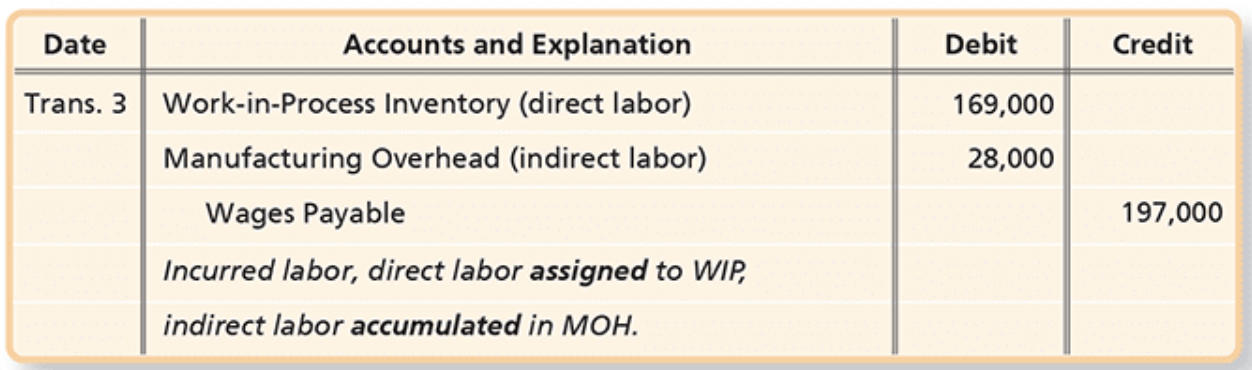
The indirect labor gets transferred to Manufacturing Overhead
10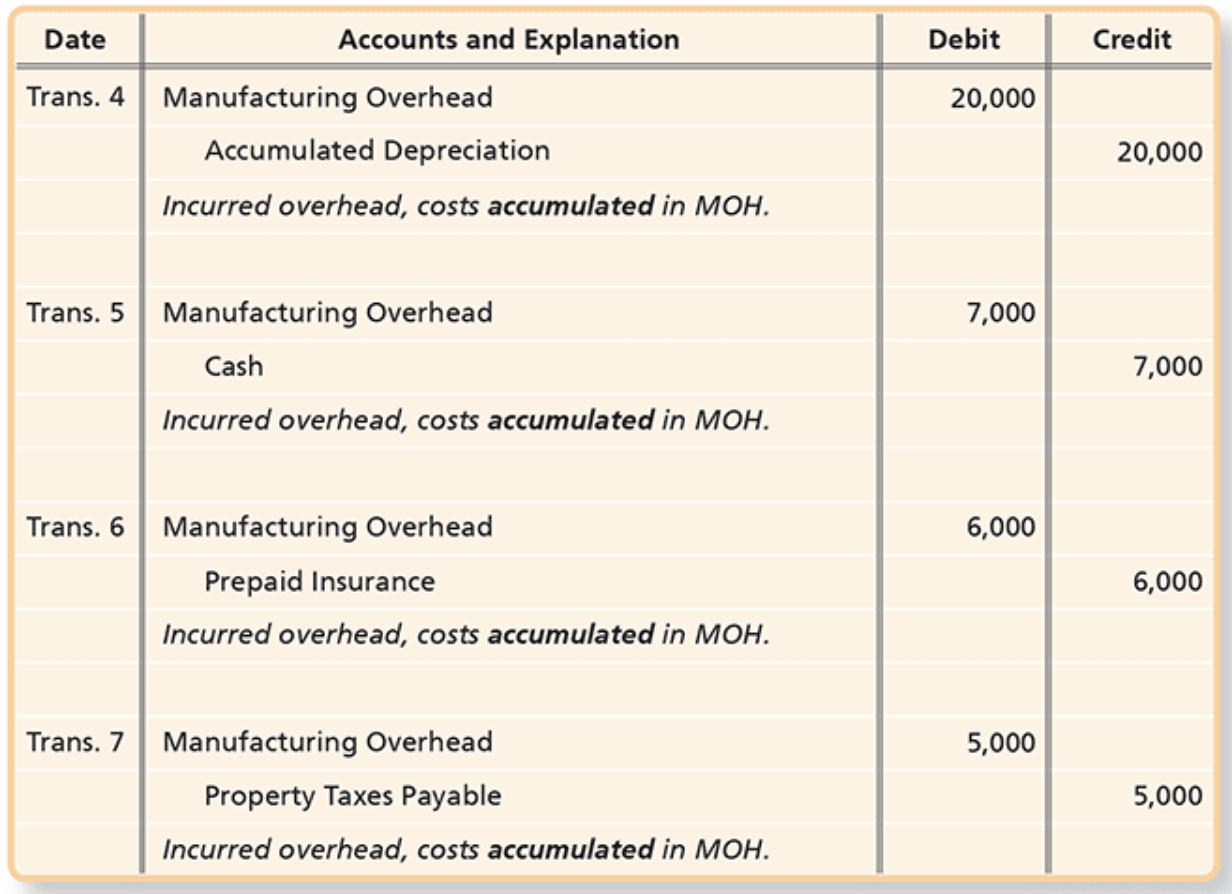
Journal Entries for Manufacturing Overhead
-Depreciation on manufacturing plant and equipment, \$20,000
-Plant utilities paid now, \$7,000
-Plant insurance previously paid, \$6,000
-Plant property taxes incurred but not yet paid, \$5,000
-Depreciation on manufacturing plant and equipment, \$20,000
-Plant utilities paid now, \$7,000
-Plant insurance previously paid, \$6,000
-Plant property taxes incurred but not yet paid, \$5,000
11
The predetermined overhead allocation rate
The main reason for the predetermined overhead allocation rate is the matching principle. You must match expenses with revenue, however, you do not know the total overhead cost until the period has ended.
*Formula shown in Image
"Total Estimated Overhead costs": Is exactly what it sounds like. Just add up all the overhead costs in that accounting period.
"Total estimated quantity of the overhead allocation base": The "allocation base" is the measure you use to split shared overhead costs among products. So, for example it could be machine hours, direct labor hours, units produced.
ex)
Smart Touch learning estimated they will spend \$100,000 on overhead costs in the period. They also estimate that they will spend 10,000 machine hours making those products (allocation base). This would equal \$10 per machine hour. This means that every time the factory uses 1 machine hour to make a product, \$10 is attributed to that products cost.
ex)
Smart Touch learning estimated they will spend \$100,000 on overhead costs in the period. They also estimate that they will spend \$200,000 on direct labor (allocation base). This would equal 50% of direct labor cost for a product is attributed as overhead cost.
So, if they spend \$1,000 on direct labor for a job, \$500 will be allocated as overhead cost.

*Formula shown in Image
"Total Estimated Overhead costs": Is exactly what it sounds like. Just add up all the overhead costs in that accounting period.
"Total estimated quantity of the overhead allocation base": The "allocation base" is the measure you use to split shared overhead costs among products. So, for example it could be machine hours, direct labor hours, units produced.
ex)
Smart Touch learning estimated they will spend \$100,000 on overhead costs in the period. They also estimate that they will spend 10,000 machine hours making those products (allocation base). This would equal \$10 per machine hour. This means that every time the factory uses 1 machine hour to make a product, \$10 is attributed to that products cost.
ex)
Smart Touch learning estimated they will spend \$100,000 on overhead costs in the period. They also estimate that they will spend \$200,000 on direct labor (allocation base). This would equal 50% of direct labor cost for a product is attributed as overhead cost.
So, if they spend \$1,000 on direct labor for a job, \$500 will be allocated as overhead cost.
12
Cost Driver
The primary factor that causes the cost of a product to increase of decrease.
13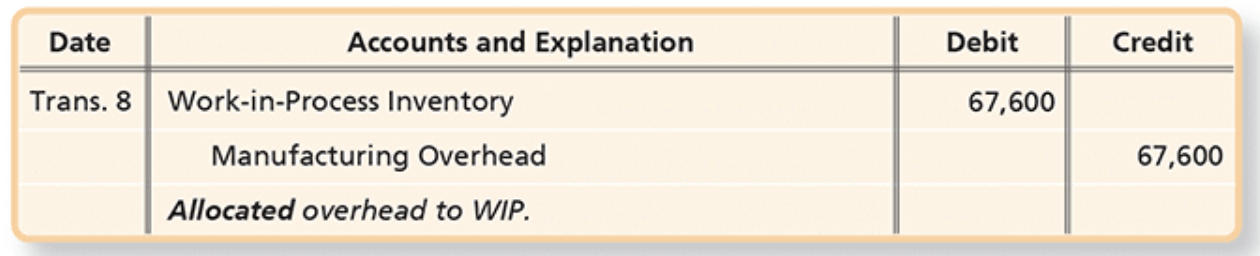
Journal Entry to allocate the manufacturing overhead cost to products (jobs)
14
Journal Entry for when the Work-in-progress inventory turns into Finished Goods Inventory
15
Jounral Entry for selling a Finsihed Goods Inventory
* Accounts Receivable is also commonly Cash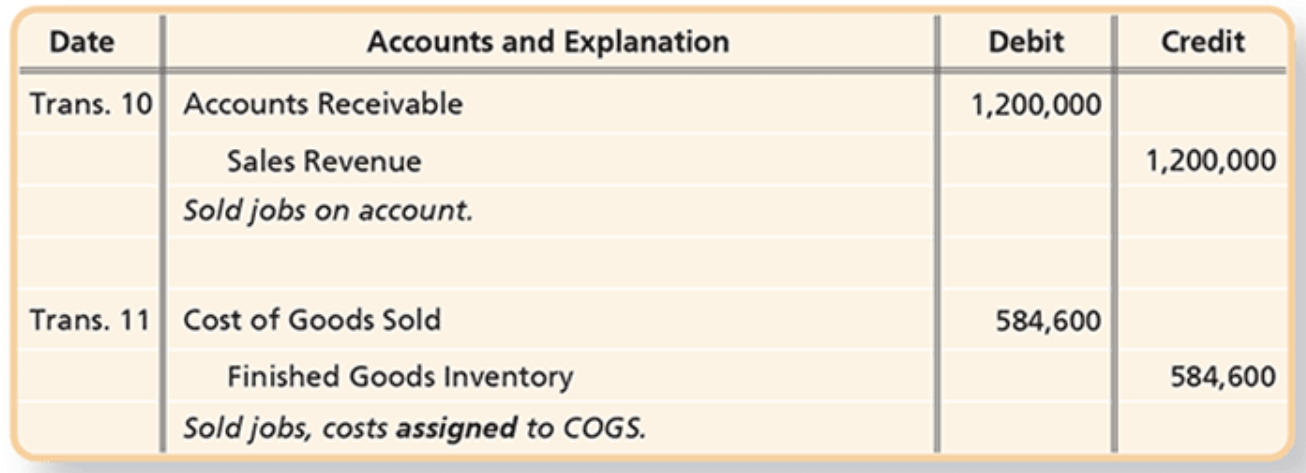
16
Underallocated Overhead
Overallocated Overhead
What is the journal entry for these (since they need to be zeroed out at the end of the period)
Overallocated Overhead
What is the journal entry for these (since they need to be zeroed out at the end of the period)
Underallocated Overhead: Actual manufacturing overhead costs are more than allocated manufacturing costs
Overallocated Overhead: Actual manufacturing overhead costs are less than allocated manufacturing costs
*Image for how to underallocate overhead shown
*If it was to fix overallocated overhead, then manufacturing overhead would be debited and cost of goods sold would be credited
Overallocated Overhead: Actual manufacturing overhead costs are less than allocated manufacturing costs
*Image for how to underallocate overhead shown
*If it was to fix overallocated overhead, then manufacturing overhead would be debited and cost of goods sold would be credited
17
How to solve this problem?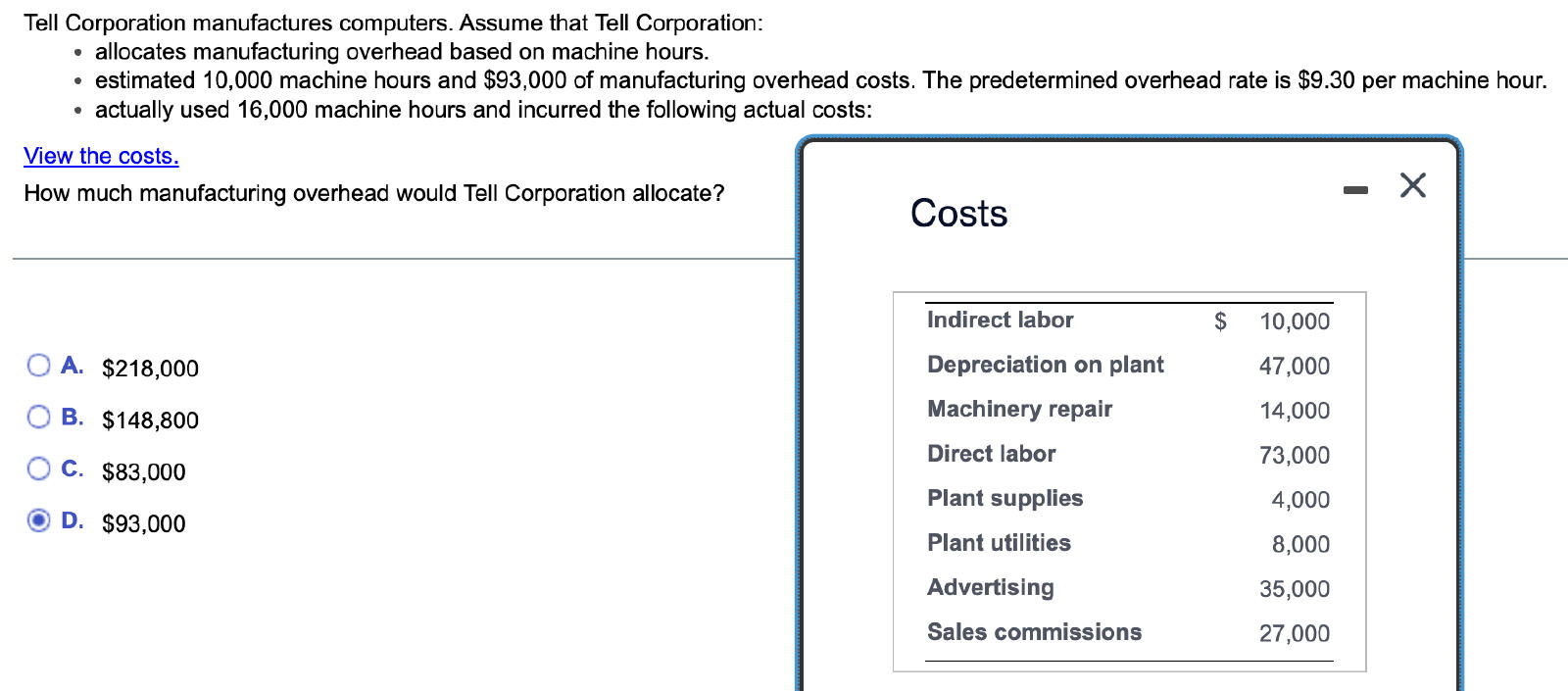
"Allocated Manufacturing Overhead" is just the amount of manufacturing overhead that your ACTUALLY allocate as cost at the end of the period.
So, it would be
Actual machine hours x predetermined overhead rate
So,
16,000 hrs x \$9.30 = 148,800
So, it would be
Actual machine hours x predetermined overhead rate
So,
16,000 hrs x \$9.30 = 148,800
18
The costs transferred from Work - in - Process Inventory to Finished Goods Inventory are called Cost of Goods Manufactured.
True or False?
True or False?
True
19
A cost accounting system will assist a manager in determining how many and which products to produce.
True
False
True
False
A cost accounting system helps managers track, allocate, and analyze costs (such as materials, labor, and overhead), but it does not directly determine how many or which products to produce. Those decisions are typically part of managerial planning and decision-making, supported—but not dictated—by cost accounting information.
20
Is this overallocated or under allocated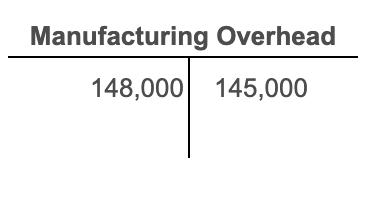
Debits: Actual overhead
Credits: Applied (estimated) overhead
*In the image, its it underallocated.
Credits: Applied (estimated) overhead
*In the image, its it underallocated.
21
Completion of a Job Journal Entry
Debit: Finished Goods inventory
Credit: Work In progress Inventory
Credit: Work In progress Inventory
22
The cost of goods manufactured is recorded with a debit to the Work - in - Process Inventory account and a credit to the Cost of Goods Manufactured account.
True
False
True
False
FALSE!!!
The costs transferred from Work - in - Process Inventory to Finished Goods Inventory is called Cost of Goods Manufactured.
So, the Journal entry would be a debit to FG and a credit to WIP
The costs transferred from Work - in - Process Inventory to Finished Goods Inventory is called Cost of Goods Manufactured.
So, the Journal entry would be a debit to FG and a credit to WIP
Mehr Karteikarten: Wirtschaft
Chapter 8 Global & Regional IntegrationWirtschaft · Englischbevo612econWirtschaft · EnglischMaddoxW45abreviation 60Wirtschaft · EnglischLoïcTCP T1 NotesWirtschaft · EnglischwowiepowEconomicsWirtschaft · EnglischSarahBusiness Igcse Marketing Wirtschaft · EnglischTasvikaChapter 19 - Liquidating DistributionsWirtschaft · EnglischwowiepowYear 2 Economics Key TermsWirtschaft · EnglischluluFacilities Layout and Location PlanningWirtschaft · EnglischPsalmsFederal Taxation (C239)Wirtschaft · EnglischdTransportationWirtschaft · EnglischBUENAFLOR,ACC Chapter 2Wirtschaft · EnglischTaylor
Lerne diese Decks in der App
Kostenlos auf iPhone, Android, Mac und im Web. Füge jedes Deck mit einem Tipp zu deinem Konto hinzu.

