Hematopoietic and Lymphoproliferative Neoplasia
Diese Karteikarten lernenKostenlos · Spaced Repetition · iPhone, Android, Mac & Web
Alle Karten
1
What is hematopoietic neoplasia?
Uncontrolled, clonal proliferation of blood-forming cells.
2
What is a lymphoproliferative disorder?
Unregulated, clonal proliferation of lymphocytes.
3
What are the two major types of lymphoproliferative neoplasia?
Lymphoma and primary lymphoid leukemia.
4
Where does lymphoma originate?
Lymph nodes or extranodal tissues outside the bone marrow.
5
Where does primary lymphoid leukemia usually originate?
Bone marrow.
6
What is a myeloproliferative disorder?
Unregulated, clonal proliferation of non-lymphoid hematopoietic cells.
7
Which cell lineages are affected by myeloproliferative disorders?
Granulocytic, monocytic, erythroid, and megakaryocytic.
8
What is myeloid sarcoma?
An extremely rare myeloid neoplasm arising outside bone marrow.
9
What is primary leukemia?
Clonal proliferation of neoplastic hematopoietic cells usually originating in bone marrow.
10
What defines acute leukemia?
Immature-appearing neoplastic cells with more than 20% blasts in bone marrow.
11
What is the typical disease course of acute leukemia?
Aggressive, rapidly progressive, and associated with poor prognosis.
12
What does ALL stand for?
Acute lymphoblastic leukemia.
13
What does AML stand for?
Acute myeloid leukemia.
14
Why can acute leukemia not always be classified by microscopy alone?
Immature lymphoid and myeloid blasts can look similar.
15
What does positive CD79a staining indicate in acute leukemia?
B-cell lineage, supporting B-ALL.
16
What defines chronic leukemia?
Proliferation of mature-appearing neoplastic cells with slow progression.
17
What is the most common chronic leukemia?
Chronic lymphocytic leukemia (CLL).
18
What are examples of chronic leukemias?
CLL, chronic granulocytic leukemia, and polycythemia vera.
19
What is myelophthisis?
Replacement of normal bone marrow by neoplastic cells, suppressing normal blood cell production.
20
Which cytopenias commonly occur with acute leukemia?
Anemia, neutropenia, and thrombocytopenia.
21
Why do acute leukemias commonly cause cytopenias?
Neoplastic blasts replace normal bone marrow cells.
22
Why might chronic leukemia be discovered incidentally?
Animals may have extremely high leukocyte counts without obvious clinical signs.
23
What WBC count is frequently observed in chronic leukemia?
Greater than 100,000 cells/µL.
24
Which is more common: lymphoid or myeloid neoplasia?
Lymphoid neoplasia.
25
What is the most common hematopoietic neoplasm?
Lymphoma.
26
How is lymphoma typically diagnosed?
Cytology or biopsy of lymph nodes or extranodal tissues.
27
What are the two causes of a leukemic blood profile with neoplastic lymphocytes?
Primary leukemia or lymphoma with secondary leukemia.
28
What are atypical lymphocytes in this lecture?
Large, immature-appearing lymphocytes with prominent nucleoli.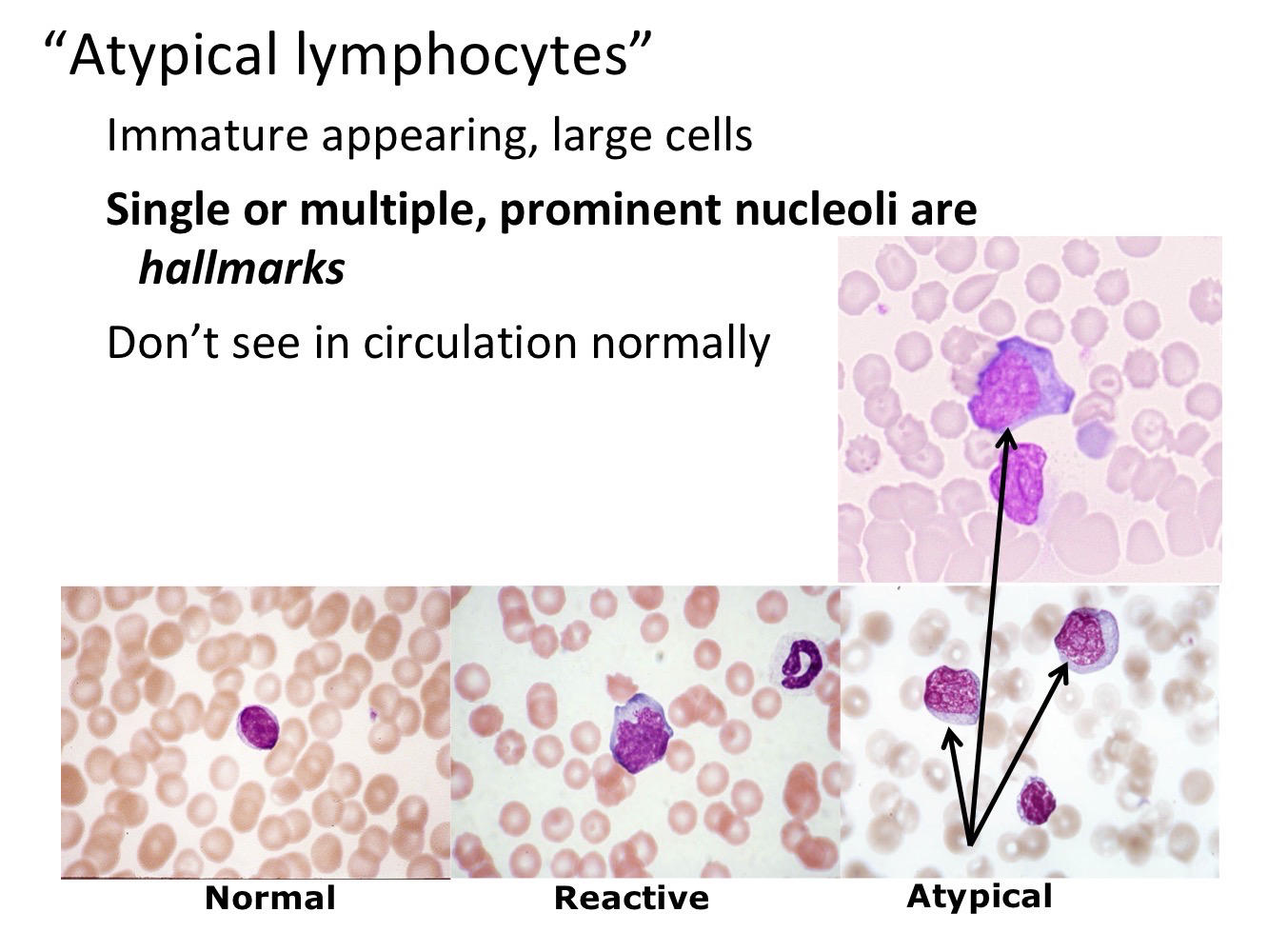
29
What are the major differential diagnoses for circulating atypical lymphocytes?
Primary acute leukemia and lymphoma with secondary leukemia.
30
What is secondary leukemia?
Circulating neoplastic lymphocytes from lymphoma originating outside bone marrow.
31
Approximately what percentage of lymphoma cases develop blood involvement?
10–20%.
32
How do circulating neoplastic cell numbers compare between primary and secondary leukemia?
Usually much higher in primary leukemia.
33
Why are severe cytopenias less common in lymphoma with secondary leukemia?
Bone marrow involvement is often patchy or focal.
34
Why can AML be mistaken for ALL on a blood smear?
Immature myeloid blasts may resemble lymphoid blasts.
35
What does positive myeloperoxidase (MPO) staining support?
Acute immature cell myeloid leukemia.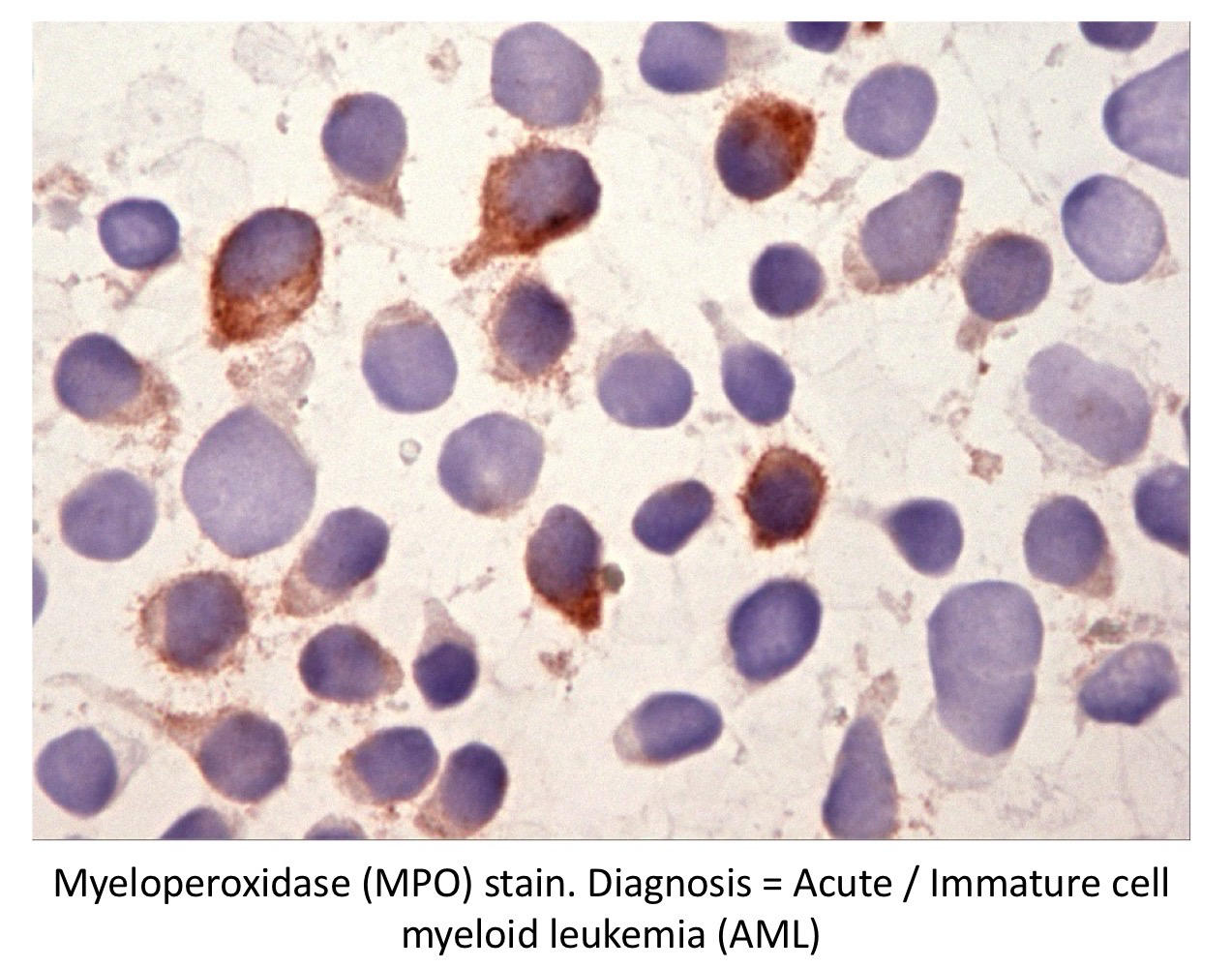
36
What characterizes acute myeloid leukemia without maturation?
Very immature cells with minimal expression of lineage-specific markers.
37
What is mastocythemia?
Presence of mast cells in peripheral blood, not normal!
38
What are the two major causes of mastocythemia?
Mast cell neoplasia and inflammatory or infectious diseases (Gastrointestinal and skin inflammation.)
39
In dogs, mastocythemia is more commonly associated with what?
Underlying inflammatory disease.
40
In cats, mastocythemia is more commonly associated with what?
Underlying mast cell neoplasia.
41
Can circulating mast cell numbers alone distinguish inflammation from neoplasia?
No, especially in dogs.
42
What mast cell morphology strongly suggests neoplasia?
Large, immature, poorly granulated mast cells.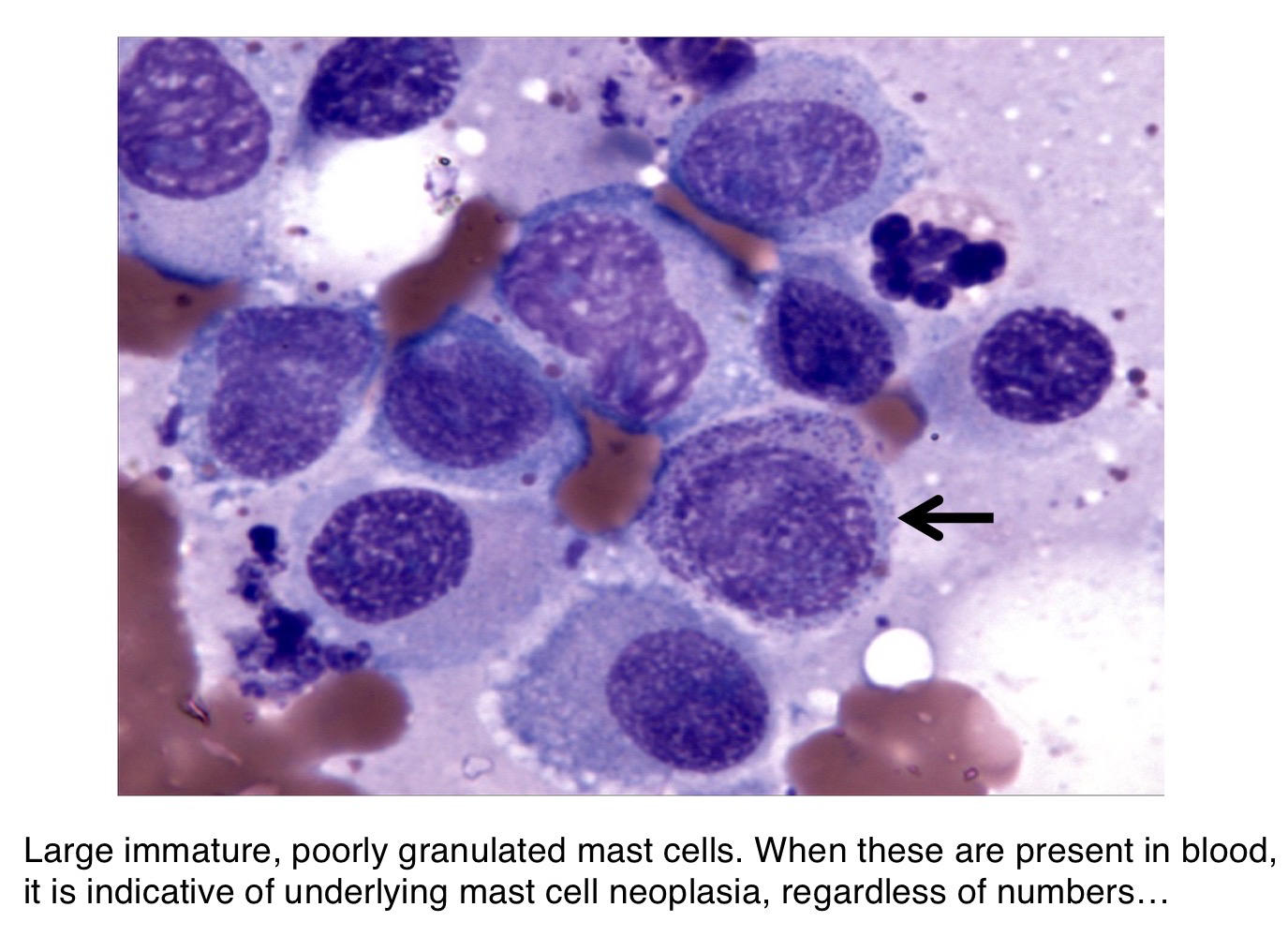
43
A dog has WBC >500,000/µL, numerous blasts, anemia, neutropenia, and thrombocytopenia. What is most likely?
Primary acute leukemia with myelophthisis.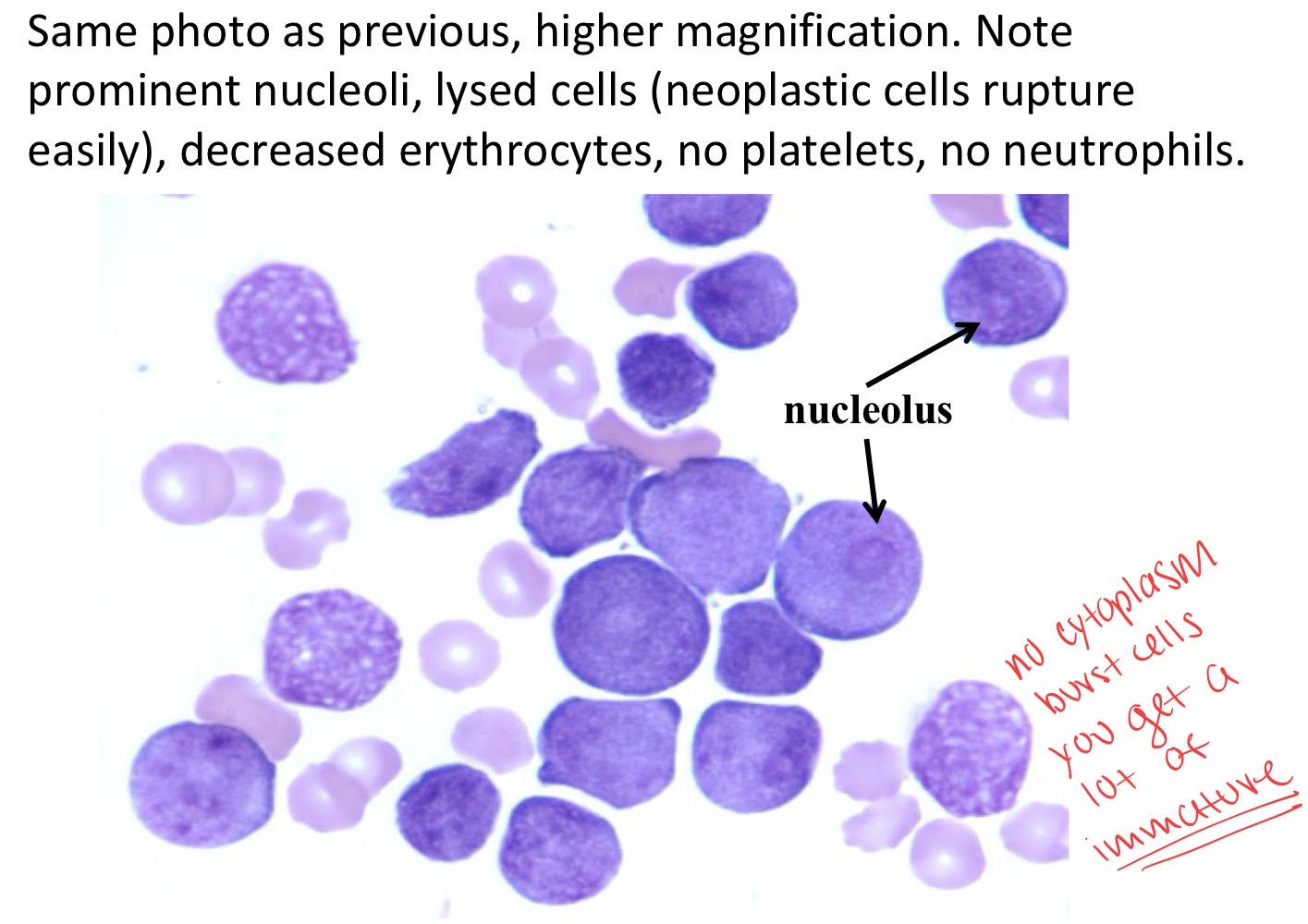
44
A dog has WBC 200,000/µL, mostly small mature lymphocytes, and no major cytopenias. What is most likely?
Chronic lymphocytic leukemia.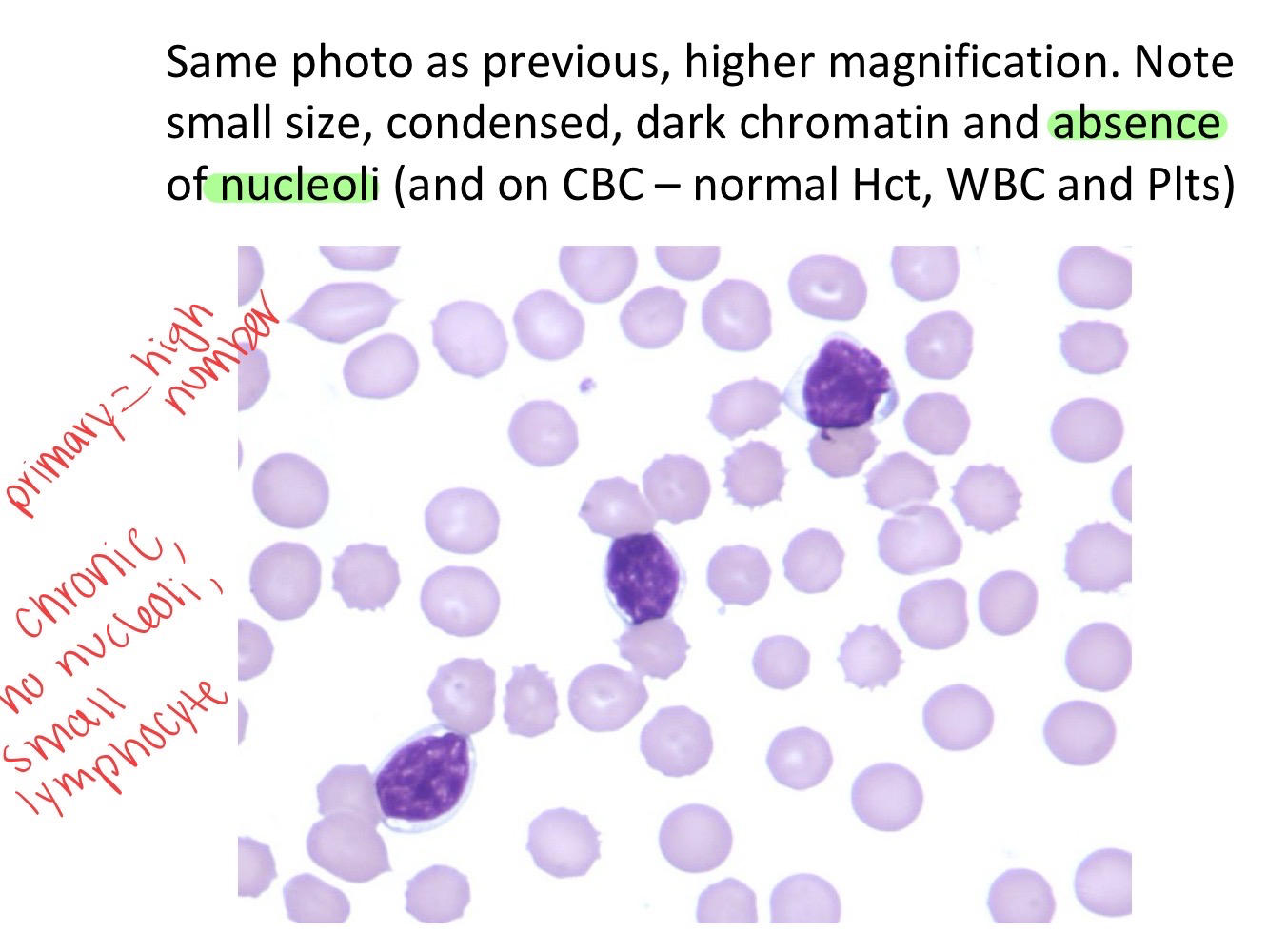
45
A cat with previous GI lymphoma has circulating atypical lymphocytes but normal RBCs and platelets. What is most likely?
Lymphoma with secondary leukemia.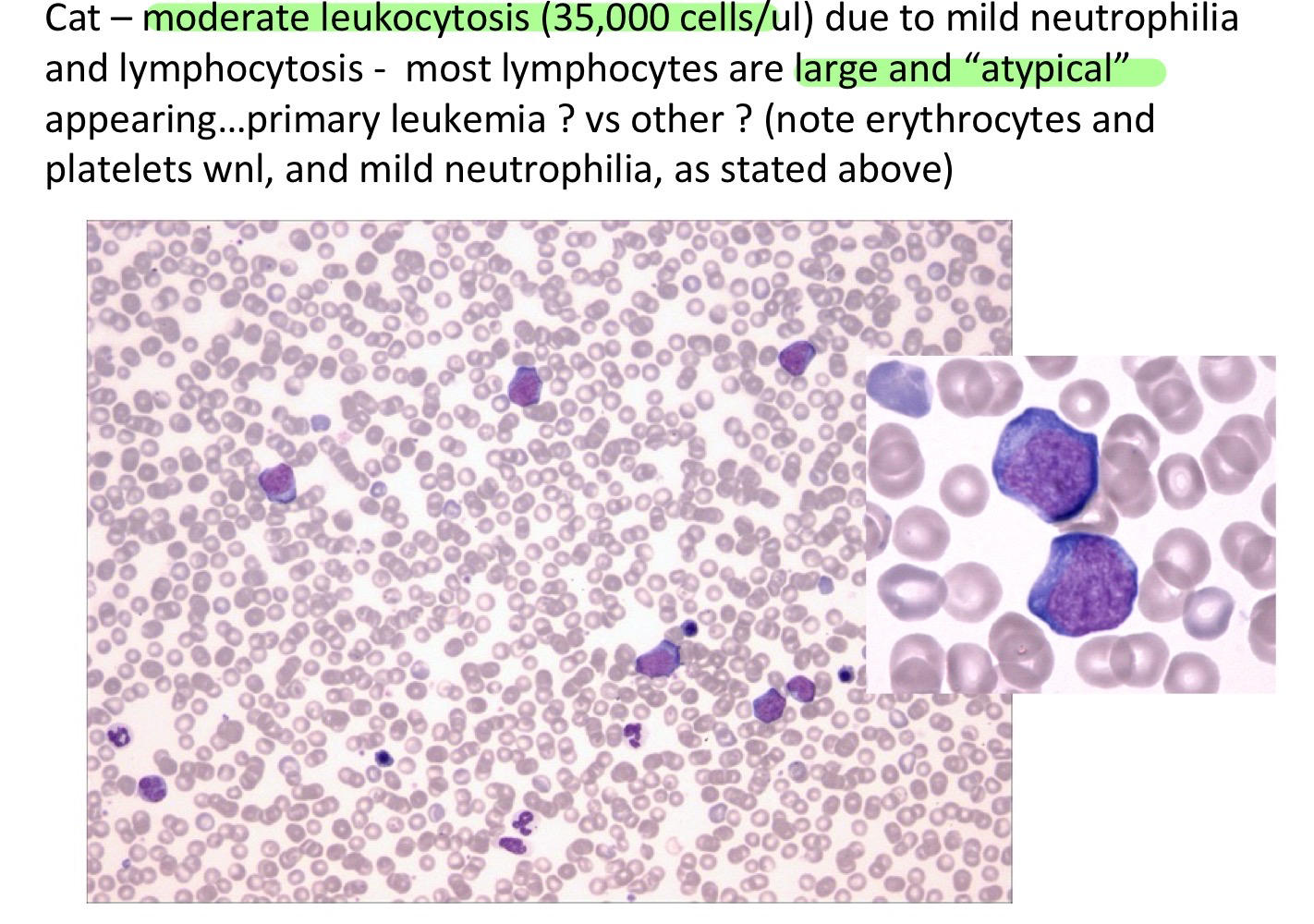
46
A severely anemic cat has numerous erythroid precursors but no reticulocytosis. What should you suspect?
Acute erythroid leukemia.
non regenerative!!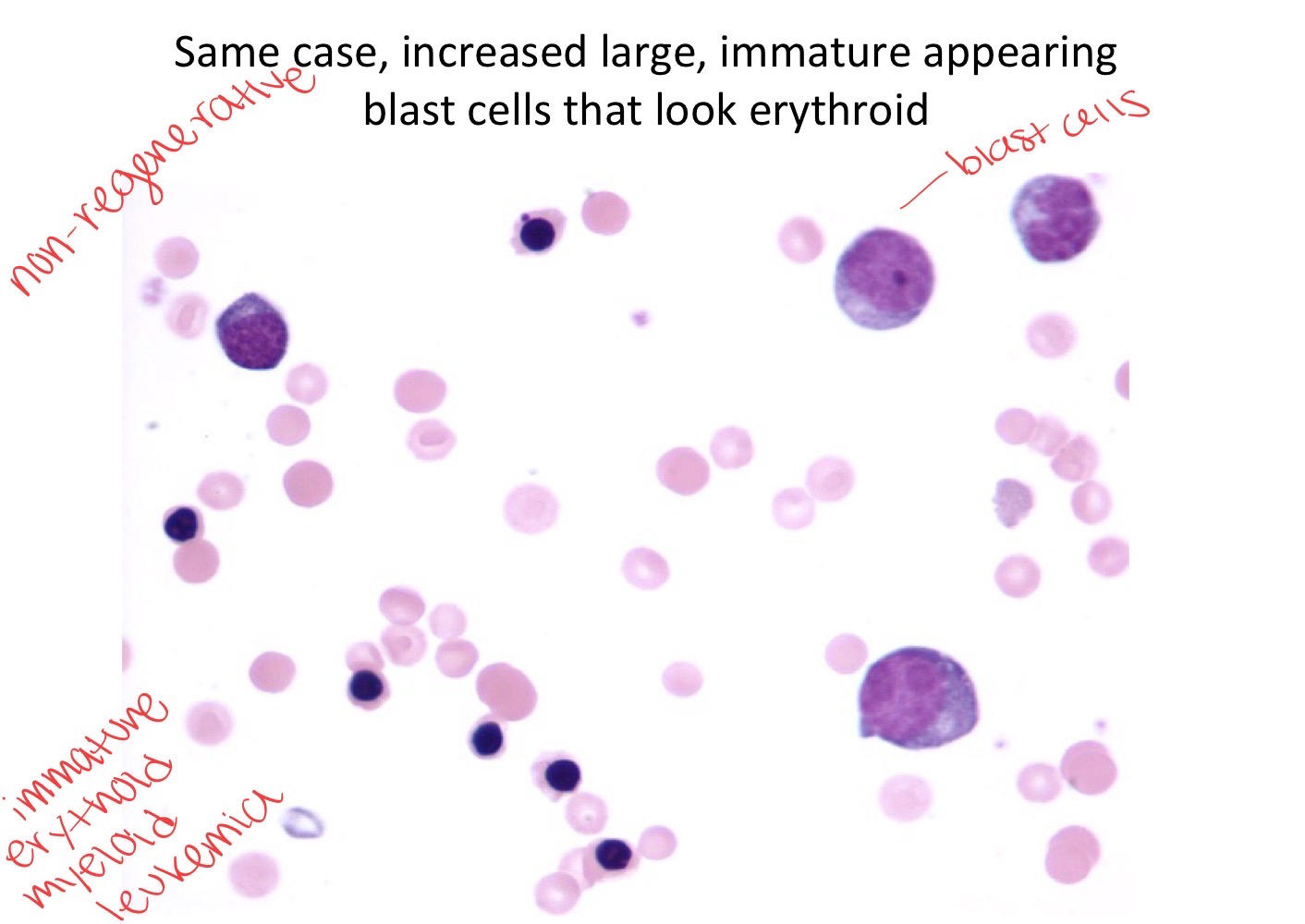
non regenerative!!
47
Which virus is strongly associated with acute erythroid leukemia in cats?
Feline leukemia virus (FeLV).
Mehr Karteikarten: Medizin und Gesundheit
Introduction to NeurotransmittersMedizin und Gesundheit · EnglischKrisMedCardsNDEE N3 Lecture ORIGINALMedizin und Gesundheit · EnglischBaoSeminal FluidsMedizin und Gesundheit · EnglischJESSQTRANAntibiotic Stewardship/BasicsMedizin und Gesundheit · EnglischAveryEmociones. NeuroMedizin und Gesundheit · SpanischJulieta106 week 3Medizin und GesundheitkjEvidence Based AssesmentMedizin und Gesundheit · Englischronnie_13Framework and ExposureMedizin und Gesundheit · EnglischEmanPathophysiologyMedizin und Gesundheit · EnglischJoshuaHospital and Clinical Laboratory RegulationsMedizin und Gesundheit · EnglischJESSQTRANGRAM NEGATIVE BACILLIMedizin und Gesundheit · EnglischNicoleHistologia: Tkanka chrzęstna i kostnaMedizin und Gesundheit · PolnischLuven
Alle Decks: Medizin und Gesundheit
Lerne diese Decks in der App
Kostenlos auf iPhone, Android, Mac und im Web. Füge jedes Deck mit einem Tipp zu deinem Konto hinzu.

