Carbohydrate Biochemistry and Animal Nutrition
Diese Karteikarten lernenKostenlos · Spaced Repetition · iPhone, Android, Mac & Web
Alle Karten
1
What are the primary energy sources for carnivores?
Fats and proteins; carnivores generally consume very little carbohydrate.
2
What is the primary dietary energy source for omnivores and monogastric herbivores?
Carbohydrates.
3
Why do ruminants consume high-carbohydrate diets but primarily use fatty acids for energy?
Microbes ferment carbohydrates into volatile fatty acids (VFAs).
4
What is a monosaccharide?
A carbohydrate that cannot be hydrolyzed into simpler sugars.
5
What are examples of hexoses and pentoses?
Hexoses: glucose and fructose
Pentoses: xylose and arabinose.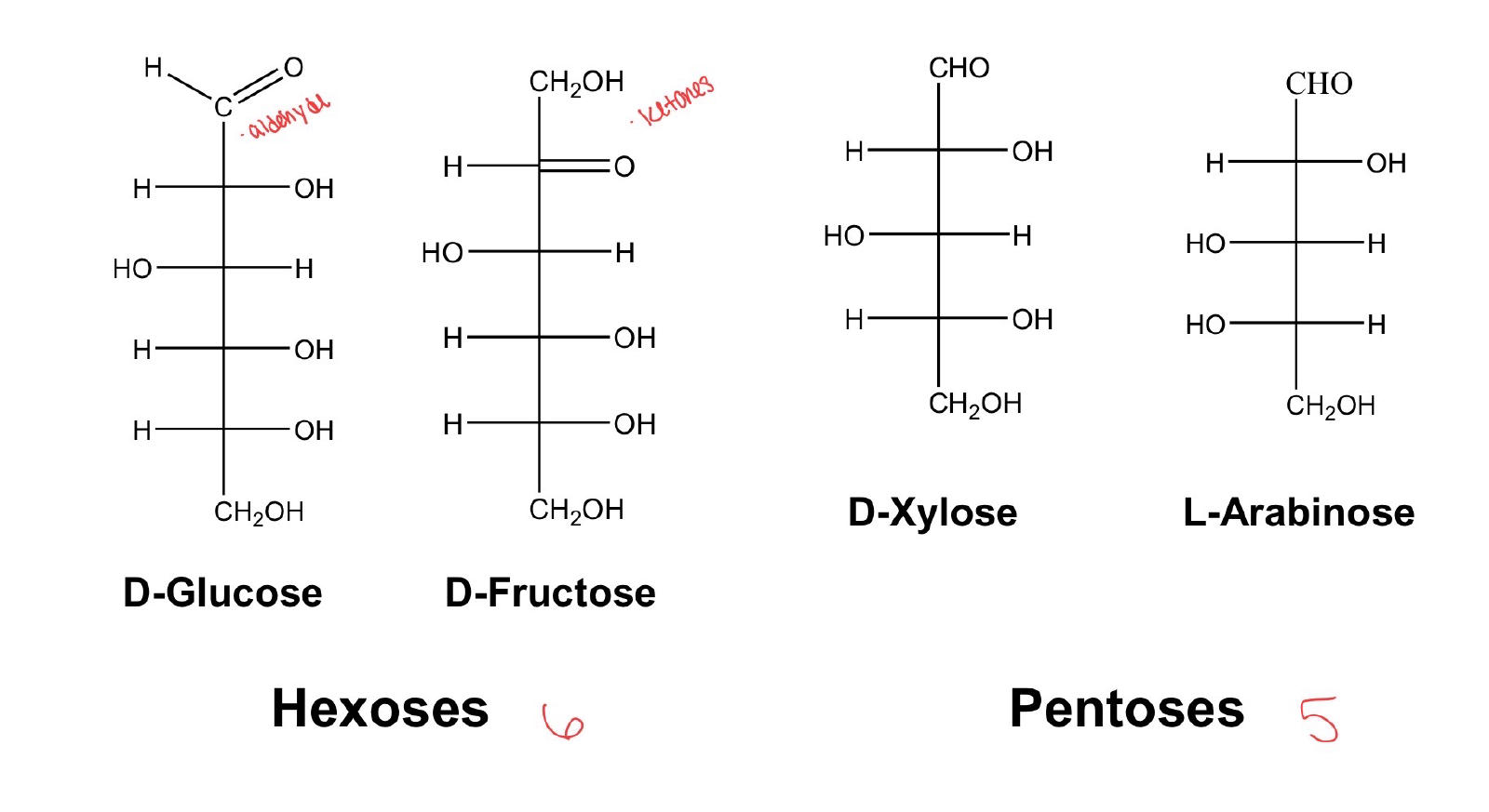
Pentoses: xylose and arabinose.
6
What are examples of modified monosaccharides?
Amino sugars, sugar alcohols, and sugar acids.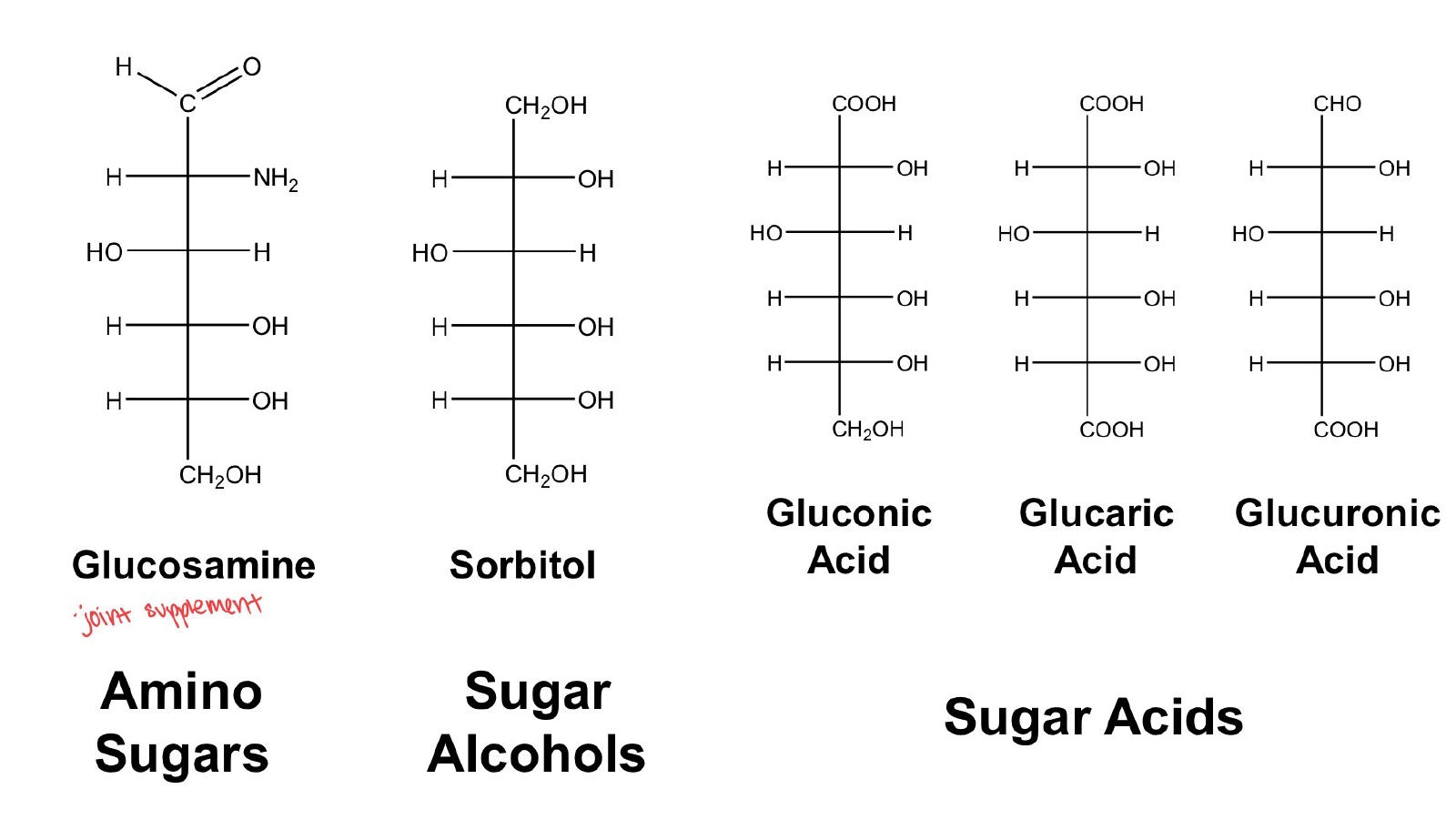
7
What is a disaccharide?
Two monosaccharides joined together; examples include sucrose, lactose, and maltose.
8
What is an oligosaccharide?
A carbohydrate containing 2–10 monosaccharide units.
9
What is a polysaccharide?
A carbohydrate containing more than 10 monosaccharide units.
10
What two monosaccharides make up sucrose?
What are the functions of sucrose in animal foods?
What are the functions of sucrose in animal foods?
1. Glucose and fructose.
2. Improves palatability and can retain moisture as a humectant. it’s the sweet one !
2. Improves palatability and can retain moisture as a humectant. it’s the sweet one !
11
What two monosaccharides make up lactose?
Where is lactose digested?
Where is lactose digested?
1. Glucose and galactose linked by a β-1,4 bond.
2. By lactase in the brush border of the small intestine.
2. By lactase in the brush border of the small intestine.
12
Why do many adult animals develop lactose intolerance?
Insufficient lactase causes diarrhea, bloating, flatulence, and abdominal discomfort.
13
According to the lecture, what are the upper dietary lactose limits for dogs and cats?
Dogs: 10%; cats: 5% of diet by weight.
14
What is the major difference between starch and fiber?
Starch is digestible by animal enzymes; fiber is not.
15
Which enzymes are involved in starch digestion?
Amylase, maltase, and isomaltase.
16
What is cellulose?
The most common fiber component, consisting of glucose units linked by β-1,4 bonds.
17
Why can microbes digest cellulose but animal enzymes cannot?
Microbes produce enzymes that break β-1,4 glucose linkages.
18
What is hemicellulose?
A plant cell wall polysaccharide rich in xylose; generally poorly soluble and moderately fermentable.
19
What is pectin?
A highly soluble and fermentable fiber composed mainly of galacturonic acid units.
20
What are gums?
Sticky plant exudates containing diverse sugars; some are moderately to highly fermentable.
21
What are fructans?
Why are fructans important in equine nutrition?
Why are fructans important in equine nutrition?
1. Carbohydrates composed mainly of fructose units, found in many plants and cool-season grasses.
2. High fructan intake has been associated with laminitis in horses.
2. High fructan intake has been associated with laminitis in horses.
22
What is resistant starch?
Starch that resists digestion and behaves like dietary fiber.
23
What is lignin?
A non-carbohydrate component associated with fiber that decreases fiber digestibility.
24
Which fibers used in pet foods are highly fermentable?
Guar gum, pectin, and oligosaccharides.
25
Which common fiber has low fermentability?
Cellulose.
26
What are the lecture's safe upper dietary cellulose limits for dogs and cats?
Dogs: 9.4%; cats: 10% of diet by weight.
27
How does fiber digestion differ between simple-stomached animals and fermenters?
Ruminants and hindgut fermenters digest more fiber through microbial fermentation.
28
What are the major products of microbial fiber fermentation?
volatile fatty acids (Acetate, propionate, butyrate) and lactate.
29
What does neutral detergent fiber (NDF) measure? EXAM
Cellulose, hemicellulose, and lignin; higher NDF is generally associated with lower feed intake; plant cell wall components
30
What does acid detergent fiber (ADF) measure? EXAM
Cellulose and lignin; higher ADF is generally associated with lower digestibility.
31
What does acid-insoluble lignin analysis measure?
Lignin.
32
What does total dietary fiber (TDF) measure?
Both soluble and insoluble fiber using an enzymatic method.
33
What is the difference between WSC and ESC?
WSC (water soluble carbohydrates) includes simple sugars and fructans; ESC (ethanol soluble carbohydrates) primarily includes monosaccharides and disaccharides.
34
What is glycemic index? went over fast
The increase in blood glucose after eating a feed relative to a reference feed.
35
What is effective NDF (eNDF)?
The portion of NDF that stimulates chewing, salivation, rumination, and rumen motility.
36
Why is fiber included in diets for constipation or diarrhea?
It helps regulate fecal moisture, consistency, and output.
37
Why is fiber useful in diets for diabetic animals?
It can slow GI transit and carbohydrate absorption, helping regulate blood glucose.
38
How can dietary fiber reduce blood cholesterol?
It decreases intestinal bile acid reabsorption.
39
How does fermentable fiber support lower gastrointestinal health?
It promotes VFA production and influences intestinal microbial populations.
40
Why is fiber useful in weight-management diets and feline hairball diets?
It dilutes energy, increases gut fill, and can help promote hair passage.
41
What happens to excess carbohydrates that are not immediately used for energy?
They are stored as glycogen or converted into fatty acids.
42
Why is glucose important even when an animal consumes little dietary carbohydrate?
The brain and red blood cells require glucose for energy.
43
What is gluconeogenesis, and what substrates can be used?
Production of glucose from non-carbohydrate sources such as amino acids, glycerol, and propionate.
44
Why do herbivores require dietary carbohydrates while carnivores may not?
Herbivores need carbohydrates for GI function; carnivores can synthesize glucose from other nutrients.
Mehr Karteikarten: Naturwissenschaften
Further ElectricityNaturwissenschaften · EnglischlemlemLight and Optics Part 1Naturwissenschaften · Englischkoolbiological compounds unit 1Naturwissenschaften · EnglischmischaVirology and Viral Life CycleNaturwissenschaften · EnglischAveryForensic MicroscopyNaturwissenschaften · EnglischSANGALLAPrimatology - group living + socialityNaturwissenschaften · EnglischAnaïsCells and controlNaturwissenschaften · EnglischesmeeAcids and AlkalisNaturwissenschaften · EnglischesmeeAerobic RespirationNaturwissenschaften · EnglischLoganvsi filamentiNaturwissenschaften · SlowenischIvaHaemoglobinNaturwissenschaften · EnglischDryLaundryMicrobiologyNaturwissenschaftencae
Alle Decks: Naturwissenschaften
Lerne diese Decks in der App
Kostenlos auf iPhone, Android, Mac und im Web. Füge jedes Deck mit einem Tipp zu deinem Konto hinzu.

